
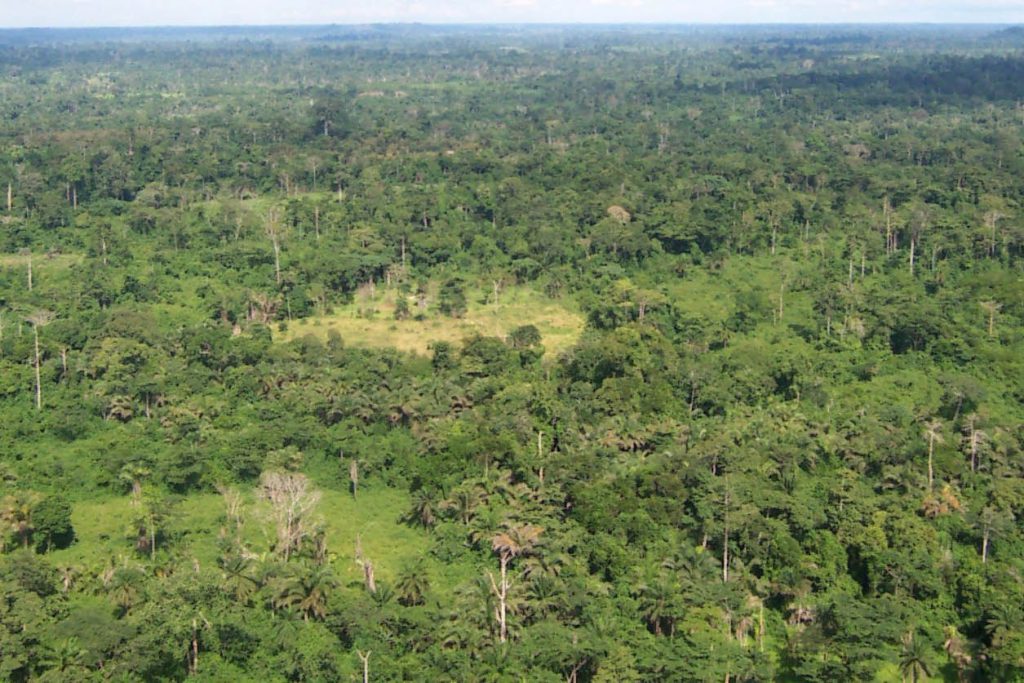
MONROVIA — Liberia is losing its forests at a steady pace, and for the millions of families across the country who depend on the land for their daily needs, the cost is mounting. According to the Food and Agriculture Organization (FAO), the nation lost roughly 0.5 percent of its forest cover each year between 2010 and 2020. By 2020, Liberia’s total forest area stood at about 4.3 million hectares — a vital resource that is shrinking under pressure from shifting agriculture and logging.
The numbers tell a troubling story, but what it means for communities across the region is more direct. Many Liberian families rely on the forest for food, fuel, and income.
When the trees disappear, so do the wild fruits, the medicinal plants, and the fertile soil that small farmers need to grow their crops. The loss is not abstract; it is felt in the fields and around the cooking fire.
Illegal timber and a broken system
Illegal logging is a major driver of this deforestation. The Forest Development Authority has reported that up to 80 percent of timber exports from Liberia may be illegal. That means the vast majority of logs leaving the country are cut without proper oversight, robbing the government of revenue and local communities of a fair share of the benefits.
For families in timber-producing areas, the promise of jobs often comes with environmental destruction and little lasting gain. Artisanal gold mining adds another layer of harm.
Miners use mercury to separate gold from ore, a practice that contaminates rivers and streams. The mercury does not stay in the mining pits; it travels downstream, poisoning fish and the people who eat them. For rural families who rely on fishing for protein and income, this is a direct threat to health and livelihood.
Pollution and public health
The Environmental Protection Agency (EPA), established in 2002, is tasked with safeguarding Liberia’s natural resources. It conducts environmental impact assessments for major projects, including mining concessions and infrastructure developments. The agency’s laboratory has been upgraded with an Elemental Analyzer, a tool that can test for pollutants in water, soil, and air.
This equipment gives the EPA a better chance of detecting mercury and other contaminants before they cause widespread harm. Yet challenges remain.
Liberia’s population, estimated at about 5.4 million in 2024, is heavily dependent on natural resources. The country ranks low on the Environmental Performance Index (EPI), a measure that reflects poor environmental health and weak ecosystem vitality. For the families across the region who draw their living from the land and water, these indicators are not just statistics; they are warnings about the future of their food, their water, and their health.
What comes next
The EPA’s new testing capacity is a step forward, but enforcement of environmental laws remains a hurdle. Illegal logging and unregulated mining continue to operate in many areas, often beyond the reach of authorities. For the communities that live closest to the forest, the question is whether stronger monitoring and accountability can arrive in time to protect the resources they depend on.
Liberia’s forests are not just a national asset; they are a lifeline for millions. As the country works to balance development with conservation, the choices made in the coming years will shape what remains for the next generation.




