
BLACK SEA, July 15 — Against this backdrop of a war that has rewritten the rulebook of modern combat, a reported strike on twenty Russian vessels in the Black Sea marks a significant escalation in an already formidable drone campaign. The attack, which targeted oil tankers, appears designed to disrupt Russia’s energy exports from a region that has become a critical theatre in the wider conflict. The evolution of drone warfare in this conflict has been swift and brutal.
What began, after Russia’s annexation of Crimea in 2014 and the full-scale invasion of February 24, 2022, as a tool for reconnaissance, has matured into an offensive arm in its own right. Ukraine, in particular, has built a robust drone program.
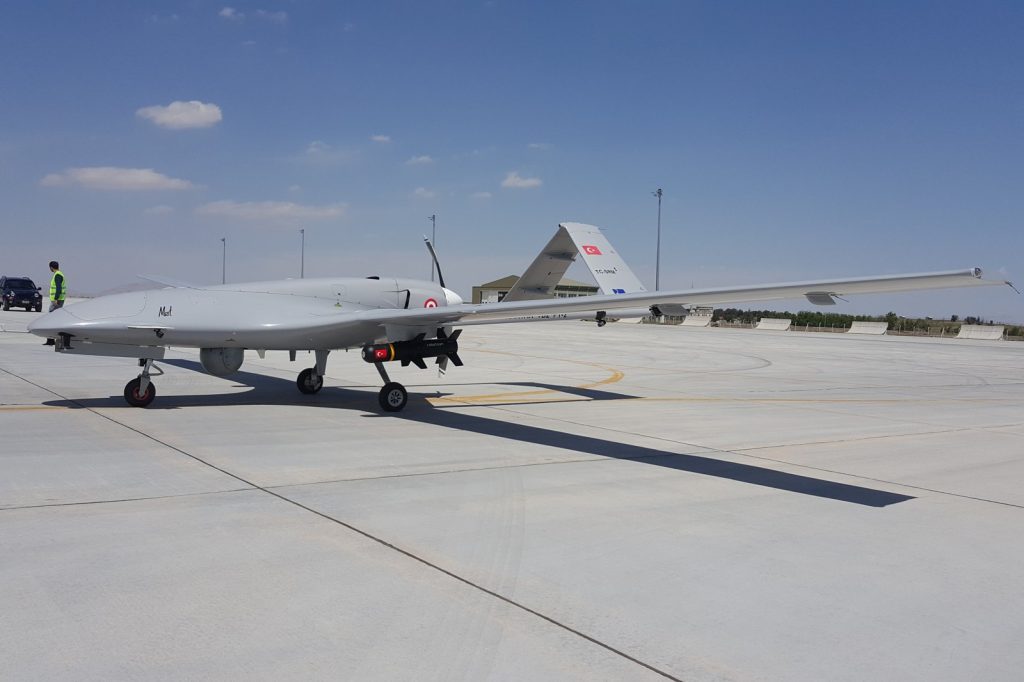
This arsenal includes the Turkish-made Bayraktar TB2, which became an early symbol of Ukrainian resistance, alongside domestically produced models such as the PD-2 and the Shark. The shift from surveillance to direct attack was first demonstrated in October 2022, when Ukraine launched its first major drone assault on Russian naval assets in Sevastopol, notably using unmanned surface vessels (USVs).
By 2023, the institutional framework had caught up with the technology, with the formation of specialised units like the 414th Separate Battalion of Unmanned Systems, known as ‘Madyar’s Birds,’ commanded by Robert Brovdi, whose callsign is Madyar. The reported strike on twenty vessels represents a clear intensification of this capability.
The use of drones in the Black Sea carries profound implications for naval warfare, challenging traditional defences that were not designed to counter low-cost, swarm-capable drones. In the corridors of military planning rooms, the calculus has shifted; a single, expensive naval asset can now be threatened by a coordinated wave of relatively cheap unmanned systems. Open-source intelligence suggests the scale of this aerial conflict is staggering, with both sides conducting over ten thousand drone flights per month.
This relentless tempo has turned the skies above the front lines and the waters of the Black Sea into a proving ground for a new kind of combat. What is at stake is not merely the control of a single sea, but the future of naval doctrine itself. The wider picture is one of a conflict that continues to accelerate technological and tactical innovation.
The targeting of oil tankers to disrupt energy exports signals a strategic calculation that extends beyond the immediate battlefield. As the war grinds on, the drone has moved from the periphery to the centre of military strategy, a shift that will be studied for decades.
The question now is how traditional naval powers will adapt to a world where the sea is no longer safe from the air.




