
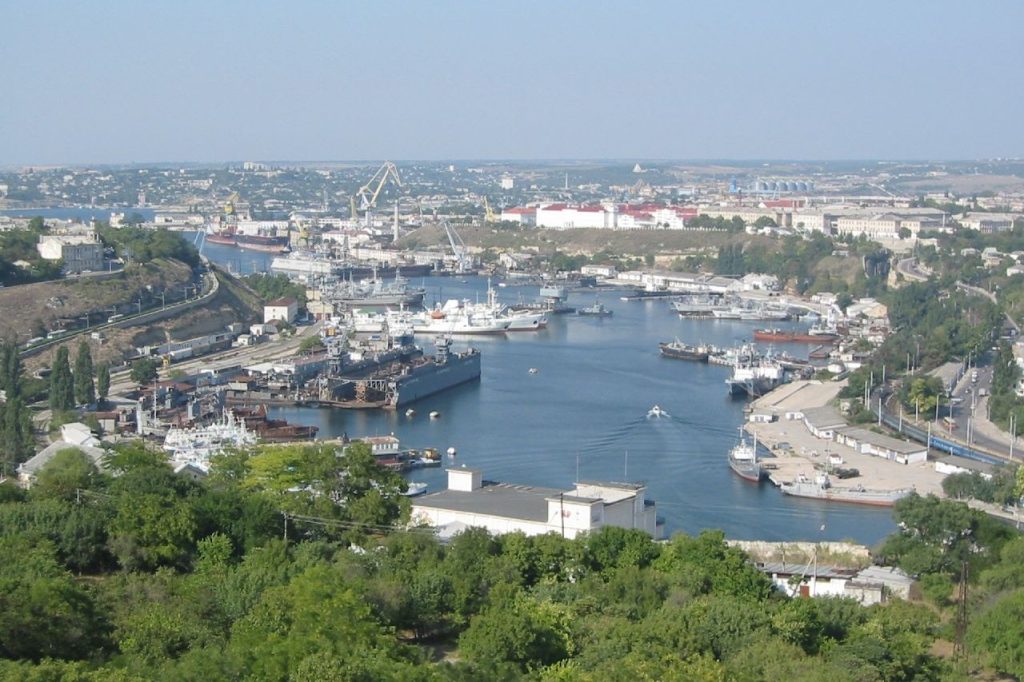
MOSCOW, July 9 — The Black Sea Fleet, a cornerstone of Russian naval power in the region since Catherine the Great, is now a diminished force. The mechanics here are straightforward: a fleet designed to project power and enforce a blockade has taken repeated, punishing hits, and the operational math no longer adds up the way it did in early 2022. The fleet’s lineage is long.
Established in 1783 after the annexation of Crimea, its primary base has been Sevastopol since 1784. It saw action through the Russo-Turkish wars, the Crimean War, and both World Wars.
After the Soviet collapse in 1991, the fleet was split between Russia and Ukraine, with Moscow leasing the Sevastopol base until 2017. That arrangement became moot following Russia’s 2014 annexation of Crimea, when the fleet was fully re-integrated under Russian command. On closer reading, the strategic bet was clear: control of Crimea meant an unencumbered Black Sea Fleet.
But the catch is that hardware doesn’t care about historical claims. As of 2023, the fleet comprised approximately 40 surface combatants, 7 submarines, and support vessels.
The flagship, the Moskva, was sunk by Ukrainian Neptune missiles in April 2022. That was not an isolated incident; it was the opening of a ledger that has since recorded more losses. Since February 2022, the fleet has been used to enforce a naval blockade of Ukrainian ports, a move that has disrupted grain exports and drawn international condemnation.
The blockade is the lever of economic warfare, but the lever itself is now damaged. The recent strikes have reduced its operational capacity, forcing some vessels to relocate to Novorossiysk, a port on the Russian mainland that offers less strategic positioning than Sevastopol.
The blockaded and the blocker
Follow the money, or in this case, follow the grain. The blockade of Ukrainian ports has been a central mechanism in Russia’s campaign to pressure Kyiv and its allies, driving up global food prices and testing the resilience of alternative export routes. But a blockade is only as effective as the fleet enforcing it.
With the Moskva at the bottom of the Black Sea and other vessels damaged or forced to relocate, the fleet’s ability to maintain that pressure is eroding. The relocation to Novorossiysk is telling.
It is a defensive move, a recognition that the waters around Crimea are no longer safe for the fleet’s remaining assets. Novorossiysk offers shelter, but it also places the fleet farther from the key chokepoints near the Bosphorus and the Ukrainian coast. That shift changes the geometry of the conflict in the Black Sea.
History as a liability
The fleet’s history is a source of pride in Moscow, but it is also a fixed cost. The infrastructure at Sevastopol, built over centuries, is not easily replicated. Moving to Novorossiysk means leaving behind repair facilities, supply chains, and the strategic depth that comes from a home port.
The fleet is not just smaller; it is less capable of sustained operations. The sinking of the Moskva was a symbolic blow, but the practical consequences are more significant.
A flagship carries command-and-control capabilities, air defense systems, and anti-ship missiles. Losing that vessel removed a central node in the fleet’s combat network. The remaining surface combatants and submarines are still a threat, but they are operating with a reduced margin for error.
What to watch next is whether the fleet can sustain even a reduced blockade from Novorossiysk, or whether the damage forces a broader strategic reassessment in Moscow. The Black Sea Fleet has been a tool of Russian power for more than two centuries.
The question now is whether it remains a credible one.




