
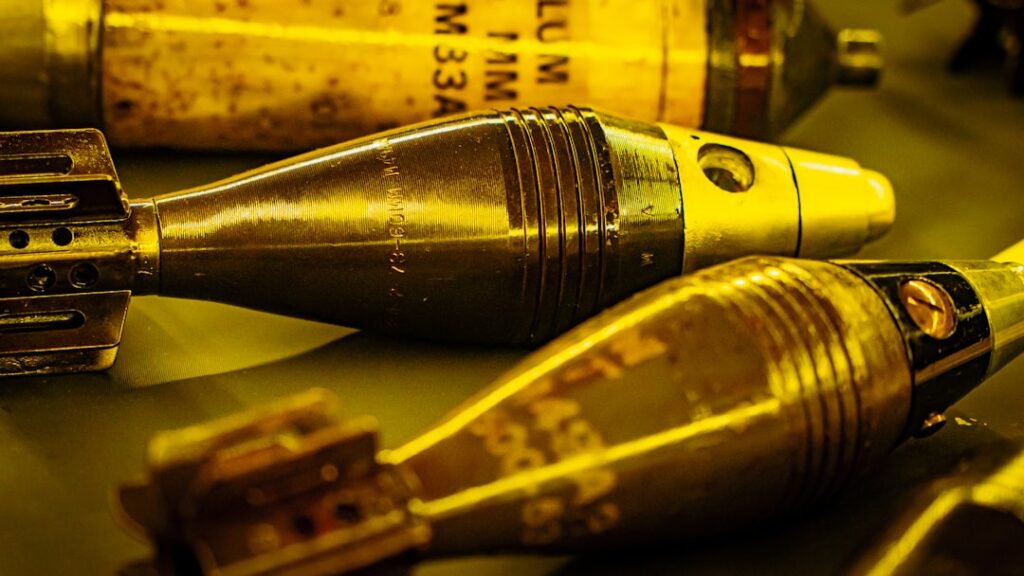
Prime Minister Mette Frederiksen announced that Denmark will move every artillery shell currently held by its armed forces to Ukraine. The decision means the entire national inventory of this weapon system will be shipped to the front, marking a rare instance of a NATO member exhausting a core component of its own stockpile for an overseas conflict.
The move underscores a broader shift in European defence thinking. For many years, NATO countries maintained modest peacetime reserves, assuming that any large‑scale war would allow time for industrial capacity to scale up production. The war in Ukraine has shattered that expectation: artillery rounds are being consumed at rates not seen since the end of World War II, and Western factories are struggling to keep pace.
Rather than wait for new output, Denmark opted to draw directly from its operational stores. This approach aligns with a growing trend among Western allies, who have moved from handing over surplus equipment to tapping into active‑duty inventories.
The United States and Germany have already supplied weapons taken from their own service stocks; Denmark’s contribution goes a step further by offering its complete artillery cache. Denmark’s political framework, established under the 1849 constitution that created the prime‑ministerial office while limiting royal authority, enables decisive action by the government. As the head of the Kingdom of Denmark—including Greenland and the Faroe Islands—Frederiksen brings a perspective shaped by both Arctic and Atlantic considerations, a strategic outlook not shared by many European capitals.
For Ukraine, the practical impact is immediate: a surge of shells that can sustain artillery barrages, which have proven to be the deadliest weapon in the conflict. Both Ukrainian and Russian forces rely heavily on massed fire to break defensive lines, suppress enemy positions, and target infrastructure.
While Ukraine has repeatedly called for more ammunition amid fluctuating Western deliveries, Denmark’s one‑time transfer will provide a substantial, though finite, boost. No plans for subsequent production or replacement were mentioned in the announcement. The United States is expected to welcome the development, as Washington continues to coordinate allied support and encourage European partners to deepen their contributions.
Denmark’s action sets a new benchmark, potentially pressuring smaller NATO members to consider similar levels of assistance. If every ally were to donate its entire artillery stockpile, Ukraine could be supplied for months, yet most countries are likely to retain reserves for their own security needs.
Denmark’s decision carries domestic implications. By depleting its artillery ammunition, the Danish defence establishment now faces a capability gap that could affect its response to crises in the Baltic region or the Arctic. The expectation is that other NATO partners, particularly the United States, would fill any shortfall under the alliance’s collective defence commitments. Implicit in the move is a bet that the conflict in Ukraine will conclude before Denmark requires its own shells again.
Frederiksen’s statement signals that, in Copenhagen’s calculus, Ukraine’s immediate and existential needs outweigh concerns about national peacetime readiness. The choice reflects how the war has reshaped European security assumptions: allies are no longer asking how much they can spare, but how much they can give away while still maintaining a credible defence posture.




