
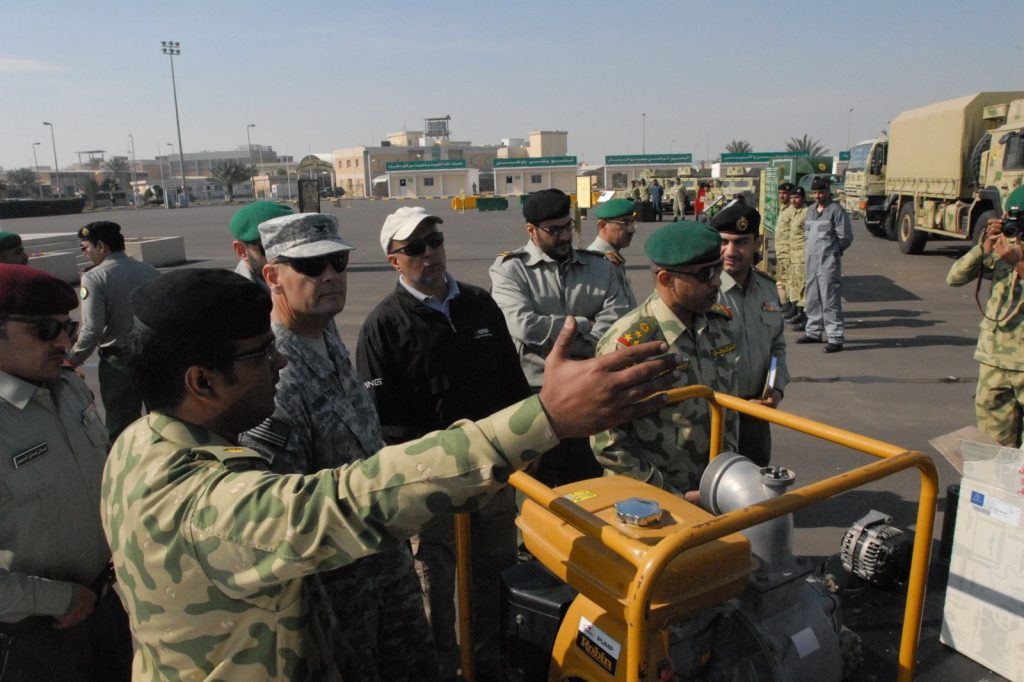
Kuwait confirmed on April 10, 2026, that Iranian drones struck its National Guard, injuring several personnel. The Kuwait Armed Forces issued a statement detailing the attack, which targeted a formal branch of the country’s military structure. The National Guard operates alongside the Air Force, Land Forces, and Naval Force under the command of the Emir of Kuwait, who serves as commander-in-chief, with the Crown Prince acting as deputy commander.
The incident represents a direct assault on a sovereign state’s military units, not a border dispute. Kuwait’s military history dates to the early 20th century, when the Directorate of Public Security Force managed security and the military protected three mounted defensive walls, the last built in 1920.
Those walls no longer exist, but regional threats persist. Iranian drones have been a recurring problem across the Middle East, previously targeting Saudi oil facilities, tankers, and bases housing U.S. troops. This attack marks the first time they have been used against Kuwaiti soldiers on their own territory. Kuwait’s defense structure is managed by the Ministry of Defense, the Ministry of Interior, and the Fire Service Directorate, reflecting the country’s emphasis on security despite its small size.
Senior Kuwaiti official Sheikh Abdullah Al-Salem Al-Sabah stated that the incident is under investigation and that the government is collaborating with allies to maintain security and stability. Kuwait’s small population and military, combined with its significant wealth, make it vulnerable to such attacks.
The country cannot address the threat alone, a reality underscored by its historical reliance on alliances. The United States responded, with the President expressing concern and reaffirming support for regional allies to promote stability and security. The U.S. maintains troops and bases in Kuwait as part of a long-standing security commitment.
The United Kingdom and other allies also acknowledged the incident without providing extensive commentary. The attack occurred amid heightened tensions between Iran and Gulf states following the collapse of the nuclear deal and tightened sanctions.
Iran’s drone program has expanded during this period. Kuwait had attempted to mediate and maintain open channels, but those efforts did not prevent the strike. The Kuwaiti military has not disclosed the number of injured personnel, whether any fatalities occurred, or the specific location of the units when the drones struck.
These details are expected to emerge later. The attack itself, however, marks a significant escalation: a sovereign nation’s soldiers wounded by another country’s weapons.
Drones, which are inexpensive, difficult to intercept, and launchable from long distances, pose a particular challenge to modern defenses reliant on alliances and technology. The message from Tehran is clear: if Iran can target the Kuwaiti National Guard, it can target any asset in Kuwait. That signal has been received by Kuwait, Washington, and others monitoring the Gulf region.




