
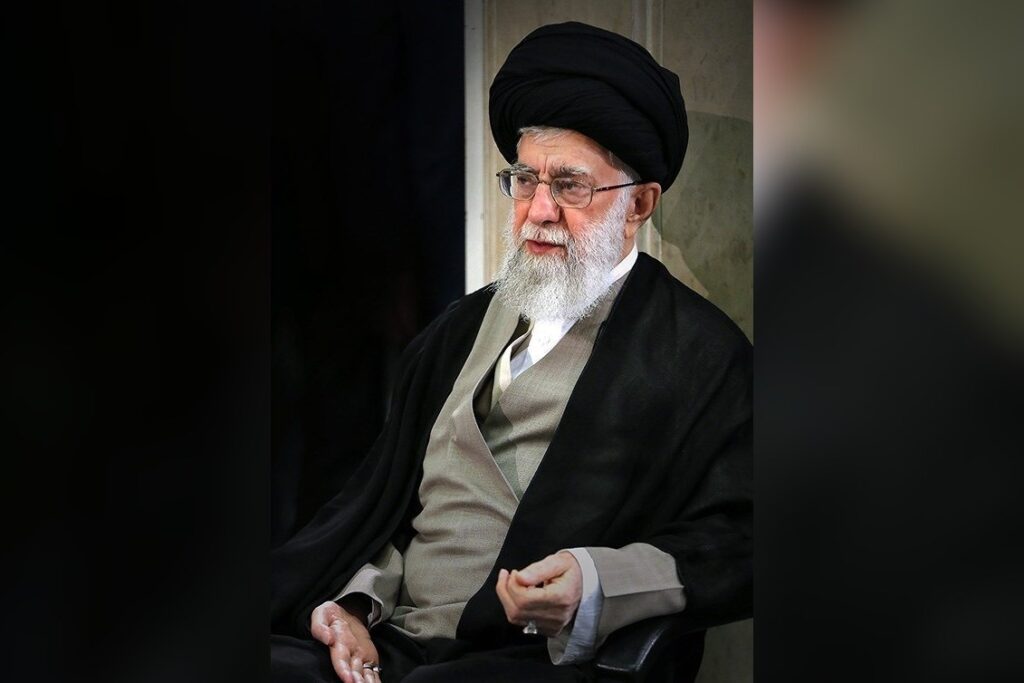
TEHRAN, July 8 — Ayatollah Ali Khamenei has held the position of Supreme Leader of Iran since 1989, wielding ultimate authority over the country’s foreign policy and military apparatus. The record shows that on March 30, 2025, Khamenei publicly declared that Iran would not bow to “American pressure,” a statement carried by the state-run Islamic Republic News Agency (IRNA). That declaration came just over two months into the second term of U.S. President Donald Trump, who took office on January 20, 2025, and has adopted a hardline posture toward Tehran.
The timeline of tensions accelerated the following day. On March 31, 2025, National Security Advisor Mike Waltz confirmed that the United States is “prepared for all options” in response to Iran’s missile test.
Waltz’s statement signaled that the administration views the test as a provocation requiring a credible military deterrent. The phrasing — “all options” — is a standard diplomatic formulation that, in the context of U.S.-Iran relations, carries the implicit threat of kinetic action. Iran’s political landscape complicates any potential off-ramp.
President Masoud Pezeshkian, elected in July 2024, has publicly advocated for diplomatic engagement with the West. But the president operates within a system where Khamenei holds final say, and where the Islamic Revolutionary Guard Corps (IRGC) exerts powerful influence over security policy.
The IRGC, established in 1979, controls Iran’s ballistic missile program. That institutional fact is central to understanding the current standoff. The United States designated the IRGC a terrorist organization in 2019, a move that further narrowed the space for diplomatic maneuvering.
The Guard’s commanders have long viewed the missile program as a non-negotiable pillar of Iran’s defense doctrine, and they face pressure from hardliners within their own ranks to resist any concessions.
A Leadership Structure Built for Confrontation
Khamenei’s role as Supreme Leader means that no major foreign policy or military decision occurs without his approval. He succeeded Ruhollah Khomeini in 1989 and has since consolidated control over the state’s key institutions, including the IRGC, the judiciary, and state media. His March 30 statement rejecting American pressure was not a tactical comment aimed at a domestic audience alone; it reflected a strategic posture that has defined his tenure.
The record shows that the Supreme Leader’s office coordinates closely with IRGC leadership on matters of national security. The Guard’s ballistic missile program is not merely a weapons system — it is a symbol of Iranian sovereignty and technological capability, and a tool for projecting power across the Middle East.
Any U.S. demand to halt or limit that program is, in Tehran’s view, an existential challenge to the regime’s identity. President Pezeshkian, for his part, has attempted to chart a different course. Elected in July 2024 on a platform of economic reform and international engagement, he has faced immediate resistance from hardliners who view any outreach to Washington as a betrayal of revolutionary principles.
The tension between Pezeshkian’s diplomatic instincts and the IRGC’s confrontational stance creates a volatile dynamic within the Iranian government.
The U.S. Calculus and Regional Implications
National Security Advisor Waltz’s March 31 confirmation that the United States is “prepared for all options” places the ball squarely in Tehran’s court. The Trump administration has made clear that it will not tolerate what it views as provocations, and the missile test appears to have crossed a red line. Waltz’s phrasing was deliberate: it keeps military action on the table while leaving room for diplomatic resolution, should Iran choose that path.
The IRGC’s designation as a terrorist organization by the U.S. in 2019 remains in effect. That designation carries legal and operational consequences: it criminalizes any material support for the Guard, and it places the organization outside the bounds of normal diplomatic engagement.
For the IRGC’s leadership, the designation is both an insult and a justification for their hardline posture.
What to Watch Next
The coming weeks will test whether Pezeshkian can carve out space for diplomacy despite the structural constraints he faces. Khamenei’s March 30 statement suggests that the Supreme Leader is not inclined to compromise, but the record also shows that Iranian policy has shifted before when the regime’s survival appeared at stake. The missile test and the U.S. response have set the stage for a potential escalation that neither side may fully control.
The IRGC’s control over the ballistic missile program means that any diplomatic breakthrough would require either a change in the Guard’s posture or a direct intervention by Khamenei. The president’s room to maneuver is limited, and the hardliners who dominate the security establishment view any concession as a sign of weakness.
For now, the trajectory points toward continued confrontation, with the U.S. signaling readiness for all options and Iran refusing to bow to pressure.




