
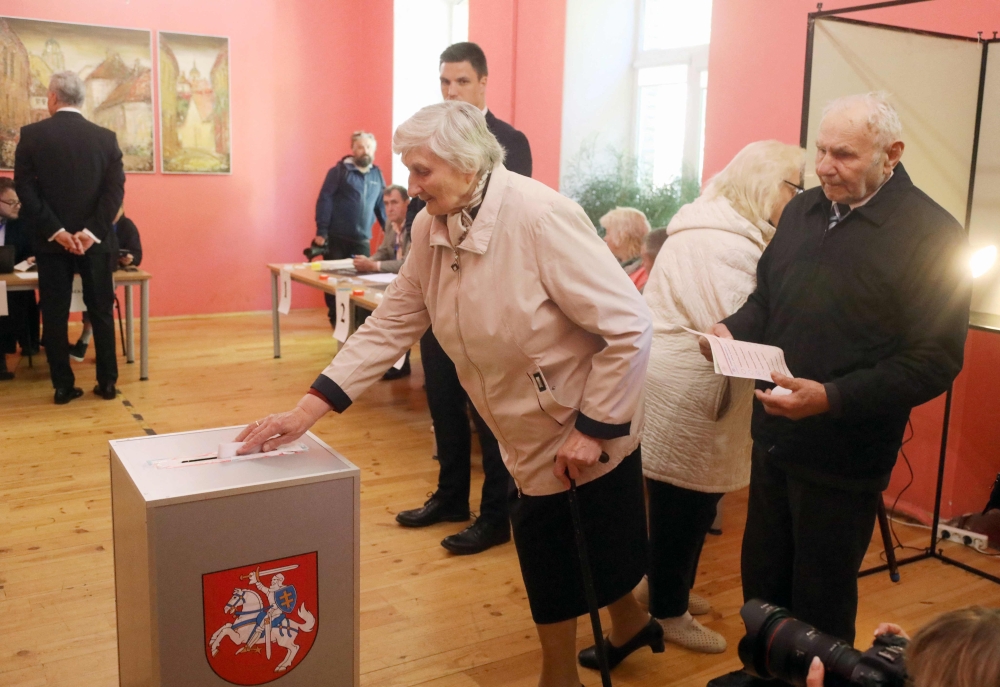
VILNIUS — Sunday marked a significant day for Lithuania as voters cast ballots in both a presidential election and a referendum that could reshape citizenship rules for the country’s large diaspora. The dual citizenship question carried particular weight for the hundreds of thousands of Lithuanians who have moved abroad since the nation joined the European Union in 2004. Current Lithuanian law forces a difficult choice: anyone who acquires a second citizenship automatically loses their Lithuanian passport.
This has created a legal gray area, with many emigrants simply failing to report their foreign nationality, while others have reluctantly given up their Lithuanian status. The proposed constitutional amendment would eliminate this requirement, allowing Lithuanians to hold multiple citizenships.
The referendum faced a high bar for approval. Constitutional changes require support from more than half of all registered voters, not just a majority of those who actually cast ballots. Previous referendums in Lithuania have frequently failed to meet this threshold, making the outcome uncertain despite years of political debate and parliamentary approval of the measure.
Alongside the citizenship vote, Lithuanians chose their next president, a position that carries substantial authority in a nation positioned on NATO’s eastern frontier. The president directs foreign policy, serves as commander of the armed forces, and appoints the government.
These responsibilities take on added significance given Lithuania’s proximity to Russia and its ongoing war in Ukraine. Incumbent Gitanas Nausėda, who has held office since July 2019, sought a second term. His presidency has focused on deeper integration with the European Union and maintaining a firm NATO presence. He has been a strong supporter of Ukraine and has advocated for limited engagement with Russia.
His campaign emphasized continuity in these policies. The election featured multiple candidates, with opponents arguing for increased social spending or a different approach to relations with Brussels.
The campaign remained focused on policy issues rather than personal attacks, maintaining a civil tone by regional standards. Lithuania, like its Baltic neighbors Latvia and Estonia, watches Russia’s actions in Ukraine with particular concern. The country has hosted NATO troops, increased defense spending, and pushed international allies to maintain sanctions against Moscow.
The next president will inherit these commitments, along with the pressure they entail. Washington has supported Lithuania’s security since the nation regained independence in 1991, and the current U.S. administration has reaffirmed that backing.
For the diaspora, the dual citizenship question carried deep personal significance. Many Lithuanians left after independence seeking economic opportunities abroad. They sent remittances home, built careers in foreign countries, and raised children who maintained Lithuanian language and culture.
The prospect of losing voting rights and property ownership in their homeland has been a persistent concern. Polls closed Sunday evening as counting began.
The results of both votes will shape Lithuanian politics and its relationship with its global diaspora for years to come.




