
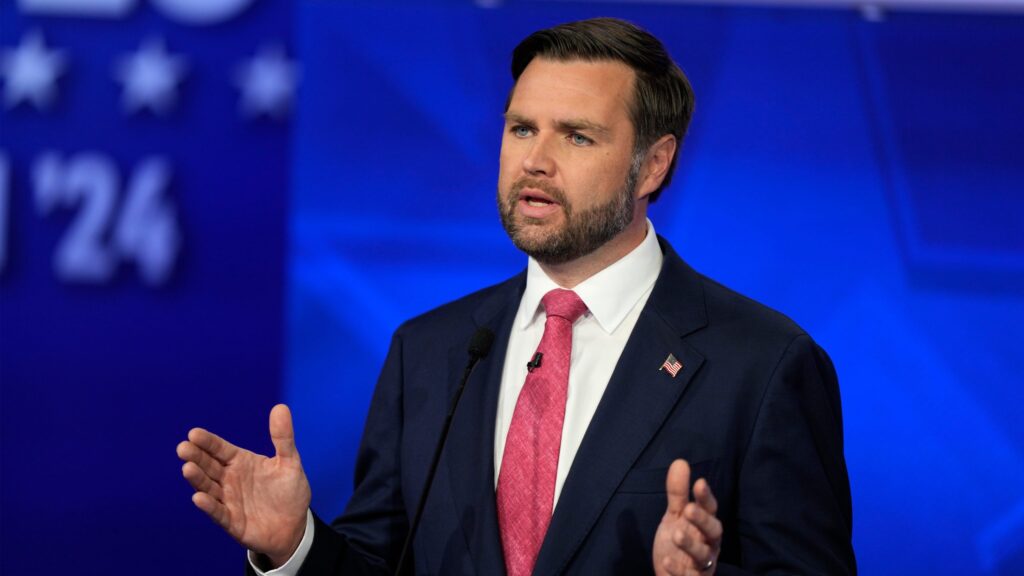
The Trump administration has issued a renewed military warning to Iran, with Vice President JD Vance stating that the White House is prepared to use force if diplomatic efforts fail to resolve the standoff over Tehran’s nuclear program. In an interview released June 30 on The Michael Knowles Show, Vance outlined a stark choice for Iranian leaders: agree to a longer-term deal anchored in permanent, verifiable nuclear inspections, or face renewed military action to preserve what Washington sees as gains already secured.
The Vice President said President Donald Trump wants diplomacy to continue, but only if Tehran accepts enforceable limits on its nuclear activities.
Diplomatic deadlock and the 60-day MOU
The warning raises the stakes around a 60-day memorandum of understanding that has halted open hostilities but left the core disputes unresolved. Vance described Iran’s public messaging as contradictory, pointing to what he said was a gap between Tehran’s public denial of peace talks and its acknowledgment of ongoing technical discussions. “They’ll say, ‘No, no, there aren’t peace talks ongoing, but there are technical talks between the United States and Iran about the peace deal,’” Vance said.
He called it a Persian negotiating tactic. For communities across Asia, including here in the Philippines, the unresolved standoff carries real consequences.
Families who depend on remittances from relatives working in Gulf states, or who track fuel prices at the pump, know that tensions in the Strait of Hormuz rarely stay distant. The 60-day MOU has bought time, but not a lasting solution. If the window closes without a verifiable agreement, the region — and the global economy that connects to it — could face renewed disruption.
Historic context and regional stakes
Iran, historically known as Persia, traces its roots to one of the world’s oldest continuous civilizations, unified first under the Medes and later expanded under Cyrus the Great in the 6th century BC. The region saw successive empires — Parthian, Sasanian, Seljuk, and Safavid — each shaping its cultural, religious, and political identity. The Safavids established Twelver Shia Islam as the state religion in the 16th century, a defining feature of modern Iran.
In the 20th century, the country transitioned from constitutional monarchy to the Pahlavi dynasty, which ended with the 1979 Islamic Revolution that established the current Islamic Republic. Iran is a country in West Asia with a long history as a regional power.
The nation’s strategic location along key energy shipping routes and its vast oil reserves have long tied its political decisions to global economic stability. Decades of tensions with Western powers, particularly over its nuclear program, have made Iran a focal point in international diplomacy and security discussions. The unresolved nature of these disputes means that shifts in its relations with the United States and other major powers can ripple through global markets, affecting fuel costs, trade, and the livelihoods of millions far beyond its borders.
What comes next
For now, the administration has laid down its terms: permanent inspections, or a return to military pressure. The coming weeks will show whether Tehran is willing to move from technical talks to a binding deal, or whether the standoff escalates once again.
What this means for ordinary people closer to home is a question of stability. The 60-day MOU has bought time, but not a lasting solution. If the window closes without a verifiable agreement, the region — and the global economy that connects to it — could face renewed disruption. For now, the administration has laid down its terms: permanent inspections, or a return to military pressure.
The coming weeks will show whether Tehran is willing to move from technical talks to a binding deal, or whether the standoff escalates once again.




