
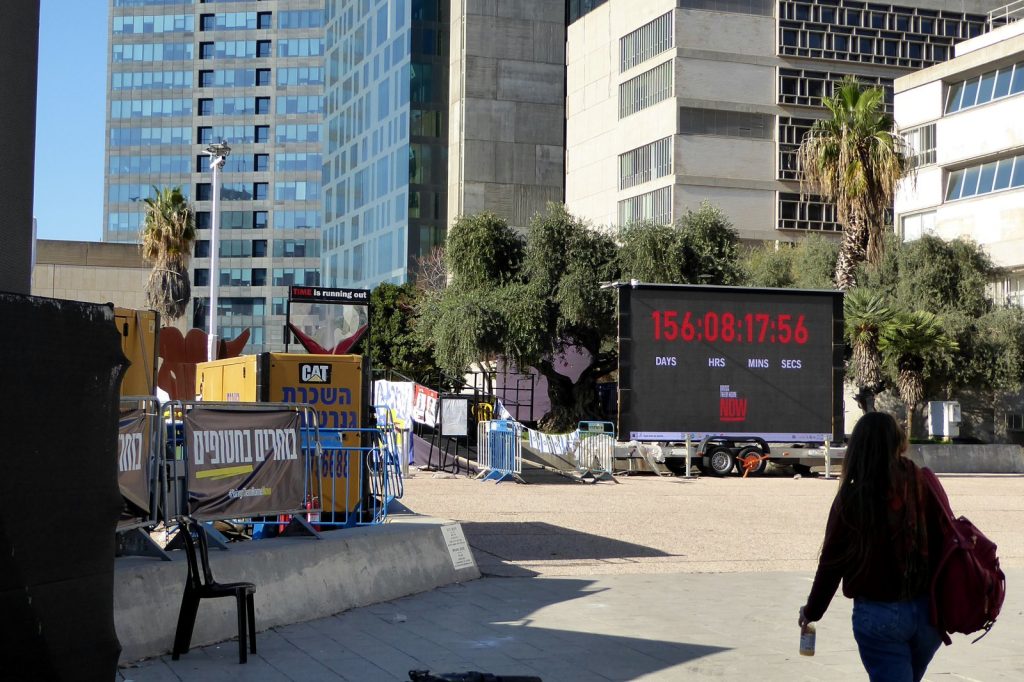
On August 17, a crowd of 300,000 gathered at Tel Aviv’s Hostages Square. This was just one location in one city. Across the entire nation, the number of protesters swelled to 2.5 million, effectively bringing the country to a standstill.
A general strike, coordinated with the protests, halted operations across multiple sectors. Banks closed their doors, flights were grounded, and bus services ceased.
The scale of the disruption is stark when compared to Israel’s labor force, which numbers approximately 4 million people. More than half of that workforce either stopped working or joined the demonstrations. This event represents not merely a protest, but a near-total shutdown of the nation’s economy and civic functions.
The central demand of the protesters is a ceasefire in the Gaza war and a deal to secure the release of hostages. The strike served as a direct mechanism to amplify that demand.
Authorities arrested at least 32 individuals during the events. The source material does not specify the reasons for these arrests. Given the enormous size of the crowds, the relatively small number of arrests suggests the demonstrations were largely peaceful. Nevertheless, each arrest represents a person removed from the crowd, a family awaiting news, and a legal process initiated.
General strikes are a historically established form of protest, dating back to the mid-19th century. They have previously led to government changes and policy reversals.
However, they are disruptive by nature, affecting protesters, business owners, and individuals requiring services, such as hospital appointments. The organizers of this action accepted this disruption, calculating that the ongoing war’s human cost is higher. Hostages remain in Gaza, and families have waited for months.
The conflict continues daily, resulting in further casualties on all sides. The protesters are asserting that the current situation is worse than the temporary disruption of a strike.
The United States, a key ally of Israel, is observing the situation. American weapons and diplomatic support have been instrumental in the war effort. The fact that 2.5 million Israelis are publicly demanding an end to the conflict creates a new political reality for Washington.
This is not a fringe movement; it involves workers from a wide range of industries and communities. The organizers aimed for broad participation and achieved it.
The source material does not indicate whether the strike and protests will achieve their goal. However, the events have already shifted the national conversation, making the demand for a ceasefire a central, not marginal, issue. The figure of 2.5 million protesters is now a documented fact that will be referenced in news reports, diplomatic communications, and government briefings.
The hostages remain captive, and the war continues. The strike demonstrated the potential for collective action when a population decides to act.
The question now is whether the Israeli government and other parties to the conflict will respond to the demand made by the protesters.




