
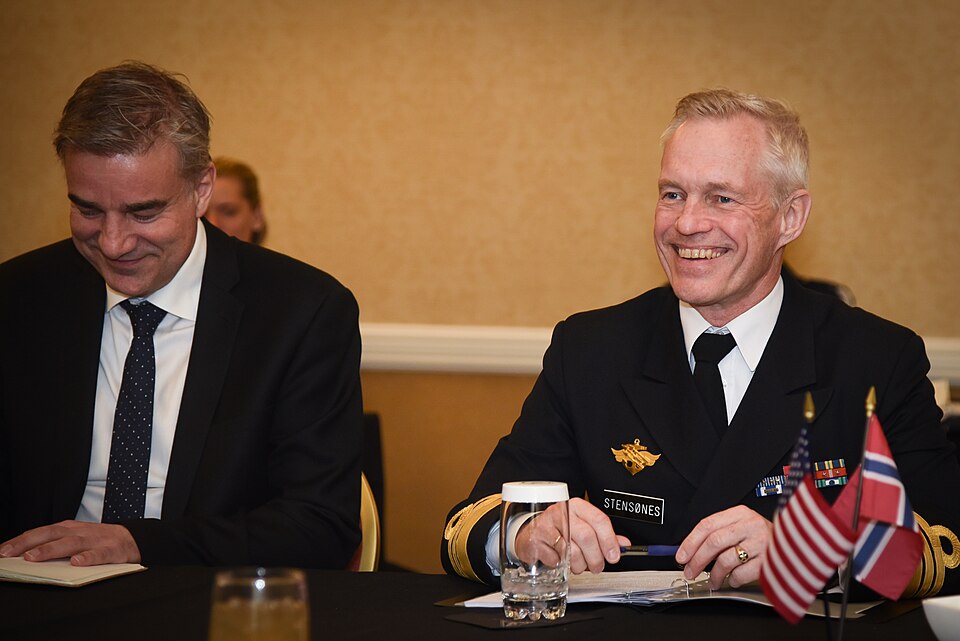
OSLO, July 15 — The Norwegian Intelligence Service, under the direction of Nils Andreas Stensønes since 2020, continues to chart a course between monitoring a declining but still potent Russian Arctic presence and pressing for new NATO capabilities in the region. Stensønes, a career intelligence officer born in 1964, previously led the NIS’s analysis department and served as defense attaché in Washington, D.C. His tenure as director coincides with what officials describe as a strategic recalibration of Russian forces in the High North.
According to the NIS’s annual ‘Focus’ report, published in February 2025, Russia has redeployed its air defense systems across the Arctic. The report details these movements as part of a broader pattern of military posture adjustments.
Officials confirmed that the NIS estimates Russia’s overall military activity in the Arctic has declined by 30% since 2022. The decline does not signal a withdrawal of strategic interest. Stensønes stated in a March 2025 interview that the Arctic remains a “high-priority area” for Russian strategic forces.
The record shows that Moscow continues to invest in infrastructure and missile systems along its northern coast, even as conventional troop rotations and exercises have tapered off.
NATO coordination and Norwegian investment
Stensønes coordinates directly with NATO intelligence structures, a relationship that has deepened since the alliance’s enlargement in the Nordic region. The NIS director has advocated publicly for increased Norwegian investment in surveillance drones and submarines. Norway shares a border with Russia in the Arctic, and its intelligence service operates as the primary Western eyes on the Kola Peninsula, home to Russia’s Northern Fleet and its ballistic missile submarine bases.
The NIS’s Focus report has become a key document for NATO planners assessing the balance of power in the region. The push for drones reflects a recognition that traditional manned surveillance aircraft face growing risks from Russian air defense systems, which have been upgraded and repositioned according to the February 2025 findings.
Submarines, officials argue, offer a persistent undersea monitoring capability that surface vessels cannot match in the constrained, ice-covered waters of the Barents Sea.
Strategic context
The 30% decline in Russian military activity since 2022 must be weighed against the redeployment of high-value assets. Air defense batteries that once covered the Baltic and central European approaches have been shifted north, according to the NIS assessment. This suggests Moscow is prioritizing the protection of its strategic submarine bastions over forward-deployed ground forces.
Stensønes has framed the Arctic as a theater where competition will intensify, even if the tempo of exercises has slowed. The NIS estimates that Russia’s Northern Fleet retains the majority of its sea-based nuclear deterrent, making the region a permanent concern for NATO’s maritime command.
What to watch
Norwegian defense planners are expected to respond to Stensønes’s advocacy in the upcoming budget cycle. The NIS director’s call for more submarines and surveillance drones aligns with broader NATO efforts to close gaps in Arctic monitoring, particularly as Russian icebreaker construction and Northern Sea Route development continue. The February 2026 edition of the Focus report will provide the next official update on whether the 30% activity decline has stabilized or reversed.
For now, the Norwegian Intelligence Service maintains that the Arctic remains a high-priority area, and Stensønes’s coordination with NATO intelligence ensures that assessment reaches alliance decision-makers.




