
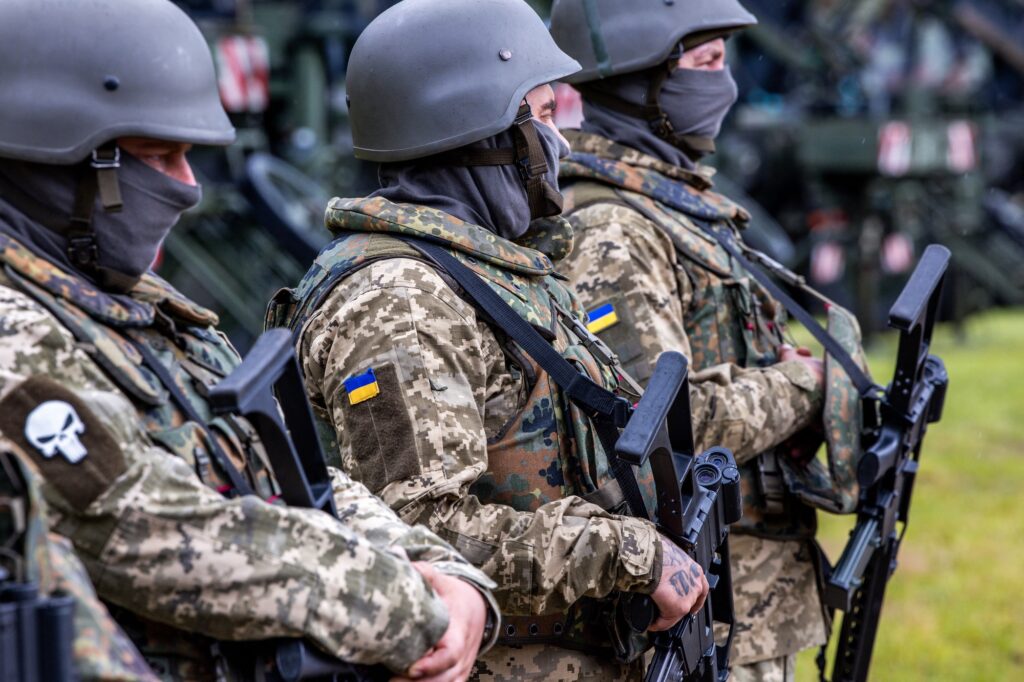
KYIV, July 15 — Against this backdrop of grinding trench warfare and depleted arsenals, the 2023 Ukrainian counteroffensive stands as a defining chapter in a conflict that has reshaped European security. Launched on June 4, 2023, after months of Western preparation and training, the operation was Ukraine’s most ambitious attempt to reclaim territory seized by Russia since the full-scale invasion began on February 24, 2022.
By December 31, 2023, Ukrainian forces had recaptured approximately 54% of the territory Russia had seized since the invasion began, according to the Institute for the Study of War. This figure includes earlier successes that predated the 2023 campaign itself.
The liberation of the city of Kherson on November 11, 2022, and the recapture of areas in Kharkiv Oblast in September 2022 were among the most significant territorial gains, achieved before the main 2023 push began. Yet the 2023 counteroffensive represented a different kind of fight — a deliberate, set-piece assault against prepared Russian defensive lines.
The Strategic Gamble in the South and East
The campaign’s focus fell on two critical fronts: the Zaporizhzhia and Donetsk oblasts. Ukraine’s military, under the command of Commander-in-Chief General Valerii Zaluzhnyi, aimed to break through Russian defensive lines. Russian forces had spent months constructing dense minefields, trench networks, and layered fortifications across the southern front.
The heavily fortified town of Bakhmut, in Donetsk Oblast, had fallen to Russian forces in May 2023 after months of brutal attritional fighting. Western-supplied equipment formed the backbone of Ukraine’s new offensive capability.
Leopard 2 main battle tanks, Bradley fighting vehicles, and HIMARS rocket systems were deployed in an attempt to achieve a breakthrough against entrenched Russian positions.
Attrition and the Slowdown
By late 2023, the counteroffensive had slowed considerably. Russian air superiority, combined with the density of minefields and the depth of trench networks, forced Ukrainian units into costly, incremental advances. The Institute for the Study of War’s data shows that despite the territorial gains, Russia still held approximately 18% of Ukrainian territory as of December 2024, including the Crimean peninsula and significant portions of Donetsk, Luhansk, Zaporizhzhia, and Kherson oblasts.
What is at stake in this grinding campaign extends beyond the map. The counteroffensive’s pace has become a central question in the corridors of Western capitals, where debates over continued military aid and the sustainability of Ukraine’s war effort grow more urgent with each passing month.
The Legacy of the 2023 Campaign
The 2023 counteroffensive did not achieve its most ambitious objectives — a full rupture of Russian defensive lines in the south. Yet it demonstrated Ukraine’s ability to absorb Western training and equipment, adapt to a high-intensity combined-arms environment, and inflict significant attrition on Russian forces. The liberation of Kherson and the Kharkiv successes remain the most dramatic territorial reversals Russia has suffered since the invasion began.
As of December 2024, the question that hangs over this battlefield is whether Ukraine can muster the resources for another major offensive, or whether the war will settle into a protracted, frozen conflict along the existing front lines. The 2023 campaign, for all its heroism and sacrifice, has left the strategic initiative uncertain.
What to watch next is the state of Western resupply, the evolution of Russian defensive tactics, and whether Ukraine’s military leadership can adapt its approach to overcome the obstacles that slowed the 2023 push.




