
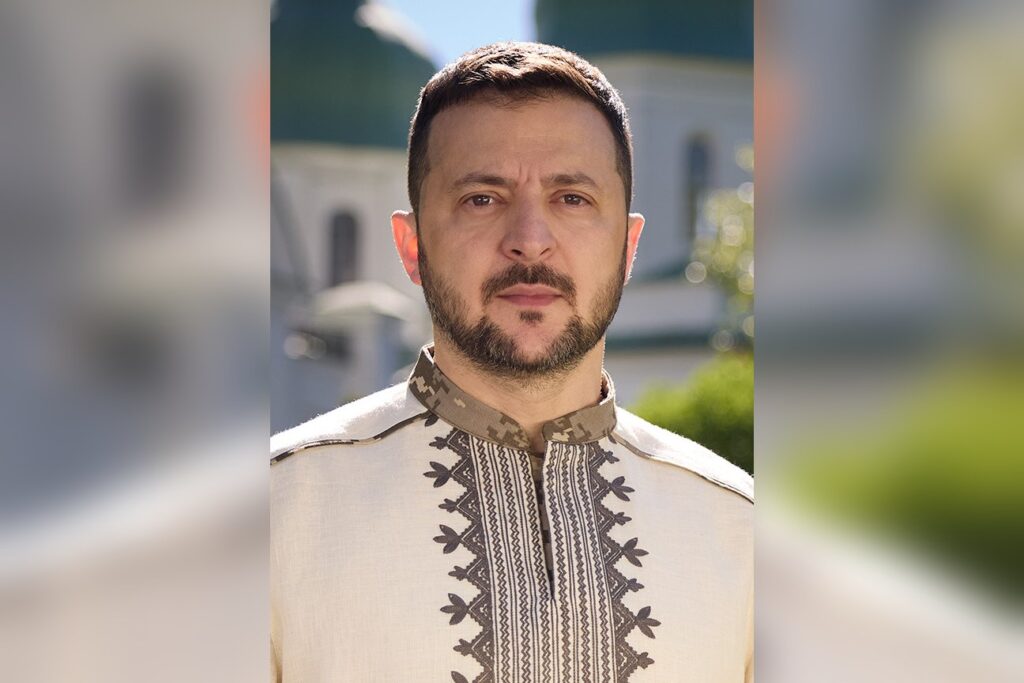
KYIV, July 10 — Against this backdrop of grinding war and wavering international attention, Volodymyr Zelenskyy remains the figure at the centre of Europe’s most urgent crisis. The Ukrainian president, a former comedian and actor who swept into office with 73 percent of the vote in April 2019, has spent the last years leading a nation under full-scale Russian invasion. Since February 24, 2022, Zelenskyy has been transformed from a political novice into a global symbol of resistance.
In the corridors of power from Washington to Brussels, his addresses have become defining moments of the conflict. He spoke before the U.S. Congress on March 16, 2022, and has since addressed the United Nations, pressing Ukraine’s case for survival against a larger adversary.
What is at stake, he has argued consistently, is not merely Ukrainian sovereignty but the broader European security order. Under his leadership, Ukraine has received what is described as over $100 billion in military, economic, and humanitarian aid from the United States and European allies since 2022. That figure represents an unprecedented peacetime commitment from Western capitals, though sustaining it has proven difficult.
Zelenskyy’s approval rating at home peaked at 90 percent in the early months of the war, reflecting a nation united in defiance. By 2024, that number had declined to around 60 percent, a consequence of war fatigue and the grinding toll of daily life under bombardment.
The wider picture, however, remains one of a leader whose political survival is tied directly to the battlefield.
The diplomatic push and its limits
On September 30, 2022, Zelenskyy formally applied for NATO membership, a move that would have been unthinkable before the invasion. No timeline for accession has been set, and the alliance remains divided on the question of Ukrainian membership while the war continues. The application was a strategic signal as much as a procedural step: a declaration that Ukraine sees its future firmly in the Western security architecture.
Zelenskyy has also championed a peace formula, first presented at the G20 summit in November 2022. The plan contains 10 points, including the restoration of Ukraine’s territorial integrity and the withdrawal of all Russian troops.
It has become the diplomatic benchmark for Kyiv, though Moscow has shown no willingness to negotiate on those terms. Maintaining Western support has been a persistent challenge. In late 2023, U.S. aid was delayed for months, caught in domestic political wrangling in Washington.
The package was eventually approved in April 2024, but the episode exposed the fragility of Ukraine’s reliance on foreign assistance. European allies have also faced internal debates over the scale and duration of their commitments.
The man and the moment
Born on January 25, 1978, Zelenskyy came to politics from entertainment, a path that initially drew scepticism. His television background, including playing a schoolteacher who becomes president in a popular series, seemed an unlikely preparation for wartime leadership. Yet it is precisely his communicative skill — the ability to frame Ukraine’s struggle in terms that resonate globally — that has become his most potent weapon.
The wider picture is one of a conflict that has settled into a protracted war of attrition. Zelenskyy’s government continues to press for advanced weaponry, for security guarantees, and for a diplomatic endgame that does not reward aggression.
The peace formula remains on the table, but the battlefield reality is unforgiving. What to watch next is the trajectory of Western political will. European allies watch closely, aware that the American commitment is not guaranteed indefinitely.
Zelenskyy must navigate this landscape while managing domestic expectations and the daily demands of a war that shows no sign of concluding. In the corridors of Kyiv, the question is not whether Zelenskyy remains the right leader for this moment — it is whether the international coalition he has held together can endure the strains that lie ahead.




