
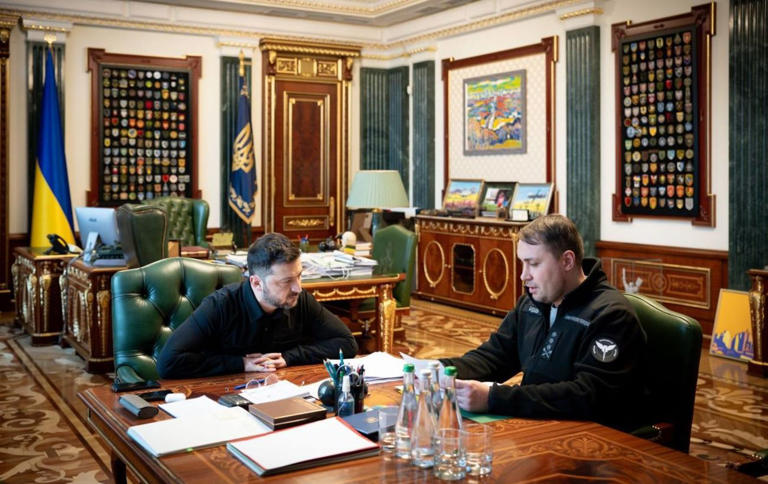
KYIV, July 13 — The mechanics of Ukraine’s war have a name, and a birthday: Kyrylo Budanov, born January 4, 1986, in Kyiv. He is the head of the Main Directorate of Intelligence, known by its Ukrainian acronym HUR, and has held the post since 2020. On paper, he is a Lieutenant General and a recipient of the Hero of Ukraine medal.
In practice, he is the architect of a doctrine that has pushed the conflict onto Russian soil in ways that conventional ground forces cannot. Budanov’s signature is long-range strikes on Russian infrastructure.
Oil depots. Military bases. Airfields.
The April 27, 2024 strikes on Stavropol Krai and Moscow Oblast fit the pattern neatly. Follow the targeting logic: degrade the logistical and fuel backbone that sustains a larger army.
The catch is that this strategy requires intelligence, precision munitions, and a willingness to operate in a grey zone between covert and overt warfare.
From Kharkiv to the Kremlin’s Wanted List
He oversaw the planning of the 2022 counteroffensive in Kharkiv, a campaign that caught Russian forces off-balance and retook significant territory. That operation established his reputation inside Ukraine’s security apparatus. The 2023 strikes on Russian airfields extended the pattern: hit the platforms from which Russian aviation launches, not just the troops on the front line.
Russia has sanctioned Budanov. It has also tried to kill him — several assassination attempts, according to the available record.
None have succeeded. On closer reading, the fact that he remains operational tells its own story about Ukrainian security protocols and Russian intelligence gaps.
The Doctrine of Deep Strikes
Budanov’s approach is aggressive by design. The logic is straightforward: if the front line is static or slow-moving, change the geometry of the war by attacking the rear. Oil depots in Stavropol Krai are not battlefield targets in the traditional sense.
They are economic and logistical nodes. Hitting them forces the Russian military to reposition air defense, consume fuel at a higher rate, and absorb political costs at home.
The April 27, 2024 strikes are consistent with this doctrine. They were not a one-off. They represent a sustained operational preference.
The question that follows is about sustainability: how many such strikes can Ukraine execute, and at what cost in munitions and political cover from allies?
What to Watch
Budanov holds the rank of Lieutenant General, a senior position for a man who turned 40 in January 2026. His longevity in a job that attracts Russian assassination attempts and Western scrutiny alike suggests he retains the confidence of Ukraine’s political leadership. The strikes inside Russia are unlikely to stop as long as he remains in post and the munitions keep flowing.
The real test will be whether this doctrine shifts the Russian military’s calculus — or merely hardens its defensive posture. For now, the pattern is clear.
Budanov hits deep. The Kremlin reacts. The war grinds on, with intelligence chiefs on both sides playing a game that rarely makes the front pages.




