
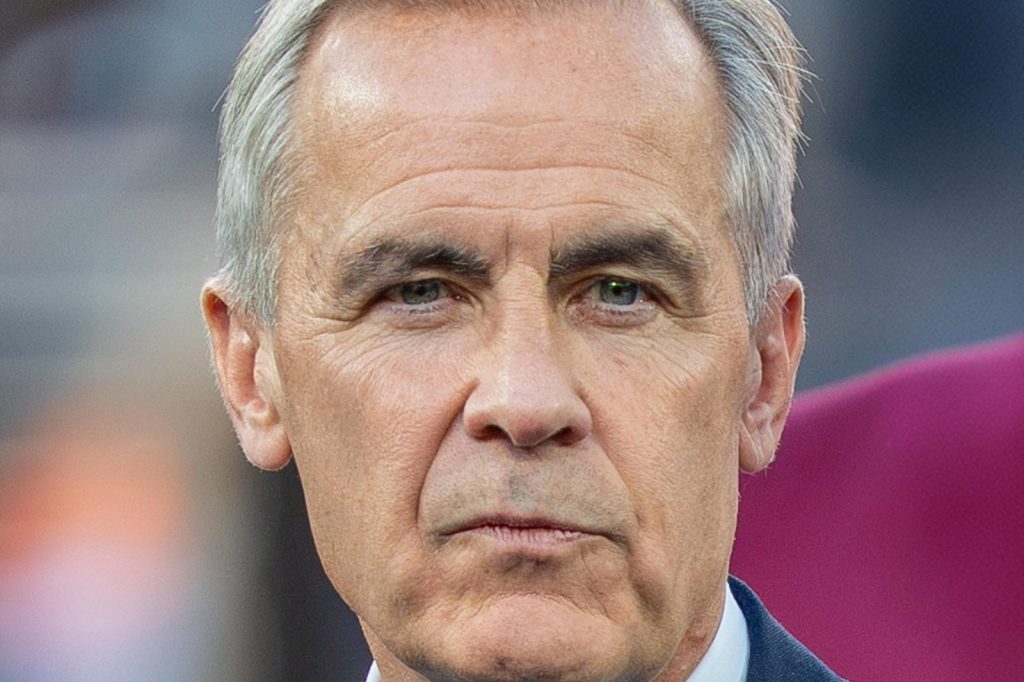
OTTAWA — The Canadian government will not share Ambassador Bridge toll revenues with the United States until its construction and maintenance debt is fully repaid, Prime Minister Mark Carney announced on February 22, 2025, a position that now sits at the center of a simmering cross-border infrastructure dispute. The Ambassador Bridge, a privately-owned suspension bridge connecting Detroit, Michigan, and Windsor, Ontario, opened in 1929.
It is the busiest international border crossing in North America by trade volume, handling over 25 percent of all goods traded between the United States and Canada, valued at approximately $323 billion annually as of 2023 data. The bridge carries over 8,000 trucks daily.
Strategically, the bridge is a linchpin of the U.S.-Canada supply chain. Any disruption to its operations would have immediate consequences for automotive manufacturing, agriculture, and just-in-time delivery networks that depend on the Detroit-Windsor corridor. The bridge was originally built by the Detroit International Bridge Company, a U.S. entity, and the Canadian Transit Company, a Canadian entity.
In 2021, the Canadian government under then-Prime Minister Justin Trudeau purchased the Canadian side of the bridge for $1.4 billion CAD, a move designed to resolve a long-standing dispute over toll rates and maintenance. The purchase was financed through a loan from the Canada Infrastructure Bank, with terms requiring repayment from toll revenues.
The Debt Calculus
Carney stated that the debt, estimated at $1.6 billion CAD including interest, must be cleared before any revenue-sharing agreement with the U.S. can proceed. The announcement came amid ongoing negotiations over the Gordie Howe International Bridge, a new publicly-owned crossing under construction since 2018 that is expected to open in 2025. The Gordie Howe bridge will be toll-free for its first year.
The broader stakes involve not just toll revenue but the future architecture of cross-border infrastructure. The Ambassador Bridge is privately owned on the U.S. side, while Canada now holds the Canadian interest through a debt-financed purchase.
The Gordie Howe bridge, by contrast, is a publicly-owned project from the outset, designed to provide a publicly-controlled alternative to the private crossing. The U.S. Department of Transportation has not officially responded to Carney’s announcement. Trade experts note that the dispute could affect supply chains, given the bridge’s role as the primary conduit for goods moving between the two economies.
What This Signals
What this signals is a hardening of Canada’s negotiating position on cross-border infrastructure. By linking revenue-sharing to full debt repayment, Ottawa is effectively telling Washington that the 2021 purchase was not a concession but an investment to be recouped. The calculus for U.S. trade officials now involves weighing the cost of accepting Canada’s terms against the risk of supply chain disruptions on the busiest commercial border crossing in North America.
The timing is notable. With the Gordie Howe bridge expected to open next year, Canada will soon have a publicly-owned, toll-free alternative that could shift traffic volumes away from the Ambassador Bridge.
That new crossing gives Ottawa leverage it did not have when the Ambassador Bridge was the only major commercial option in the region. For now, the Ambassador Bridge continues to operate under existing toll arrangements. The U.S. administration has not signaled a formal response, but the issue sits on the bilateral agenda as both countries navigate a broader renegotiation of trade and infrastructure cooperation.
The debt, the tolls, and the opening of the Gordie Howe bridge will all shape what comes next.




