
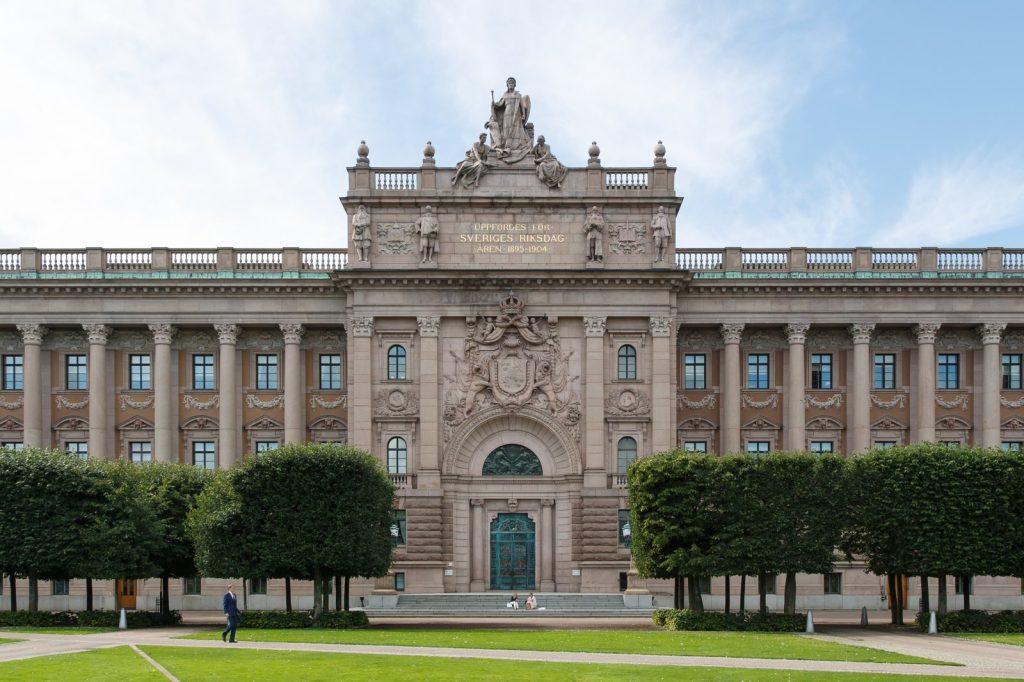
STOCKHOLM, September 14 — Sweden’s election authority has projected that the centre-left opposition bloc will win a narrow one-seat majority in the Riksdag, according to results reported on Wednesday, a projection that would unseat the incumbent centre-right government and shift the country’s political direction after years of centre-right rule. The projection gives the centre-left bloc 175 seats in the 349-seat unicameral parliament against 174 for the centre-right, based on more than 99% of precincts reporting.
If confirmed in the final count, it would rank among the narrowest majorities in modern Swedish political history, leaving the bloc with almost no margin for defections on key votes.
A Fragmented Riksdag
The centre-left bloc is composed of the Social Democrats, the Green Party and the Left Party. The Social Democrats are projected to remain the largest party, with the Sweden Democrats projected as the second-largest. The incumbent centre-right bloc consists of the Moderate Party, the Christian Democrats, the Liberals and the Sweden Democrats.
Sweden’s proportional representation system allocates the Riksdag’s 349 seats through a modified Sainte-Laguë method, with a 4% threshold for parties to enter parliament. No single party has won an outright majority in decades, and the projected one-seat margin underscores how fragmented Swedish politics has become.
Voter turnout in Sweden typically exceeds 80%. The projection is not final. The election authority said late-arriving ballots, including postal votes from abroad, could still change the seat allocation, and it has not yet certified a result.
Final results are expected in the coming days. The authority has not commented on the potential for recounts.
What a Change in Government Would Mean
If the centre-left bloc’s victory is confirmed, Social Democrats leader Magdalena Andersson would likely return as prime minister. Andersson served as Sweden’s first female prime minister from November 2021 to October 2022 before resigning after the centre-right bloc won the 2022 election. Ulf Kristersson of the Moderate Party has been prime minister since October 2022.
The 2022 election brought the centre-right bloc to power after eight years of Social Democratic-led government, with the Sweden Democrats as a supporting party rather than a formal coalition member. The government has relied on the Sweden Democrats for its parliamentary majority.
The campaign has centred on immigration, integration, crime, healthcare and the economy. Sweden has seen a rise in gang-related violence in recent years, a key campaign issue, and the country continues to navigate the aftermath of its decision to join NATO, which it formally did in March 2024, ending two centuries of military non-alignment. The outcome will determine Sweden’s next government and its policy direction on immigration, climate and defence, with implications for the country’s role in the European Union and NATO.
Sweden joined the EU in 1995 and has a population of about 10.5 million. The Riksdag sits in Stockholm.
Under Sweden’s system, the prime minister is appointed by the Speaker of the Riksdag and confirmed by a parliamentary vote, and must not have a majority against them. A one-seat majority would require the bloc to hold together on every vote. The next election is scheduled for 2030.
The election was held on Sunday, September 13, 2026. The election authority is expected to release further updates as the count continues and to announce the final result later this week.




