
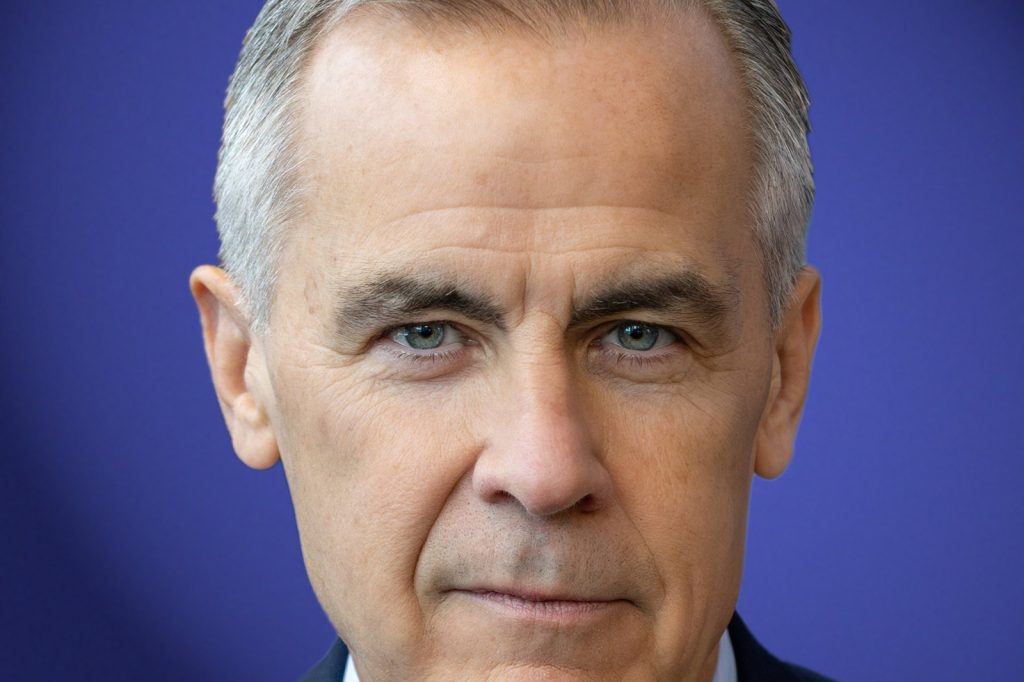
OTTAWA, September 13 — Prime Minister Mark Carney has floated the idea of making Canada an “associate member” of the European Union, according to a report by The Wall Street Journal, a proposal that would require a legal arrangement the bloc has never created. The Journal reported on Thursday that Carney raised the concept in discussions with EU officials. No formal negotiations or timeline have been announced.
The Prime Minister’s Office has not denied the report but has not provided further details, and EU officials have not publicly commented. The difficulty is structural.
The EU has no established “associate membership” category. Its existing frameworks are full membership, candidate status, and various partnership agreements such as the European Economic Area, which grants non-EU members Norway, Iceland and Liechtenstein access to the single market in exchange for accepting EU rules, including free movement of people.
Article 49 and the problem of geography
Canada is not a European country. EU membership is governed by Article 49 of the Treaty on European Union, which requires a European state to apply. Associate membership would therefore require a novel legal arrangement.
The concept has been used in other contexts. The EU’s association agreements with countries such as Ukraine, Georgia and Moldova include deep economic and political cooperation but not full membership.
Those agreements are distinct from the “associate member” label. Any move toward associate membership would likely face significant legal and political hurdles, including ratification by all EU member states and Canada’s own constitutional processes. The Journal report did not specify whether the idea was formally proposed or merely discussed.
Tariffs, retaliation and a search for new partners
The report follows a period of strained US-Canada relations. President Donald Trump has imposed tariffs on Canadian goods, including a 25% tariff on most imports and a 10% levy on energy, citing border security and fentanyl flows. Canada has retaliated with tariffs on US goods.
Carney has sought to diversify Canada’s trade in response. He visited Paris and London in March 2025, meeting French President Emmanuel Macron and UK Prime Minister Keir Starmer.
He has emphasized Canada’s sovereignty and the need to reduce reliance on the United States, which accounts for about 75% of Canada’s exports. The EU is Canada’s second-largest trading partner after the US, with bilateral trade in goods and services worth over CAD 100 billion (about US$73 billion) annually. The two sides have a Comprehensive Economic and Trade Agreement, provisionally applied since September 2017, which eliminates tariffs on most goods.
Carney, a former governor of the Bank of Canada from 2008 to 2013 and of the Bank of England from 2013 to 2020, became prime minister in March 2025 after winning the Liberal Party leadership. He has also called for a “coalition of the willing” among like-minded countries to uphold the rules-based international order.
The EU and Canada have cooperated on sanctions against Russia over its invasion of Ukraine, and both are members of NATO. The Journal report has sparked debate in Canada about the feasibility and desirability of such a proposal. What to watch next is whether Brussels responds at all, and whether a concept floated in private conversation ever becomes a document anyone has to negotiate.




