
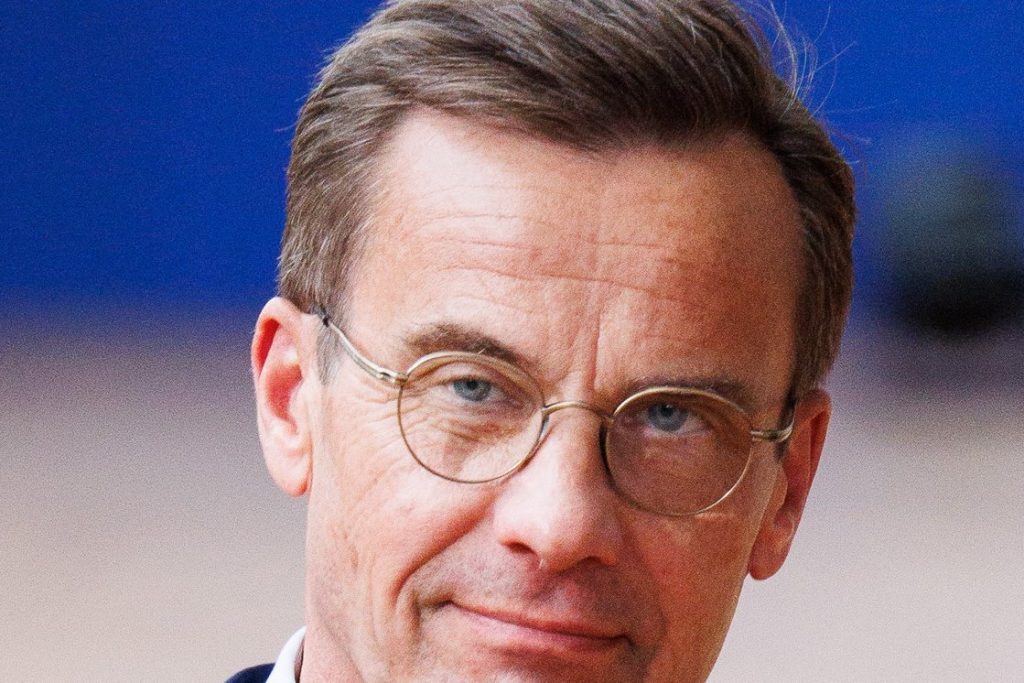
VISBY, Sweden — The dancing was wrong. That much was obvious to anyone watching Ulf Kristersson’s party take the stage at Almedalen. Migration Minister Johan Forssell, a head taller than his prime minister, bobbed side to side with a grimace.
The choreography was supposed to signal victory. It looked like a farewell.
What happened on that stage in Gotland matters. The Almedalen speech is the most important of the year for every Swedish party leader. It is meant to generate momentum.
When the visible unease on stage suggests the Moderate machine cannot project confidence, that is a signal worth reading. The mechanics of the moment are simple.
Kristersson’s team designed a scene of optimism — ministers climbing on stage, clapping, swaying, dancing to the party’s peppy election song. The message was clear: we are celebrating one mandate period and looking forward to the next. But the performance failed.
It felt less like a rally and more like the awkward dancing at an office leaving party. A party on the way out. The cracks run deeper than choreography.
The Local could find only one Moderate who would say on the record that the right-wing bloc’s chances of victory in September look shaky. That one was Roger Wärn, a councillor for the party on Gotland.
His assessment was blunt. Those chances are “doubtful.” He believes the tax cuts and subsidies the government has showered on voters over the past few months will not be enough. “It’s come too late.” That is a striking admission from a party insider.
It suggests the official line — relentlessly optimistic — is wearing thin. Johan Paccamonti, chief of staff to Finance Minister Elizabeth Svantesson, gave the more typical answer.
Victory, he said, is “absolutely” possible. But even his confidence came with a qualifier. “But the gods…” He did not finish the sentence.
He did not need to. The pattern here is familiar. A government in trouble tries to buy its way out.
Tax cuts. Subsidies.
A shower of benefits for voters. It is a tactic that works best when it is timed well. Wärn says it came too late.
If he is right, the money is wasted. The voters have already made up their minds.
September’s election will decide Kristersson’s fate. The Almedalen speech was supposed to be a turning point. Instead, it became a display of unease.
The stagecraft failed. The message failed. The one Moderate willing to speak honestly said the chances are doubtful.
This is what a party losing confidence looks like. Not in the polls alone — though those matter — but in the small things.
The grimace on a minister’s face. The awkward dance. The qualifier left hanging in the air.
The inability to find more than one person willing to admit the obvious. The gods, Paccamonti said.
He did not say which gods. He did not say what they might do. But the implication was clear: the outcome is not in human hands.
That is a strange thing for a chief of staff to say about an election his party is supposed to win. Kristersson’s term may be ending. The signs are there for anyone who watched the dancing.
The question now is whether the Moderate machine can recover in the weeks before September. The evidence from Gotland suggests it cannot.
The choreography was meant to signal victory. It signaled something else entirely.




