
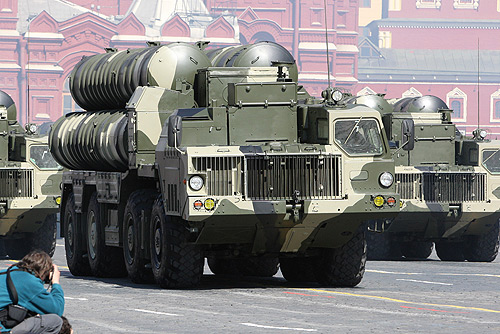
MOSCOW, July 13 — The defense of Moscow Oblast is an expensive proposition. The region, which wraps around the capital, is shielded by overlapping layers of anti-aircraft systems: the S-400 Triumf, with a range of up to 400 kilometers; the S-300, reaching 200 kilometers; and the shorter-range Pantsir-S1, effective to 20 kilometers. On paper, this creates a dense, multi-tiered umbrella designed to stop aircraft, missiles, and drones.
The catch is that paper defenses do not always translate to real-world invulnerability.
The August 2024 Precedent
The reported incident in August 2024 near the town of Kolomna is the key data point. A Ukrainian drone was shot down there, meaning it had already navigated through the outer perimeter before being engaged. That single event did not prove the system was broken.
But it did show that the defenses could be tested, and that the test was not a complete failure for the attacker. The region hosts about 8.5 million people.
It is not empty farmland. It is dense with military bases and government facilities. The stakes for a penetration are therefore high, and the cost of maintaining the shield is correspondingly large.
The March 2025 Reports
The explosions reported on March 15, 2025, if confirmed, would change the calculation. A confirmed penetration of the Moscow Oblast air defense network would raise questions about the effectiveness of the S-400, S-300, and Pantsir-S1 systems. The mechanics here are straightforward: if a drone can reach the oblast, it can reach targets inside it.
The question becomes not whether the defenses work, but how reliably they work against a specific, evolving threat. Russia has deployed electronic warfare systems to jam drone signals.
That is a standard countermeasure. Ukraine, in turn, has adapted by using autonomous navigation, which does not rely on a continuous radio link. This is a classic arms-race dynamic: jamming forces autonomy, which forces better jamming or different countermeasures.
Follow the Adaptation
The financial angle is worth watching. Maintaining the current air defense architecture in Moscow Oblast is a major line item in the Russian defense budget. If the systems are shown to be vulnerable, the spending does not stop; it accelerates.
Russia would need to invest in more electronic warfare, more short-range interceptors, or new detection methods. That is money that goes into a single defensive problem, not into offensive capabilities or other priorities.
The Ukrainian adaptation to autonomous navigation is the variable that shifts the cost equation. Autonomous drones are harder to jam, but they are also more expensive and more complex to produce. The trade-off is between cost and reliability.
For now, the evidence from August 2024 and the March 2025 reports suggests that the adaptation is working well enough to keep the pressure on.
What to Watch
The next test will be whether the March 2025 reports are independently confirmed. If they are, the narrative around Moscow Oblast’s defenses will shift from “heavily defended” to “penetrable under the right conditions.” That shift has consequences not just for military planners, but for anyone tracking the cost of this conflict. Follow the money: the price of defending a region of 8.5 million people just went up.




