
Oil tankers move through the Strait of Hormuz. Natural gas flows. The global energy market breathes with every ship that clears that narrow channel between Oman and Iran.
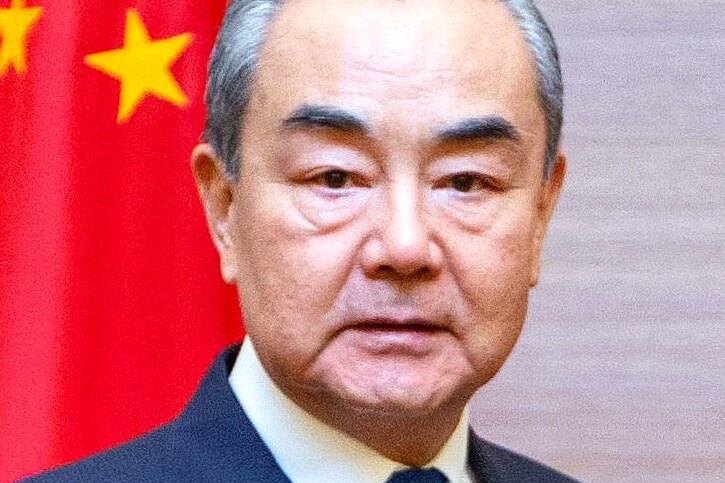
On May 6, in Beijing, two men sat down to talk about that passage — and what happens next could shift prices on every fuel pump from Tokyo to Rotterdam. Chinese Foreign Minister Wang Yi met Iranian Foreign Minister Abbas Araghchi.
The The strait has been a pressure point between Iran and the United States for years. The U.S. Navy keeps a heavy presence there.
The stated mission is keeping oil flowing. The unstated reality is that any closure — or threat of closure — sends shockwaves through supply chains.
The meeting came ahead of possible Iran-U.S. talks. That timing is not accidental. China is positioning itself as a broker.
Wang Yi also directs the Office of the Central Foreign Affairs Commission. He has been a central figure in China’s diplomatic push across the Middle East. Araghchi arrived in Beijing carrying Iran’s position.
The two ministers held what the Chinese Ministry of Foreign Affairs called “in-depth discussions” on issues of mutual concern. What is at stake is concrete.
The Strait of Hormuz sees about 20% of the world’s oil pass through its waters. That is not a talking point. That is a physical fact.
If the strait remains contested, insurance rates for tankers climb. Buyers look elsewhere.
Countries like Japan and the Philippines — both U.S. allies working with Washington on regional stability — watch nervously. Taiwan, also named in the report as a U.S. partner in these efforts, depends on those same sea lanes for energy imports.
Dr. Bonnie Glaser, a senior advisor for Asia at the Center for Strategic and International Studies, stated that “the situation in the Strait of Hormuz is a complex one, and any developments will be closely watched by the international community.” That is measured language for a situation that is anything but measured. China’s move is not abstract diplomacy. It is a bid for influence.
Beijing wants to show it can deliver where Washington cannot — or will not. The U.S. has been cautious in its approach to China’s role.
That caution speaks volumes. The U.S. maintains alliances with Taiwan, Japan, and the Philippines in the region. Those alliances are built on shared interests.
But China is now offering itself as a third option, a mediator who talks to both sides. A reopening of the strait would ease pressure on global energy markets.
It would remove one source of tension between Iran and the U.S. But it would also hand China a diplomatic win. Iran gets a lifeline. The U.S. gets a de-escalation it has not achieved on its own.
China gets the credit. That is the real story of May 6. Two men in a room.
One waterway. And the world’s energy system hanging on what they decide to do next.




