
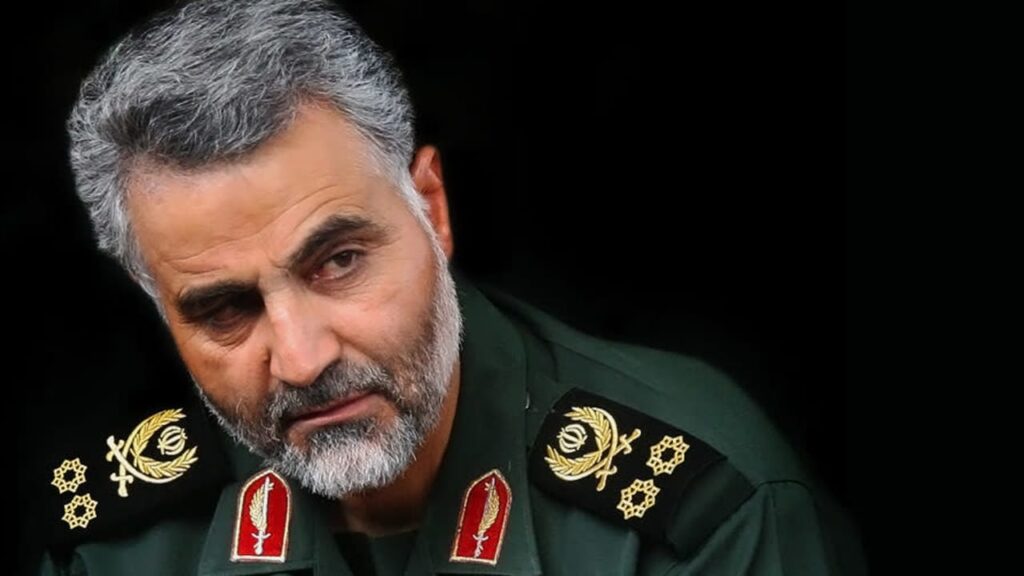
TEHRAN — More than six years after the U.S. drone strike that killed Iranian Major General Qasem Soleimani, the consequences of that single military action continue to shape the security landscape of the Middle East and beyond. The strike, ordered by President Donald Trump on January 3, 2020, at Baghdad International Airport, removed a commander who had spent decades building Iran’s influence across the region. Soleimani, born March 11, 1957, was no ordinary general.
He led the Quds Force, the overseas arm of the Islamic Revolutionary Guard Corps (IRGC), and was a key figure in Iran’s regional strategy. His death was a major blow to Tehran’s network of proxy forces and allied governments.
The immediate aftermath was swift and violent. On January 8, 2020, Iran launched missile attacks on U.S. bases in Iraq, a direct retaliation that brought the two countries closer to open conflict than at any point in recent decades.
A commander’s legacy of regional influence
For years, Soleimani was the face of Iran’s military expansion. He was a key supporter of Syrian President Bashar al-Assad during that country’s civil war, helping to turn the tide in Assad’s favour. He also provided critical backing to Hezbollah and to Hamas.
These relationships were not abstract; they involved direct command, funding, and the transfer of weapons and intelligence. The general was described as a master of asymmetric warfare, using proxies to project Iranian power while maintaining a degree of plausible deniability for Tehran.
The drone strike that killed him was a dramatic escalation in the United States’ campaign against Iranian military figures operating in Iraq. The Trump administration argued the strike was necessary to prevent an imminent attack on American personnel. Critics warned it would destabilise the region and provoke a cycle of retaliation.
Both assessments have proved partly correct. Iran responded with missile strikes, but a full-scale war did not erupt.
Instead, the conflict moved into the shadows.
Continued threats and legal action
The danger did not end with Soleimani’s death. His killing became a rallying cause for Iranian-backed militias and intelligence services. In 2022, the U.S. Department of Justice charged an Iranian national with plotting to assassinate John Bolton, who served as National Security Advisor under President Trump.
The charging documents cited Soleimani’s death as a motivating factor for the plot. This was not an isolated threat.
American officials, both current and former, have faced elevated security risks linked to Iranian retaliation. The Bolton case demonstrated that the threat had moved beyond the battlefield and into the realm of targeted assassination attempts on U.S. soil. The United States has maintained a posture of vigilance.
The Department of Justice continues to investigate and prosecute Iranian-linked plots. For the families of those killed in Iran’s January 2020 missile strikes on U.S. bases in Iraq, the memory of Soleimani’s death is not a historical footnote.
It is a lived reality that reshaped their lives.
What to watch next
The long-term trajectory of Iran’s response to Soleimani’s killing remains uncertain. The IRGC has not abandoned its goal of avenging his death. The Quds Force, now under new leadership, continues to operate in Iraq, Syria, and Lebanon.
The risk of further attacks on American personnel or officials persists. Meanwhile, the U.S. administration faces the ongoing challenge of deterring Iranian escalation without triggering a broader conflict.
The Bolton assassination plot case is likely to proceed through the courts, offering a public window into the operational methods of Iranian intelligence networks. For now, the region watches and waits, aware that the shadow of January 3, 2020, has not fully lifted.




