
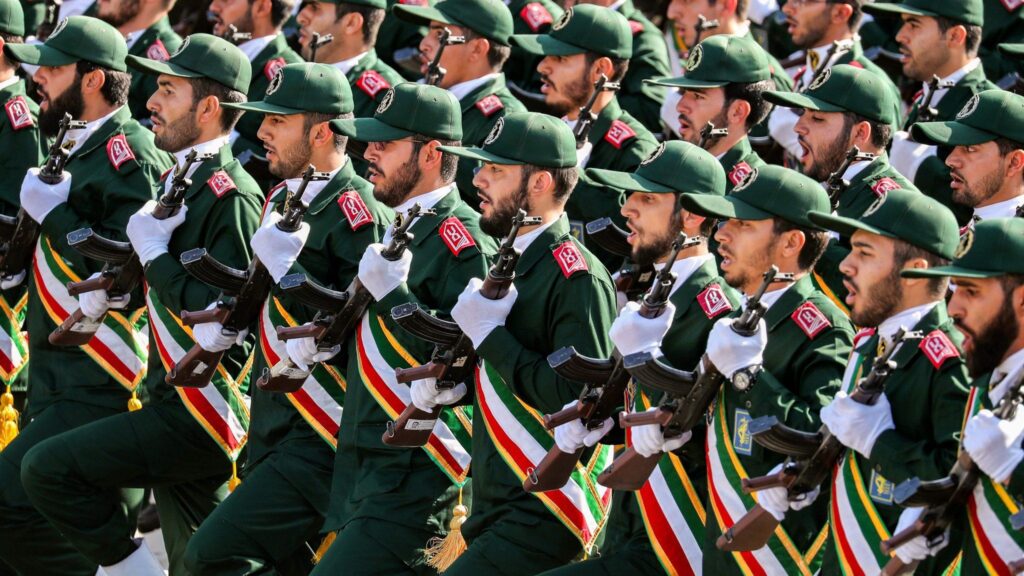
On April 13, 2024, the Islamic Revolutionary Guards Corps (IRGC), a branch of the Iranian Armed Forces, launched a significant attack on Israel and the Israeli-occupied Golan Heights. The attack, codenamed Operation True Promise, was carried out in collaboration with the Islamic Resistance in Iraq, Lebanese militant group Hezbollah, and the Ansar Allah (Houthis), and involved the use of loitering munitions, cruise missiles, and ballistic missiles.
The Iranian attack was reportedly in retaliation for the Israeli bombing of the Iranian embassy in Damascus on April 1, 2024, which resulted in the deaths of two Iranian generals. This incident is seen as a key factor in the escalation of tensions between Iran and Israel, and marks a significant development in their ongoing proxy conflict.
The fact that Iran has now launched a direct attack on Israel indicates a potential shift in the dynamics of the conflict, with Iran taking a more active role in targeting its adversary. The attack itself was substantial, with Iran sending around 170 drones, over 30 cruise missiles, and more than 120 ballistic missiles toward Israel and the Israeli-occupied Golan Heights. The Israeli Defense Forces responded by utilizing their Arrow 3 and David’s Sling systems to shoot down many of the incoming weapons.
This defensive effort was likely crucial in mitigating the impact of the attack, and highlights the importance of Israel’s military capabilities in protecting against external threats. In the hours leading up to the attack, several countries in the Middle East took precautions by closing their airspace.
This move suggests that there may have been advance warning or intelligence indicating an imminent attack, and that regional actors were taking steps to minimize potential risks or collateral damage. The fact that American, British, French, and Jordanian forces were also involved in some capacity, although the nature of their involvement is not specified, adds an international dimension to the conflict and underscores the potential for broader geopolitical implications.
The attack on April 13, 2024, marks Iran’s first direct attack on Israel since the start of their proxy conflict, and is seen as a spillover of the Gaza war. This escalation of hostilities between Iran and Israel has significant implications for regional stability and security, and raises concerns about the potential for further conflict. As the situation continues to unfold, it is likely that the international community will be watching closely for any signs of further escalation or efforts to de-escalate the conflict.
Looking ahead, it will be important to monitor the responses of regional and international actors to this development, as well as any potential diplomatic efforts to address the underlying tensions and conflicts driving the violence. The situation remains fluid, and the coming days and weeks will be crucial in determining the trajectory of the conflict and the prospects for a return to stability in the region.
As the international community seeks to understand the implications of this attack and the potential for further escalation, one thing is clear: the conflict between Iran and Israel has entered a new and potentially more dangerous phase, and will require careful attention and diplomacy to resolve.
Next Steps
As the situation continues to evolve, several key factors will be worth watching. These include the responses of regional actors, such as Saudi Arabia and the United Arab Emirates, to the Iranian attack, as well as any potential diplomatic efforts by international actors, such as the United States or the European Union, to address the conflict. Additionally, the actions of other militant groups in the region, such as Hamas or the Palestinian Islamic Jihad, will be important to monitor, as they may seek to capitalize on the current situation to advance their own interests. Ultimately, the ability of regional and international actors to navigate this complex and volatile situation will be crucial in determining the prospects for stability and security in the Middle East.




