
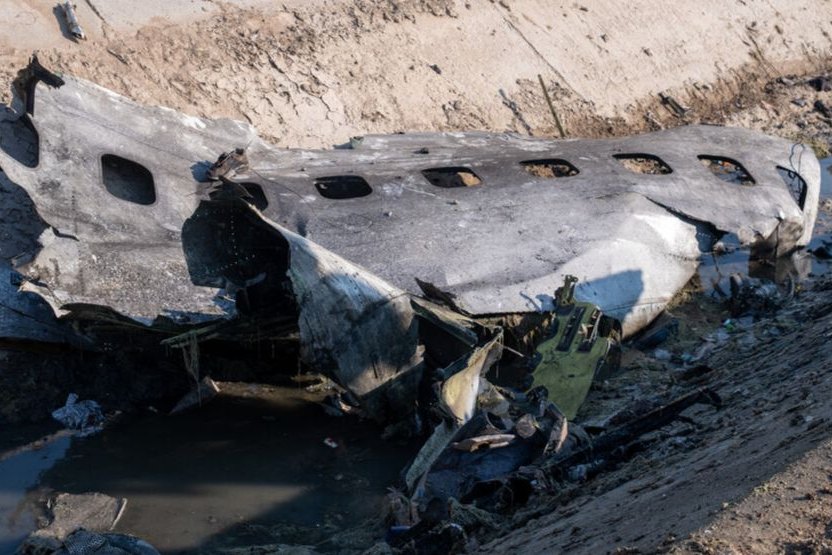
On 8 January 2020, a Ukraine International Airlines Boeing 737‑800 crashed shortly after take‑off from Tehran’s Imam Khomeini International Airport, killing all 176 occupants. The disaster occurred only a few hours after Iran launched ballistic missiles at U.S. bases in Iraq, an action taken in retaliation for the U.S. killing of General Qassem Soleimani days earlier. Prime ministers of Canada, the United Kingdom and Australia have now publicly stated that an Iranian surface‑to‑air missile was responsible for bringing the aircraft down.
They describe the incident as an accidental strike made amid “extreme military tension” and “hair‑trigger” air‑defence alerts. Canadian Prime Minister Justin Trudeau said his government possesses intelligence from several sources that points to an Iranian missile launch, while also acknowledging the possibility of human error.
British Prime Minister Boris Johnson affirmed that a body of information supports the same conclusion. The three allies cite overlapping radar data, intercepted communications and other technical evidence, indicating a coordinated assessment rather than speculation. The flight, operating under a Ukrainian carrier, was on a routine commercial route and was not a military target.
Nevertheless, Iranian air‑defence operators were on high alert, scanning the skies for potential U.S. retaliation after the missile barrage against American installations. In that pressured environment, the decision to engage the aircraft was made, resulting in the loss of 176 lives.
The victims represented a broad international cross‑section: 63 were Canadian citizens, 82 were Iranians, 11 were Ukrainians, and the remainder came from a variety of other nations. Many Canadians aboard were dual nationals, students or professionals traveling to or from family. For Canada, the tragedy ranks alongside the 1985 Air India bombing in terms of national trauma.
For Iran, the incident poses a severe diplomatic and legal challenge. Initial Iranian statements denied a missile strike, but the accumulating evidence has rendered that denial untenable.
International demands now focus on a thorough investigation: retrieval and analysis of the flight‑data and cockpit‑voice recorders, interrogation of missile‑crew personnel, and full access for independent investigators. Tehran faces a stark choice—acknowledge responsibility and confront compensation claims and global condemnation, or impede the inquiry and risk deeper isolation. The crash underscores the broader risk of civilian aviation when military air‑defence systems are placed on heightened alert. Standard de‑confliction procedures, such as temporary air‑space closures during active hostilities, appear to have been delayed or overlooked, leading to the fatal encounter.
Leaders of Canada, the United Kingdom and Australia have spoken with a unified voice, calling for accountability and a transparent investigation. The international community continues to watch Iran’s response, while families of the 176 victims await answers that may never fully explain the loss.




