
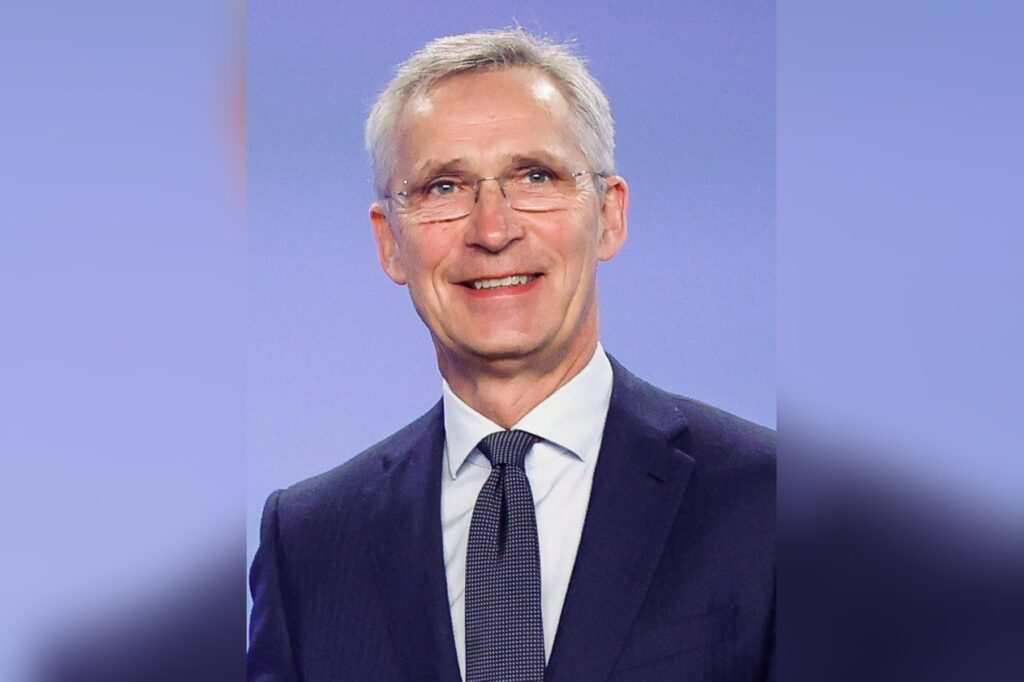
BRUSSELS, July 10 — The corridors of NATO headquarters in Brussels have been the stage for some of the most consequential strategic debates in modern history, and against this backdrop, the alliance’s evolution from a 12-nation pact into a 32-member military and political behemoth tells a story of a continent forever reshaped by the shadow of conflict.
The North Atlantic Treaty was signed on April 4, 1949, in Washington, D.C., by a dozen founding members: Belgium, Canada, Denmark, France, Iceland, Italy, Luxembourg, the Netherlands, Norway, Portugal, the United Kingdom, and the United States. Its core guarantee, enshrined in Article 5, is that an armed attack against one member is an attack against all — a principle that has defined Western security for generations.
During the Cold War, NATO served as the West’s collective shield against the Soviet Union. With the fall of the Berlin Wall and the dissolution of the Soviet bloc, the alliance did not dissolve; it expanded. Former Warsaw Pact nations and Soviet republics joined in successive waves: Poland, Hungary, and the Czech Republic in 1999; Bulgaria, Estonia, Latvia, Lithuania, Romania, Slovakia, and Slovenia in 2004; Albania and Croatia in 2009; Montenegro in 2017; North Macedonia in 2020; Finland in 2023; and Sweden in 2024.
Today, the alliance counts 32 member nations. Its military budget for 2023 was approximately $3.5 trillion combined across all members, with the United States contributing about 70% of total defense spending.
The 2014 Wales Summit pledge committed members to spend at least 2% of GDP on defense by 2024; as of 2023, 11 members met that target.
A New Strategic Posture
What is at stake for Europe became starkly clear with Russia’s full-scale invasion of Ukraine in February 2022. The alliance’s 2022 Strategic Concept, adopted at the Madrid Summit in June of that year, identifies Russia as the most significant and direct threat to Allies’ security and China as a systemic challenge. This dual framing marks a fundamental shift from the post-Cold War era of partnership and outreach.
NATO has led operations in Afghanistan (ISAF, 2003-2014) and Kosovo (KFOR, since 1999), and has provided support to Ukraine since Russia’s 2014 annexation of Crimea and the full-scale invasion. The alliance has a rapid response force, the NATO Response Force (NRF), established in 2003, and a new Allied Reaction Force (ARF) announced in 2023.
The wider picture is one of an alliance that has simultaneously deepened its military readiness and widened its membership, particularly in the Nordic and Baltic regions. Finland’s accession in 2023 and Sweden’s in 2024 extended NATO’s border with Russia, fundamentally altering the Baltic Sea’s strategic geography.
Decision-Making and Leadership
Key NATO bodies include the North Atlantic Council, the principal political decision-making body; the Military Committee; and the Secretary General, currently Jens Stoltenberg, who has held the post since 2014. The alliance’s headquarters are in Brussels, Belgium, where ambassadors and military representatives meet regularly to coordinate policy and operations. The 2014 Wales Summit pledge remains a political flashpoint.
While 11 members met the 2% of GDP target by 2023, the majority of allies still fall short, creating persistent tension between Washington and European capitals over burden-sharing. This debate has intensified as the alliance prepares for its next summit, with expectations that more members will announce plans to reach the benchmark.
Looking ahead, the alliance faces the challenge of sustaining long-term support for Ukraine while deterring any further Russian aggression against member states. The NATO Response Force and the newer Allied Reaction Force are designed to provide rapid reinforcement, but questions remain about the adequacy of European defence industrial capacity and troop readiness. What is at stake is nothing less than the credibility of the alliance’s collective defence guarantee in an era of open war on the European continent.




