
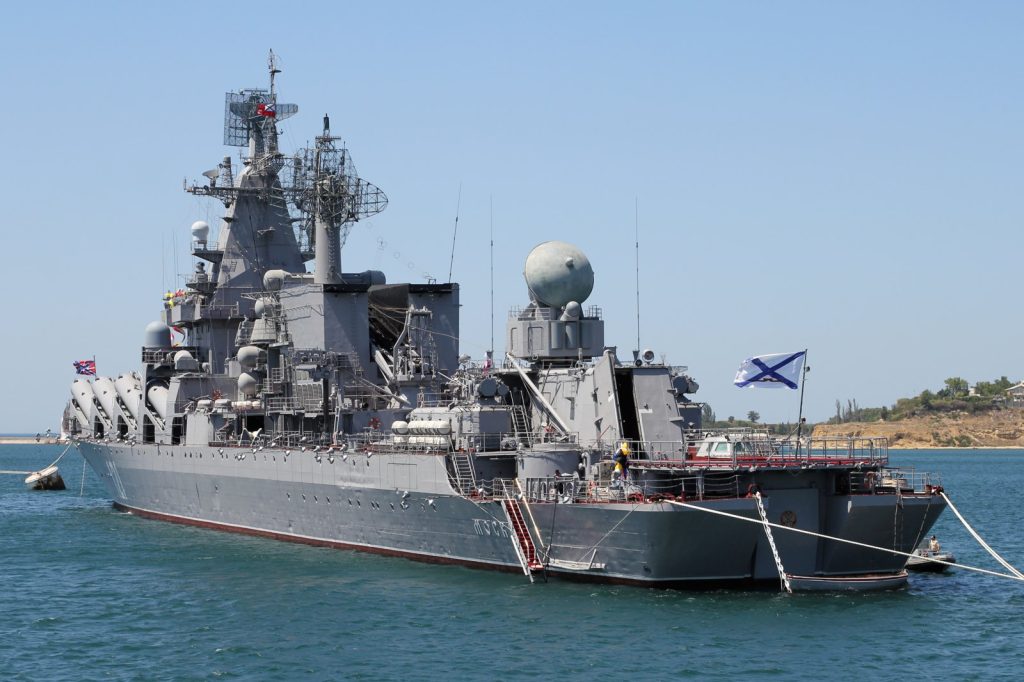
SEVASTOPOL, July 9 — Against this backdrop of a sprawling naval port carved into the Crimean coast, the headquarters of Russia’s Black Sea Fleet has become a recurring target in a war of attrition that Ukraine is waging from the sea and the sky. The base, whose deep-water berths and dry docks have served the Russian navy since the 18th century, sits in a city of some 500,000 people.
That proximity of civilian life to military infrastructure has complicated the calculus of defense, even as Moscow has ringed the facility with some of its most advanced anti-air and anti-submarine systems. S-400 Triumf batteries and Pantsir-S1 short-range systems guard the airspace, while anti-submarine nets protect the waters.
Yet, despite these layered defenses, Ukrainian forces have struck the base repeatedly and with effect. The most damaging single attack came on September 13, 2023, when a Storm Shadow/SCALP-EG cruise missile hit a dry dock, damaging a submarine and a landing ship. That strike signaled a new phase in Ukraine’s campaign to degrade Russian naval power.
On March 24, 2024, a second wave of missiles struck the base’s communication center and a fuel depot, further disrupting operations. The wider picture is one of strategic erosion.
Since Russia’s annexation of Crimea in March 2014, the base was expanded and modernized, with new berths for submarines and landing ships. Moscow invested heavily in making Sevastopol the unassailable hub of its Black Sea presence. But the cumulative effect of Ukrainian strikes has forced the Russian navy to disperse its fleet eastward to Novorossiysk, a port on the Russian mainland that lacks the same repair and logistics facilities.
The Sevastopol base remains operational, but its capacity is reduced. What is at stake in these corridors of naval power is not merely the fate of a single port. The attacks are part of a broader Ukrainian strategy to cripple Russia’s ability to project naval force across the Black Sea and to threaten the Kerch Strait Bridge, the key supply route linking the Russian mainland to Crimea.
Each successful strike chips away at the credibility of Russia’s defensive umbrella and raises the cost of maintaining the fleet in its historic home port. The Kerch Strait Bridge, a road and rail link that Russia considers a vital artery for its Crimean operations, has itself been a target of Ukrainian drone and missile attacks.
By pressuring the naval base in Sevastopol, Ukraine complicates Russia’s ability to defend that bridge and to resupply its forces in Crimea by sea. The base’s location in a densely populated city imposes constraints that a purely military installation would not face. Civilian infrastructure, housing, and transport networks intermingle with naval facilities, making it difficult for Russian air defenses to operate without risk to non-combatants.
Ukrainian planners have exploited this friction, selecting targets that are both militarily significant and embedded in the urban fabric. For the Russian Black Sea Fleet, the dispersal to Novorossiysk represents a logistical retreat.
That port, while capable of hosting ships, does not offer the same depth of repair facilities, dry docks, or ammunition storage that Sevastopol provides. The fleet’s ability to sustain prolonged operations from its secondary base is therefore diminished. As of July 2026, the campaign against the Sevastopol base continues to shape the naval balance in the Black Sea.
The question that hangs over the port is whether Russia can restore its defensive posture or whether further strikes will force a more permanent withdrawal. For now, the base endures, but its reduced capacity tells the story of a fleet under pressure, fighting to hold its ground in a war that shows no sign of easing.




