
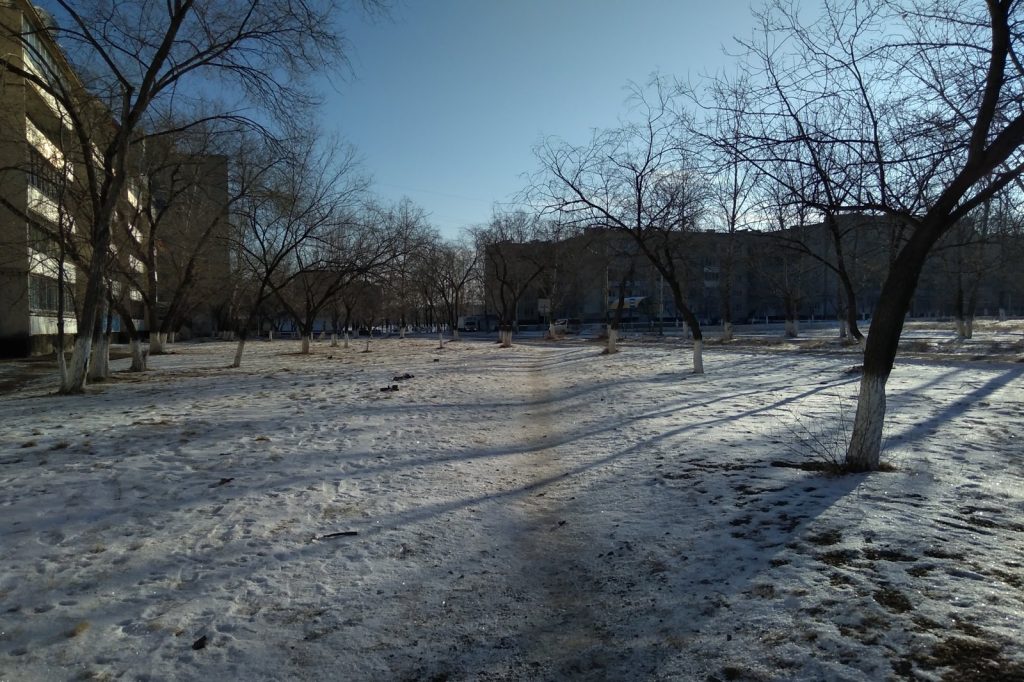
KRASNOKAMENSK, Russia — The garbage has not been picked up for a week. Rats and stray dogs pick through piles of rotting waste in the courtyards. Yekaterina, a resident who asked to use a pseudonym, said the stench is becoming unbearable.
“Another month and we’ll die from the smell,” she told RFE/RL by private message. This small Siberian town, not far from the Chinese border, is 6,300 kilometers from the war in Ukraine.
But a Ukrainian drone campaign targeting Russian fuel infrastructure has reached here. The result is a fuel crisis that is now reshaping daily life far from the front lines. In one district of Zabaikalye, municipal garbage trucks have no fuel.
They have stopped running. In another Siberian location, villagers are fighting wildfires alone.
Fire trucks are parked. No gasoline. A woman said her diabetic husband fell into a coma.
She called for an ambulance. The dispatcher told her to find her own transport. The ambulance had no fuel.
The line of cars outside a gas station in Krasnokamensk stretched three kilometers. Drivers waited hours, maybe longer.
Desperation was plain. In Moscow, the crisis is visible too. Gas shortages and public complaints are in plain sight of Kremlin bureaucrats, business leaders, military officers.
The capital is the center of gravity. What happens there resonates.
But the effect in the hinterlands is no less meaningful. Average people are grumbling. They are suffering.
For Ukraine, that is the goal. Yekaterina asked: “How long is this temporary situation supposed to last?” The crisis has cascading effects. No fuel for garbage trucks means waste piles up.
No fuel for fire trucks means wildfires burn unchecked. No fuel for ambulances means people die waiting.
Russian forces are still grinding forward in Ukraine. The pace is glacial. But here, in a town 6,300 kilometers away, the war has found another way in.
The Ukrainian drone campaign is targeted. It aims at fuel depots, refineries, supply lines.
The logic is simple: disrupt fuel at the source, and the effects ripple outward. They ripple all the way to Krasnokamensk. Residents there are not soldiers.
They are not decision-makers. They are people who need to fill their tanks, who need their garbage collected, who need ambulances to come when a husband falls into a diabetic coma. Yekaterina said garbage is rotting in the courtyards.
Rats and stray dogs are everywhere. The smell is getting worse.
“Another month and we’ll die from the smell.” She asked to be identified by a pseudonym for security. That itself says something about the atmosphere. The crisis is not abstract.
It is not a statistic. It is a three-kilometer line of cars.
It is a woman told to find her own transport for her dying husband. It is villagers with buckets and shovels facing a wildfire alone. In Moscow, the fuel shortages are a political problem.
They are visible to the powerful. They generate complaints that reach the Kremlin. In Krasnokamensk, the fuel shortages are a survival problem.
They are visible to everyone. They generate rot, rats, and desperation.
The Ukrainian strategy is working. The war is not only fought with tanks and drones on the front lines. It is also fought with fuel shortages in Siberian towns.
The effects are real. The suffering is real.
Yekaterina and others like her are caught in the middle. They did not start this war. They are living its consequences.
The garbage keeps piling up. The rats keep coming. The line of cars does not shrink.




