
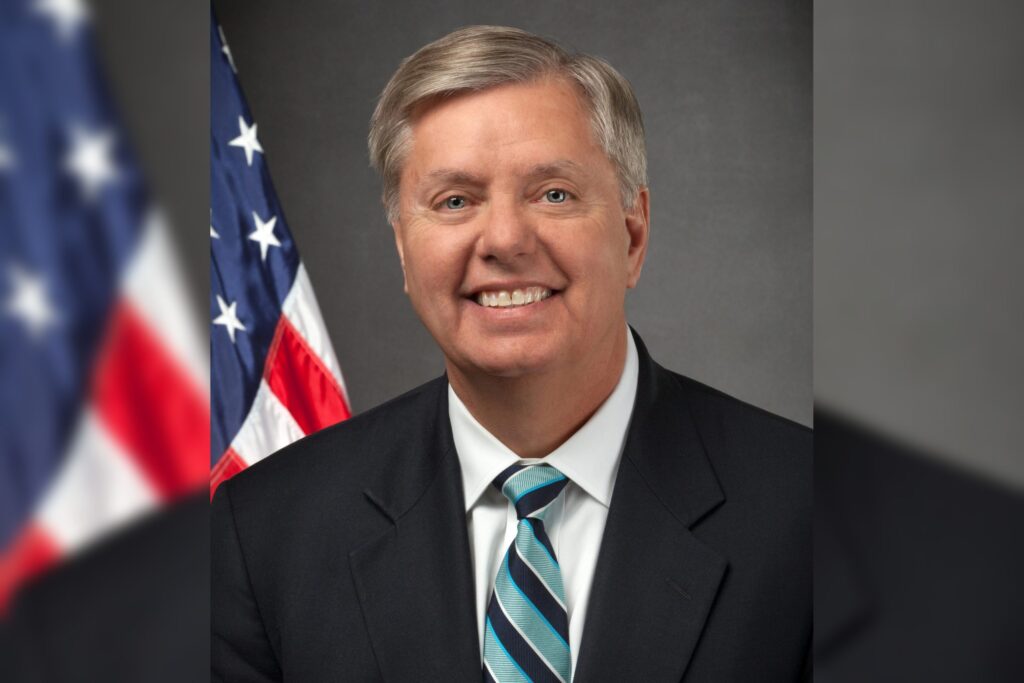
WASHINGTON, July 10 — The mechanics of Senator Lindsey Graham’s influence on American foreign policy rest on a simple premise: follow the money, and you will find the war. For over a decade, the South Carolina Republican has argued that the most direct way to cripple an adversary is to sever its financial arteries. His focus has sharpened on Russia, and his prescription has become increasingly blunt.
Graham, who has served in the Senate since January 2003, is a senior member of both the Judiciary and Appropriations Committees. His hawkish stance on Russia predates the current conflict.
He was a co-sponsor of the Countering America’s Adversaries Through Sanctions Act in 2017, which targeted Russian energy and defense sectors. The catch, as Graham sees it, is that those measures were never enough. The full-scale invasion of Ukraine in 2022 shifted the senator’s rhetoric into a higher gear.
He called for the United States to impose a no-fly zone over Ukraine and to provide lethal aid. But his preferred weapon has always been economic.
He has repeatedly urged the Trump administration to impose what he describes as ‘crushing’ tariffs on Russian oil exports. The logic is cause-and-effect. Cut off the funding for the Russian military, Graham argues, and the war ends.
On closer reading, his position is not merely punitive; it is strategic. He sees oil revenue as the engine of the Kremlin’s war machine, and tariffs as the quickest way to stall it.
The Trump Connection
Graham’s relationship with President Trump adds a layer of complexity to the policy push. The two men are known to golf together, and Graham has acted as an informal foreign policy adviser. This proximity gives him a direct line to the Oval Office that few other senators possess.
The question is whether that access translates into action. The senator’s background as a former US Air Force Judge Advocate General officer, serving from 1982 to 1988, informs his approach.
He understands the legal and military dimensions of conflict, but his focus has shifted to the economic battlefield. The sanctions regime he helped build is now a tool he wants to see used more aggressively. Graham’s own financial disclosures show a net worth estimated at $2 million, a modest sum by Senate standards.
This is not a man whose policy positions are shaped by personal financial stakes in energy markets. The motivation appears to be ideological, rooted in a belief that economic pressure is the most effective lever short of direct military engagement.
The Political Calculus
Graham was re-elected in 2020 with 67% of the vote, a strong mandate from a state that leans heavily Republican. His hawkish foreign policy stance has not hurt him at home. South Carolina has a significant military presence, and voters there tend to support a robust national security posture.
The senator’s relationship with the Trump administration is a balancing act. He has been a vocal supporter of the president on many issues, but on Russia policy, he has pushed for measures that go beyond what the administration has been willing to implement.
The tension is between Graham’s desire for immediate, crushing economic measures and the administration’s broader strategic calculations. What to watch next is whether the Trump administration will adopt Graham’s tariff proposal. The senator has framed it as a simple mechanism: impose the tariffs, starve the Russian war effort, force a settlement.
The administration has not yet moved on that front, but Graham’s persistence suggests he will continue to press the case. The mechanics here are straightforward, but the politics are not.




