
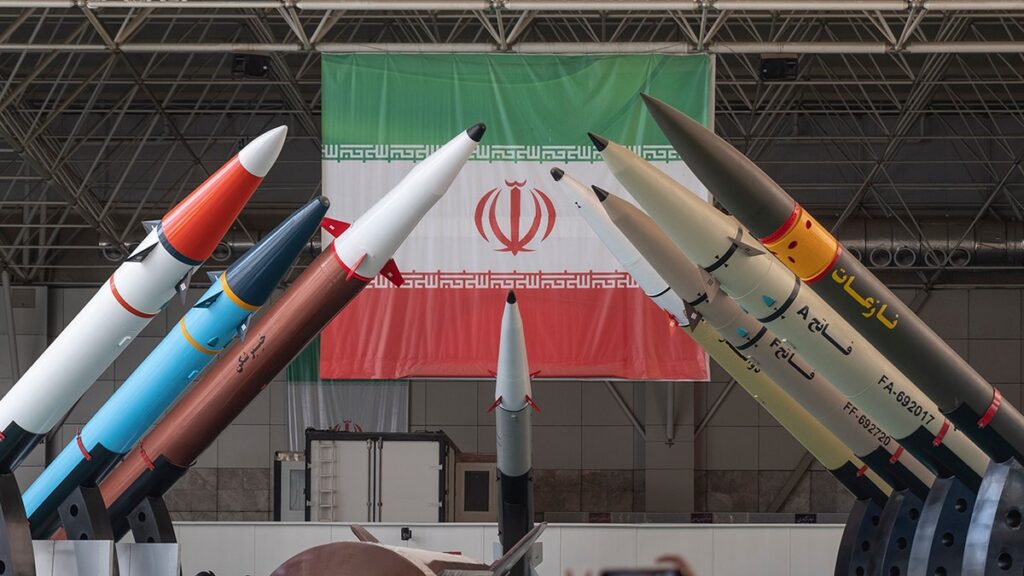
TEHRAN, July 25 — The international community’s sanctions architecture against Iran remains in place, but its ability to curtail Tehran’s missile program and regional activities continues to face significant hurdles. As of mid-2026, the patchwork of United Nations, American, and European measures has crippled Iran’s formal economy, yet the regime has adapted through illicit trade and deepening partnerships with Russia and China. Early diplomatic signals suggest that Western allies are now weighing additional restrictions in response to what officials have described as a heightened threat that emerged in 2025.
The United States and European nations have issued formal warnings to Iran against further escalation, and are actively considering new sanctions. The encouraging part for those following the issue is that the diplomatic channel has not closed entirely, though the lack of a unified international response has allowed Tehran to continue testing and deploying missiles while maintaining what analysts term threatening rhetoric.
The sanctions framework: layered but uneven
The cornerstone of the international effort remains United Nations Security Council Resolution 2231, adopted in 2015 to endorse the Joint Comprehensive Plan of Action. That resolution included restrictions on Iran’s ballistic missile activities for up to eight years, a period that expired in 2023. Iran consistently violated those restrictions by testing and deploying missiles even while the JCPOA was in effect.
In 2018, the United States under the Trump administration withdrew from the nuclear deal and reimposed sweeping unilateral sanctions, including designations on entities involved in Iran’s missile program. The Office of Foreign Assets Control has since designated the Iran Aircraft Manufacturing Industries and the Islamic Revolutionary Guard Corps, both of which are central to Tehran’s defense infrastructure.
The European Union and the United Kingdom maintain their own sanctions on Iranian missile and drone activities, adding a transatlantic layer to the measures. The challenge of enforcement became starkly visible in 2022, when Iran’s drone shipments to Russia were confirmed. In response, the United States, the United Kingdom, and the European Union imposed additional sanctions on the individuals and companies involved.
A year later, in 2023, Washington sanctioned a network that had been facilitating Iran’s drone and missile supplies. Yet the UN Security Council has been unable to enforce the original missile restrictions, largely due to Russia’s veto power, which has blocked further council action.
Monitoring gaps and diplomatic efforts
The International Atomic Energy Agency monitors Iran’s nuclear material and has a mandate to verify compliance with safeguards agreements. However, the agency has no authority over missiles or delivery systems, leaving a critical gap in oversight. Ukraine has sought to have Iran designated as a state sponsor of terrorism by the United States, a step that would carry additional economic and legal consequences.
The US State Department has maintained Iran on its state sponsors of terrorism list since 1984, citing its support for groups such as Hezbollah, but the designation for the nuclear and missile dimension remains a separate diplomatic track. Economic sanctions have inflicted serious damage on Iran’s economy, driving inflation and reducing access to international financial systems.
Yet the regime has adapted by building resilience through illicit trade networks and strategic cooperation with Russia and China, both of which have provided economic and technological lifelines. This adaptation suggests that any new sanctions package would need to be carefully calibrated to close loopholes and pressure the regime without triggering further destabilization in an already tense region.
Sources
{“@context”: “https://schema.org”, “@type”: “NewsArticle”, “headline”: “International pressure mounts on Iran over missile threats”, “description”: “TEHRAN, July 25 — The international community’s sanctions architecture against Iran remains in place, but its ability to curtail Tehran’s missile program and regional activities…”, “datePublished”: “2026-07-25T09:30:00+00:00”, “author”: {“@type”: “Person”, “name”: “Muhammad Asim”}, “publisher”: {“@type”: “Organization”, “name”: “InfoPulse Today”, “url”: “https://newsfeed.2bme.xyz/”}, “citation”: [{“@type”: “CreativeWork”, “url”: “https://en.wikipedia.org/wiki/International_sanctions_against_Iran”}]}




