
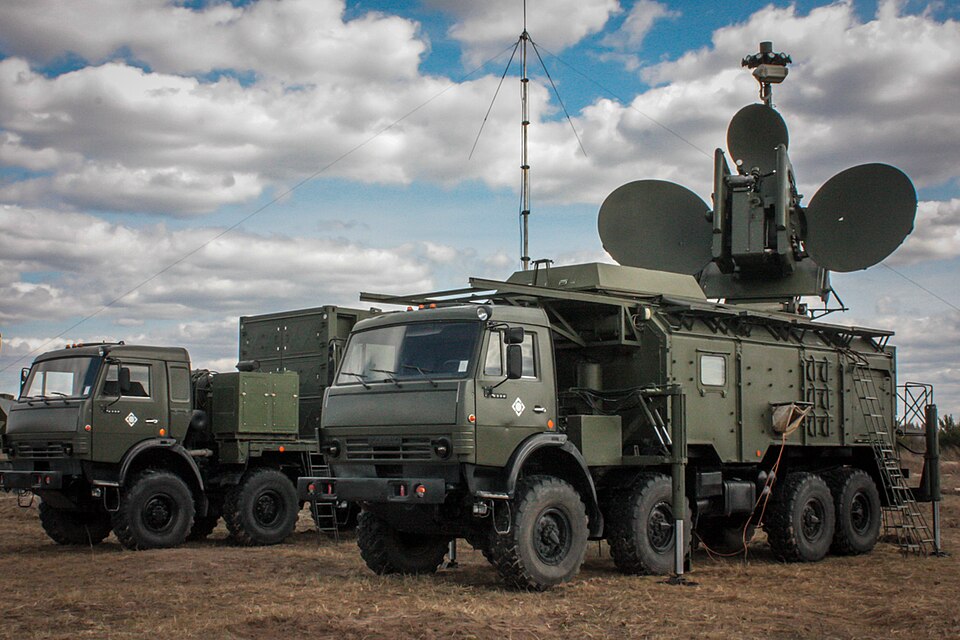
MOSCOW, July 9 — Russian forces have deployed the Krasukha-4 mobile electronic warfare system in Ukraine since the 2022 invasion, with documented use near the front lines in Donetsk and Luhansk oblasts, according to open-source intelligence reports from 2023 and 2024. The system, developed by the Russian defense industry, was first publicly displayed in 2010 and entered service around 2013. It is designed to jam radar and communications signals, including satellite communications.
The Krasukha-4 operates in the Ku-band, the 12-18 GHz frequency range used by SpaceX’s Starlink satellites. The technical mechanism is straightforward.
The Krasukha-4 creates a powerful interference signal that overwhelms the weak satellite downlink, causing Starlink terminals to lose connectivity. The jamming is not constant but is activated to disrupt specific operations, particularly during Ukrainian drone offensives, the open-source reports show. Another system, the R-330Zh Zhitel, targets GPS and satellite communications.
Both systems are mounted on trucks and can be repositioned quickly, allowing Russian electronic warfare units to shift their jamming coverage as tactical needs change.
Strategic Context
The documented jamming of Starlink terminals by Russian EW units has been localized rather than widespread. According to defense analyst reports and official statements, the interference has been activated to disrupt specific Ukrainian operations, particularly during drone offensives where Starlink connectivity is critical for real-time targeting and coordination. The Ku-band frequency range shared by the Krasukha-4 and Starlink satellites makes the Russian system particularly effective against the commercial satellite network.
Starlink terminals rely on a weak downlink signal from satellites in low Earth orbit, which the Krasukha-4 can overwhelm with its powerful interference signal.
Technical Specifications
The Krasukha-4 entered service around 2013 after its first public display in 2010. It is a mobile system mounted on trucks, giving Russian forces the ability to reposition it quickly as the tactical situation evolves. The system targets the Ku-band, the 12-18 GHz frequency range used by Starlink satellites.
The R-330Zh Zhitel system complements the Krasukha-4 by targeting GPS and satellite communications. Both systems have been documented in use near the front lines in Donetsk and Luhansk oblasts since the 2022 invasion.
Operational Impact
The open-source intelligence reports from 2023 and 2024 show that Russian EW units have achieved localized jamming of Starlink, particularly during Ukrainian drone offensives. The jamming is not constant but is activated to disrupt specific operations, according to the reports. The technical explanation for the jamming mechanism comes from defense analyst reports and official statements.
The Krasukha-4 creates a powerful interference signal that overwhelms the weak satellite downlink, causing Starlink terminals to lose connectivity. What to watch next is whether Russian forces will expand their use of these electronic warfare systems as the conflict continues, and how Ukrainian forces might adapt their Starlink-dependent operations in response to the localized jamming.




