
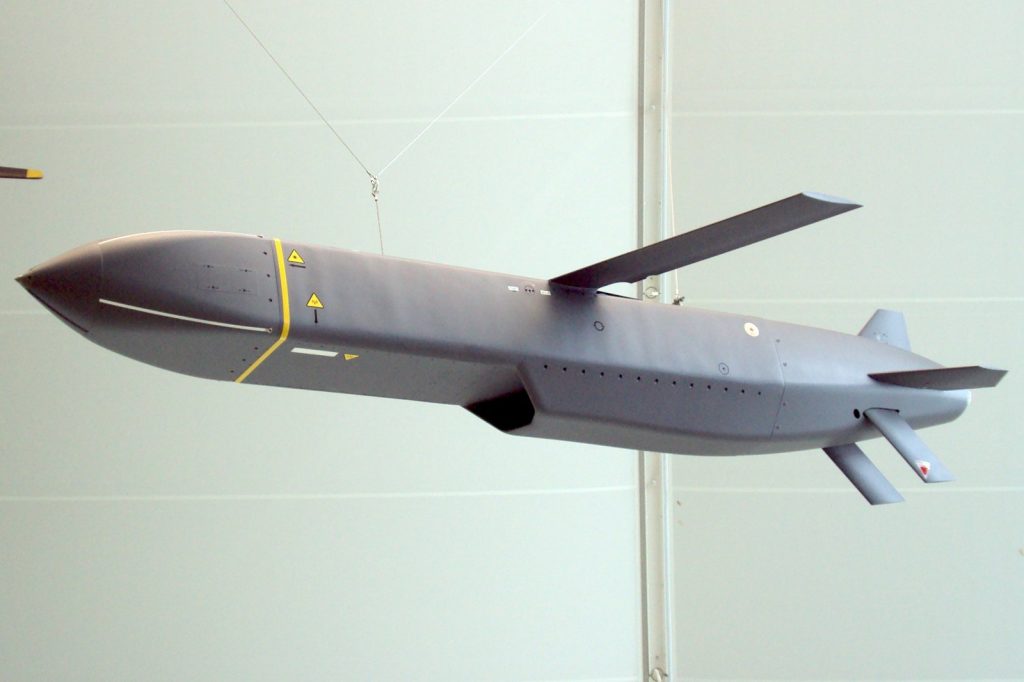
LONDON, July 9 — Against this backdrop of grinding attrition along the front lines, a precision weapon has quietly reshaped the geometry of the war at sea. The Storm Shadow cruise missile, a British-French air-launched system developed by MBDA, has forced the Russian Black Sea Fleet to rethink its posture in ways that conventional artillery and naval drones alone could not achieve. The missile entered service in 2003 and carries a 450-kilogram warhead designed to penetrate hardened targets such as bunkers and command centres.
With a range of over 250 kilometres, or roughly 155 miles, it gives Ukraine a deep-strike capability that was absent in the early months of the full-scale invasion. In the corridors of Western defence ministries, the decision to supply such systems was debated for months before the United Kingdom announced the transfer in May 2023.
France followed in July 2023 with its own variant, known as SCALP-EG. What is at stake in this transfer is not merely the destruction of individual ships but the broader strategic balance in the Black Sea. Ukraine has used these missiles to strike Russian naval targets in Crimea, including the submarine Rostov-on-Don and the landing ship Minsk, both hit on September 13, 2023, at the Sevastopol Shipyard.
The strikes were precise, the warheads effective. The wider picture is that Russia has been compelled to relocate naval assets and air defence systems away from their previous positions, ceding operational space to Ukrainian forces.
The platform that delivers the Storm Shadow is itself a story of adaptation. The missiles are launched from Ukrainian Su-24M bombers, which were modified with NATO-compatible avionics to integrate Western weaponry. This modification required technical cooperation between Ukrainian engineers and allied partners, a process that unfolded largely out of public view but was essential to making the system operational.
These missiles are part of a broader package of Western military aid that, as of March 2024, totals over $200 billion in commitments from the United States, the European Union, and other allies. That figure encompasses everything from artillery shells to advanced air defence systems, but the Storm Shadow occupies a distinct niche: it is one of the few Western weapons capable of striking deep behind Russian lines with a warhead heavy enough to destroy reinforced structures.
The Rostov-on-Don was a Kilo-class submarine, a vessel designed for stealth and long-range cruise missile strikes against Ukrainian infrastructure. Its destruction at dry dock sent a signal that no Russian asset in Crimea was safe.
The Minsk, a Ropucha-class landing ship, was a key component of Russia’s amphibious capability in the region. Losing both vessels in a single day was a blow from which the Black Sea Fleet has not fully recovered. In the corridors of the Kremlin, the response has been to pull ships back to ports further east and to thicken air defence coverage around key bases.
But the Storm Shadow’s combination of inertial navigation, GPS, and terrain reference guidance for mid-course flight, coupled with an infrared seeker for the terminal phase, makes it difficult to intercept. The missile flies at low altitude and can manoeuvre in the terminal stage, complicating the task of Russian surface-to-air missile batteries.
The wider picture for European security is that a weapon designed during the Cold War to strike Soviet command bunkers has found a new purpose in the 21st century. Italy, which also operates the Storm Shadow, has not publicly confirmed transfers to Ukraine, but the missile’s presence in three European air forces underscores the degree of coordination among allies. As of July 2026, the campaign against Russian naval targets continues.
What to watch next is whether Ukraine will receive additional stocks of these missiles or whether Western stockpiles will constrain further transfers. The Storm Shadow is not a mass-produced round; each missile represents a significant investment of industrial capacity. The question in the corridors of allied defence ministries is whether production lines can keep pace with demand.
For now, the Black Sea Fleet remains a diminished force, its most capable units either sunk or relocated. The Storm Shadow has proven that a relatively small number of precision weapons, in the right hands, can achieve what entire fleets of drones and artillery pieces cannot.
That lesson will not be lost on planners in Moscow, nor on those in Kyiv who are already looking ahead to the next phase of the war.




