
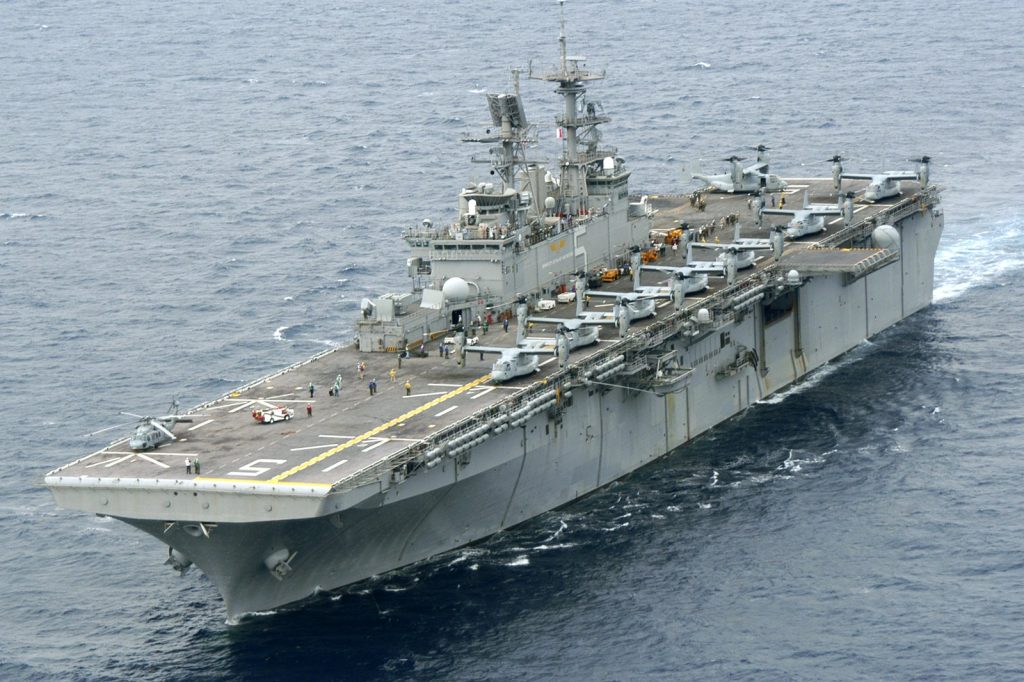
MANAMA, July 7 — The United States Fifth Fleet, headquartered in Bahrain, stands at the center of escalating maritime tensions in the Persian Gulf as renewed attacks on commercial shipping in May 2023 have triggered fresh demands for expanded coalition patrols. The Fleet commands the Combined Maritime Forces, a 34-nation coalition that includes the United Kingdom, Australia, and Saudi Arabia, giving Washington a broad strategic platform to respond. Strategically, the calculus in the Gulf has shifted.
Iran’s Islamic Revolutionary Guard Corps Navy operates independently from the regular Iranian Navy and has been responsible for many attacks against merchant vessels in recent years. This dual-navy structure complicates deterrence, as the IRGCN’s small-boat swarming tactics and mine-laying capabilities present a different threat profile than conventional naval forces.
The broader stakes are clear. The Fifth Fleet’s area of responsibility covers the Persian Gulf, Gulf of Oman, and Red Sea — chokepoints through which a significant portion of global oil and container traffic passes. Any sustained disruption to shipping in these waters would reverberate through energy markets and supply chains worldwide.
What this signals is a return to the heightened alert posture that defined the region after the 2019 tanker attacks. In July of that year, the U.S. launched Operation Sentinel specifically to protect shipping.
That mission later evolved into the International Maritime Security Construct, or IMSC, a multinational framework designed to share the burden of patrols and escort duties. The May 2023 attacks have now prompted renewed calls for coalition patrols. While the source material does not specify the exact nature of those attacks, the pattern is familiar: limpet mines, drone strikes, or fast-attack craft harassing commercial vessels in international waters.
The Fifth Fleet’s ability to coordinate responses across 34 partner nations gives it a unique tool to manage the crisis. For Washington, the challenge is sustaining coalition unity. Not all CMF members share the same appetite for confrontation with Tehran, and the IRGCN’s willingness to escalate remains a wild card.
The administration of President Donald Trump has maintained a firm posture toward Iran, but the maritime dimension requires constant attention. Looking ahead, the coming weeks will test whether the IMSC framework can adapt to the latest threat environment.
The Fifth Fleet’s command structure in Bahrain provides the logistical backbone, but the political will of coalition partners will determine how robust the response becomes. For now, the Gulf remains a flashpoint where a single miscalculation could draw in multiple navies.




