
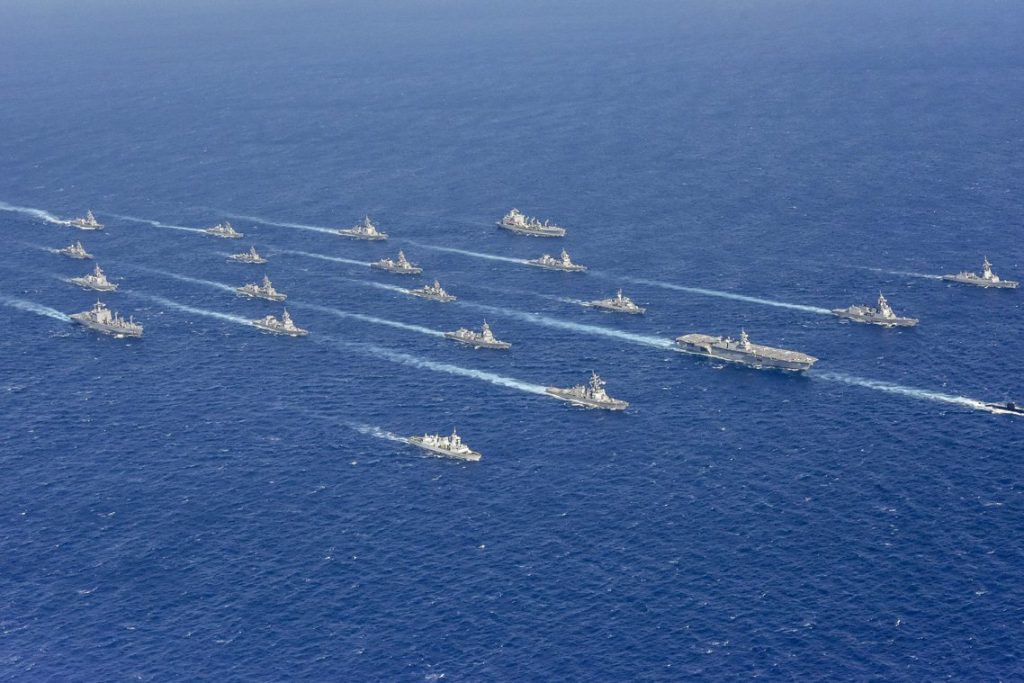
The two‑day joint naval operation led by the U.S. carrier strike group centered on the USS Abraham Lincoln concluded on Wednesday in the Sea of Japan. Japan contributed the destroyers JS Kōngō and JS Inazuma, together with a squadron of F‑2 fighter jets. This marks the first time since 2017 that an American carrier has conducted such an exercise in these waters, ending a five‑year hiatus.
Japanese officials framed the maneuver as a routine step to reinforce “effective deterrence and response” capabilities, according to a statement from the Maritime Self‑Defense Force. Chief Cabinet Secretary Hirokazu Matsuno told reporters the drills were not directed at any particular nation, emphasizing the goal of bolstering military cooperation and readiness.
The timing of the exercise carries symbolic weight. North Korea is approaching the birthday of its founding leader, Kim Il Sung, a date that historically prompts Pyongyang to showcase its military strength, including missile launches or nuclear tests. Defense analysts warn that the regime could act within days, making the joint drill a clear signal intended to deter such provocations.
Strategically, the location of the drills—between Japan and the Korean Peninsula—covers a vital maritime chokepoint. The presence of the nuclear‑powered supercarrier, coupled with the Aegis‑equipped Japanese destroyers capable of tracking and intercepting ballistic missiles, shifts the regional military calculus.
Should North Korea fire a missile toward Japan, the allied forces now possess a rapid response framework. Regional dynamics add further complexity. The United States and South Korea are set to begin their own annual joint exercises, which historically draw sharp criticism from Pyongyang.
The addition of the Japan‑U.S. carrier operation amplifies pressure on Kim Jong Un’s government, raising the likelihood of a swift reaction. China’s growing assertiveness in the area also informs the broader security environment.
Japan has responded by increasing joint training with the United States and other partners, and the carrier drill fits within that expanding pattern of cooperation. In his remarks, Matsuno pledged that Japan will “continue to strengthen the deterrence and response capability of the alliance” and affirmed the nation’s commitment to “our utmost for the defense of our country.” Such language underscores a heightened concern within Japanese leadership about the evolving threat landscape. Although the exercise has ended, its implications endure.
North Korea now observes that the United States and Japan can coordinate carrier‑based operations on short notice, that the interval between drills has narrowed, and that future exercises could follow even more rapidly. The response from Pyongyang—whether a missile launch this week or a nuclear test—will likely be framed as a reaction to the joint drill.
While the carrier group remains stationed in the region and the Japanese destroyers stay on standby, the broader alliance signals continued readiness. South Korea, though not a participant in this specific drill, monitors the developments closely as it prepares for its own upcoming joint exercises with the United States. Historical frictions between Seoul and Tokyo have often complicated trilateral training, yet the perceived threat from the north is drawing the three nations closer together. For now, the Sea of Japan has returned to calm.
The ships have departed, and the aircraft are back at their bases, but the countdown to Kim Il Sung’s birthday continues, and North Korea’s pattern of marking such anniversaries with explosive displays remains a lingering concern.




