
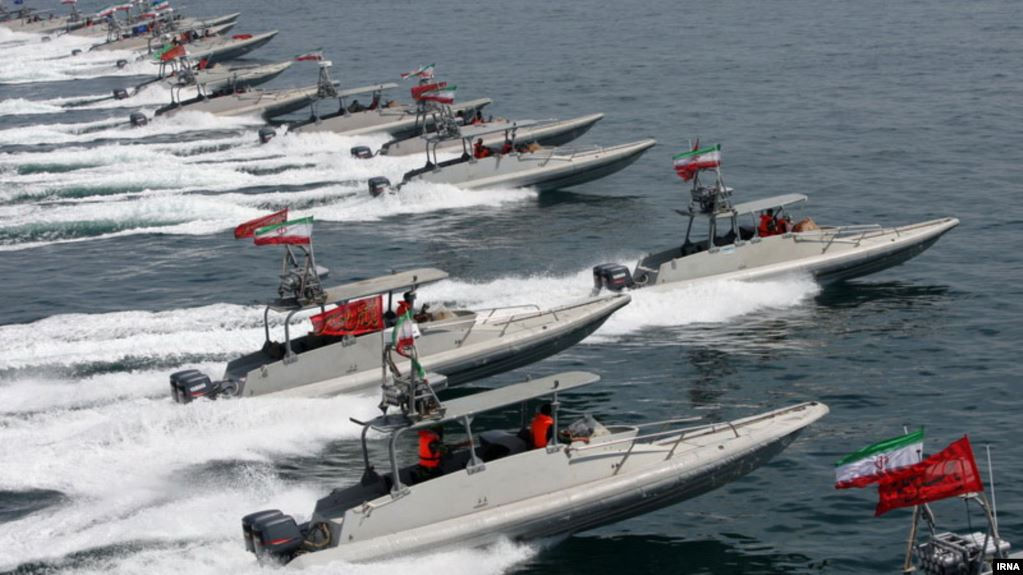
TEHRAN, July 12 — The Islamic Revolutionary Guard Corps Navy, a force established in 1979 as a separate naval arm from Iran’s regular navy, operates with an estimated 20,000 personnel and a fleet of over 1,000 small fast-attack craft. Its arsenal includes Boghammar-class boats, Chinese-made C-802 anti-ship missiles, and Iranian-made Noor missiles. The force also deploys naval mines, including the M-08 and SADAF-02 types, and has used unmanned aerial vehicles for reconnaissance.
Rear Admiral Ali Reza Tangsiri, appointed in 2018, commands the IRGC navy. Its base at Bandar Abbas, on the Iranian coast, serves as a key staging point for operations in the Strait of Hormuz, a critical chokepoint for global oil shipments.
Asymmetric tactics and regional friction
The IRGC navy’s doctrine emphasizes asymmetric warfare, using swarms of small boats to overwhelm larger vessels. This approach reflects Iran’s recognition that it cannot match the United States Navy in conventional ship-to-ship combat. Instead, the force relies on speed, numbers, and the ability to strike from multiple directions simultaneously.
In 2016, IRGC navy boats harassed U.S. Navy ships near the strait, an incident that underscored the persistent tension between the two forces. The IRGC navy also has a history of seizing commercial vessels.
In 2015, it intercepted the MV Maersk Tigris, a cargo ship, in the strait. The vessel was later released after negotiations, but the incident highlighted the risks faced by commercial shipping in the region. The force’s deployment of naval mines, including the M-08 and SADAF-02 types, adds another layer of threat.
Mines can be laid quickly from small boats, potentially disrupting shipping lanes for extended periods. The IRGC navy’s use of UAVs for reconnaissance suggests it is also investing in surveillance capabilities to support its swarm tactics.
Strategic implications
The IRGC navy’s presence in the Strait of Hormuz remains a central concern for the United States and its allies. The strait sees about one-fifth of the world’s oil transit daily, making any disruption a matter of global economic security. The IRGC navy’s small-boat swarm tactics are designed specifically to threaten larger naval vessels, including U.S. warships, in the confined waters of the strait.
Iran’s regular navy, by contrast, operates larger vessels and focuses on blue-water operations. The IRGC navy’s separate command structure and distinct mission set reflect the Islamic Republic’s broader strategy of using asymmetric capabilities to offset conventional military disadvantages.
Bandar Abbas, the IRGC navy’s main base, sits on the Iranian coast near the strait’s narrowest point. From there, fast-attack craft can sortie quickly into the waterway. The base also supports the force’s logistics and maintenance operations, enabling sustained patrols.
Looking ahead, the IRGC navy’s continued investment in small boats, anti-ship missiles, and mines suggests it will remain a persistent challenge to maritime security in the region. The force’s history of harassment and vessel seizures indicates that confrontation, rather than cooperation, has been the dominant pattern in its interactions with international shipping and naval forces.
Whether the IRGC navy will escalate its tactics or maintain its current posture remains an open question for analysts tracking the volatile security environment around the Strait of Hormuz.




