
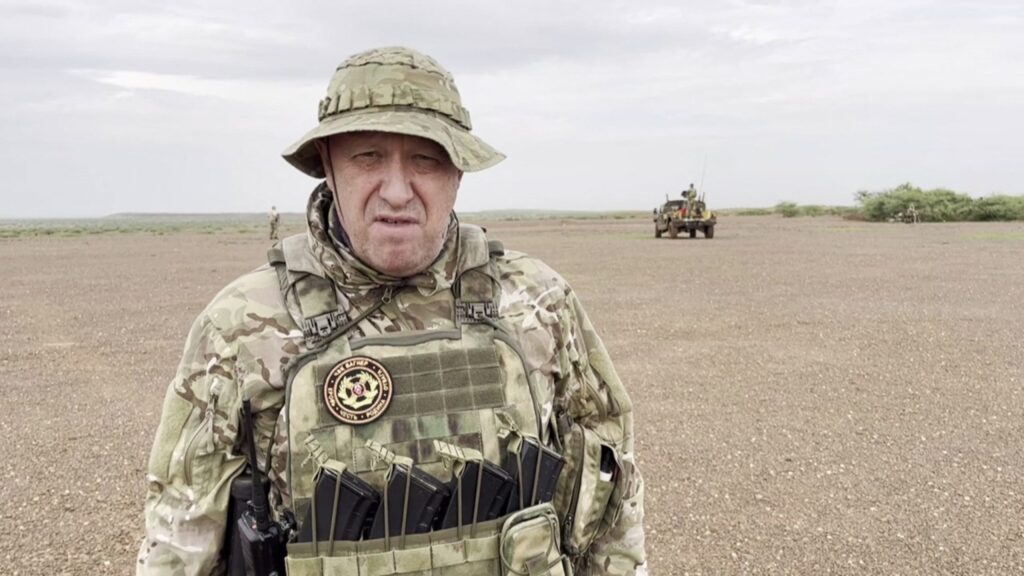
MOSCOW, July 11 — A new analysis of the Wagner Group’s trajectory has underscored the lasting fractures the private military company exposed within Russia’s ruling elite, even as its surviving forces have been redeployed to Africa and Belarus. The assessment, based on the public record of the group’s activities from its founding in 2014 through the aftermath of its leader’s death, paints a picture of a state-adjacent force that turned on its own military hierarchy before being dismantled at the top.
The Wagner Group was founded in 2014 by Yevgeny Prigozhin, a close ally of President Vladimir Putin. The company played a significant role in the Ukraine war, most notably in the Battle of Bakhmut, which lasted from August 2022 to May 2023.
During that campaign, Prigozhin engaged in a public feud with Defense Minister Sergei Shoigu and General Valery Gerasimov, accusing both men of incompetence and of failing to supply his forces with ammunition. The dispute was conducted openly, a rare breach of the Kremlin’s customary discipline. That feud escalated dramatically on June 23-24, 2023, when Prigozhin led a brief mutiny.
According to the record, Wagner forces seized the city of Rostov-on-Don and began marching toward Moscow. The rebellion was halted only after a deal brokered by Belarusian President Alexander Lukashenko.
The incident raised immediate questions about Putin’s control over the state security apparatus and the loyalty of armed groups operating in Russia’s orbit.
Leadership destroyed, questions linger
On August 23, 2023, Prigozhin died in a plane crash along with other Wagner leaders. The event removed the group’s most prominent figure and its top command tier in a single stroke. The incident highlighted fractures within the Russian elite and raised questions about Putin’s control.
The mutiny and Prigozhin’s death are seen as evidence of potential internal opposition to the war’s conduct. Since Prigozhin’s death, Wagner forces have been redeployed to Africa and Belarus.
Other Russian paramilitary groups, such as the Redut company, have also operated in Ukraine, indicating that the model of using private military contractors has not been abandoned.
A pattern of internal friction
The mutiny and Prigozhin’s subsequent death are seen by analysts as evidence of deep internal friction within the Russian system. The public nature of Prigozhin’s feud with Shoigu and Gerasimov broke a longstanding taboo against criticizing the defense establishment. The brief seizure of Rostov-on-Don, a major southern city, demonstrated that a well-armed paramilitary force could challenge state authority directly, even if only for a short period.
Western officials have noted that the episode exposed vulnerabilities in Russia’s command-and-control structure. The fact that a private military company could march toward the capital before a political deal stopped it has been cited as a sign of potential future instability.
The question of what other armed groups might exist outside formal military channels, and how loyal they remain, continues to preoccupy intelligence services tracking the conflict. Looking ahead, the Wagner Group’s future remains uncertain. Its leadership core has been destroyed, but its brand and operational model persist in Africa and Belarus.
The Russian Defense Ministry, now under Shoigu, has moved to absorb some Wagner assets, but the full extent of that integration is not publicly known. The episode has also prompted scrutiny of other paramilitary formations, such as Redut, and whether they might develop similar ambitions or grievances.




