
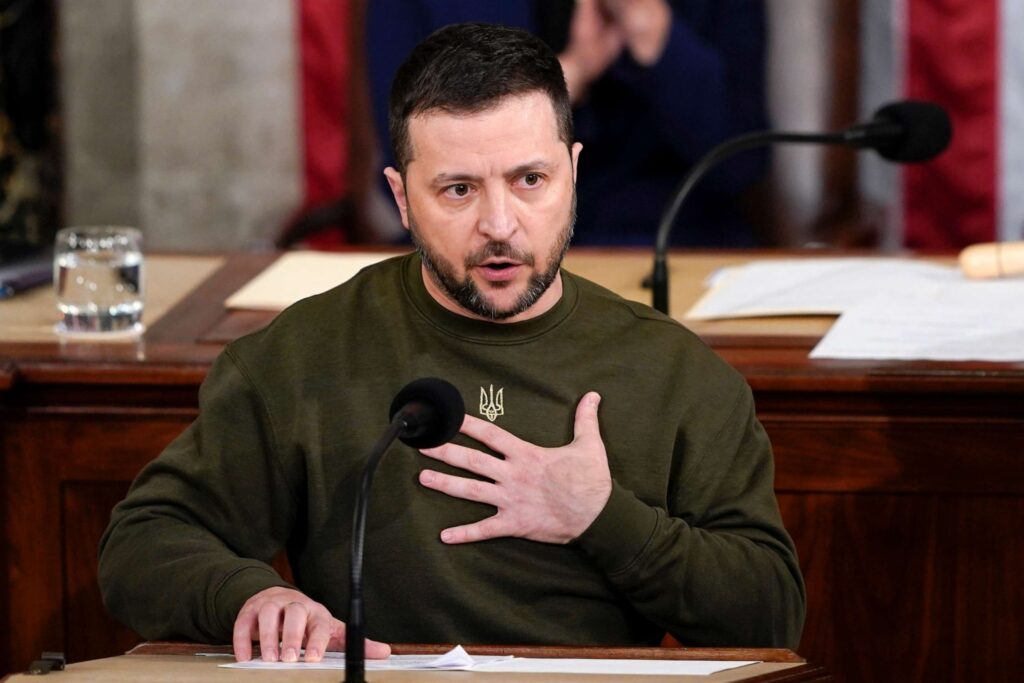
KYIV, July 15 — Against the backdrop of a war that has reshaped the European security order, Ukrainian President Volodymyr Zelenskyy has drawn a sharp and unambiguous line: Ukraine does not want Russia without fuel, but it wants Ukraine without war. That statement, delivered during the Munich Security Conference in February 2025, distilled the core of Kyiv’s negotiating position into a single, pointed phrase. The conference, held from February 14-16 of that year, has long been a stage where transatlantic leaders test their arguments.
Zelenskyy used it to make clear that any discussions with Moscow must prioritise ending the conflict, not the flow of energy supplies. The full-scale invasion that Russia launched on February 24, 2022, has now entered its fifth year.
The human toll is staggering: tens of thousands of casualties and millions displaced from their homes. In the corridors of European capitals, the question of what is at stake has never been more urgent.
A Wartime Presidency Extended
Zelenskyy was elected in 2019 with 73 percent of the vote, a mandate that reflected widespread hope for reform and a break with the past. His original five-year term was set to end in 2024. But under the constitution, martial law — declared on the very day of the invasion — suspends elections.
His presidency continues, anchored by the grim reality of war. The wider picture extends far beyond Ukraine’s borders.
Since 2022, the United States has provided more than $75 billion in aid to Ukraine, according to the U.S. Department of Defense. This figure covers both military supplies and humanitarian assistance, making Washington Kyiv’s single largest backer. The European Union and NATO have also poured in substantial support, both in weaponry and in economic aid.
Russia, meanwhile, has faced a cascade of international sanctions. The European Union, the United States, the United Kingdom, and a coalition of allied nations have targeted Moscow’s financial system, energy exports, and key industries.
The measures are designed to degrade Russia’s ability to sustain its war effort.
What Is at Stake in Any Negotiation
Zelenskyy’s insistence that ending the war must come before any discussion of energy supplies reflects a strategic calculation. For Kyiv, a ceasefire that leaves Russian forces in occupied territory, while European nations resume buying Russian gas, would be a diplomatic defeat disguised as peace. The president’s phrasing — that Ukraine does not want Russia without fuel but wants Ukraine without war — captures the asymmetry of the two sides’ priorities.
For Moscow, energy revenues have long been the lifeblood of the state budget. For Kyiv, the survival of the nation as an independent, sovereign entity is the only acceptable outcome.
As the conflict grinds on, the diplomatic calendar remains uncertain. No major peace talks are publicly scheduled. What is clear is that Zelenskyy has set the terms: any negotiation must start with the war, not with the pipeline.
In the corridors of European foreign ministries, that message has been heard. The question now is whether it will be heeded.




