
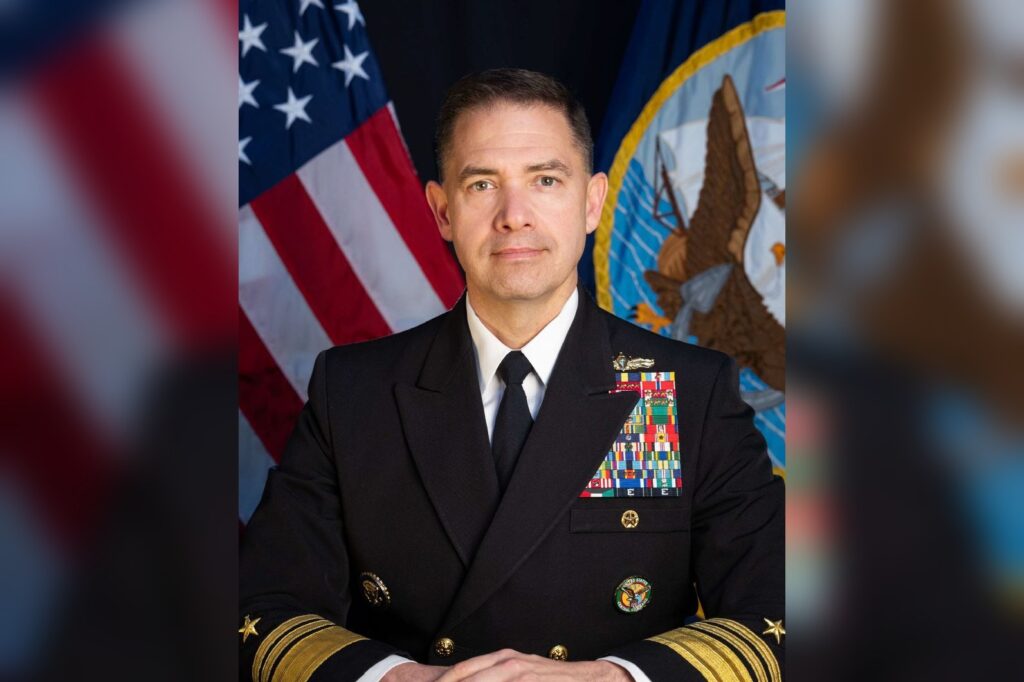
MANAMA, July 11 — The steel-gray hulls of the USS Sentry and its sister mine countermeasure vessels sit at the pier at Naval Support Activity Bahrain, their crews running pre-departure checks. The U.S. Fifth Fleet, the primary American naval force in the Persian Gulf, is on a war footing tonight. The fleet’s commander, Vice Admiral Brad Cooper, who took command in May 2024, oversees a force that typically includes an aircraft carrier strike group, an amphibious ready group, and up to 30 ships.
By nightfall, the base hums with the low thrum of generators and the clatter of helicopter rotors. Arleigh Burke-class destroyers, each armed with Tomahawk cruise missiles that can strike targets 1,000 miles away, sit at ready stations.
The Fifth Fleet operates under U.S. Central Command. Reestablished in 1995 after being inactive since 1947, this command is no stranger to the region’s flashpoints. In 2023 alone, it conducted more than 100 exercises with partner nations, a constant show of force in waters where the Strait of Hormuz narrows to a strategic choke point.
Residents near the base describe a scene of controlled urgency. The fleet’s P-8 Poseidon maritime patrol aircraft have been spotted making low passes over the Gulf, their sensor suites scanning for mines or fast-attack craft.
The USS Nimitz-class carriers, the floating airfields that project American power across the region, are on station.
Operation Sentinel and the Strait
The Fifth Fleet has a recent history of escorting commercial vessels through the Strait of Hormuz. That mission, Operation Sentinel, launched in 2019 as a multinational maritime security initiative. Alongside the IMSC — the International Maritime Security Construct, formed the same year with the UK, Australia, and others — the fleet coordinates a layered defense of the sea lanes.
The Strait carries a significant portion of the world’s oil traffic. Any closure — whether from mines, missile strikes, or political brinkmanship — would send shockwaves through global markets.
The fleet’s mine countermeasure vessels, like the USS Sentry (MCM-3), are designed to clear those very threats.
Assets in the Water
The fleet’s arsenal is formidable. Arleigh Burke-class destroyers are the backbone, their vertical launch systems packed with Tomahawk cruise missiles capable of reaching targets deep inland. The aircraft carriers provide air cover and strike capability.
The amphibious ready group adds a Marine expeditionary force, ready to insert or extract personnel. But the fleet is not alone.
The IMSC, with its British, Australian, and other partner navies, patrols alongside American ships. This coalition, born from the tensions of 2019, gives the Fifth Fleet a multinational face.
What Comes Next
Vice Admiral Cooper’s command now faces its most serious test since the fleet’s reestablishment. The ships at Bahrain are fueled and provisioned. The P-8 Poseidons are flying.
The mine countermeasure vessels are preparing to sweep. By nightfall, the Gulf waters reflect the running lights of a fleet ready to move.
The question is not whether the Fifth Fleet can respond — it is how quickly the situation will demand it.




