
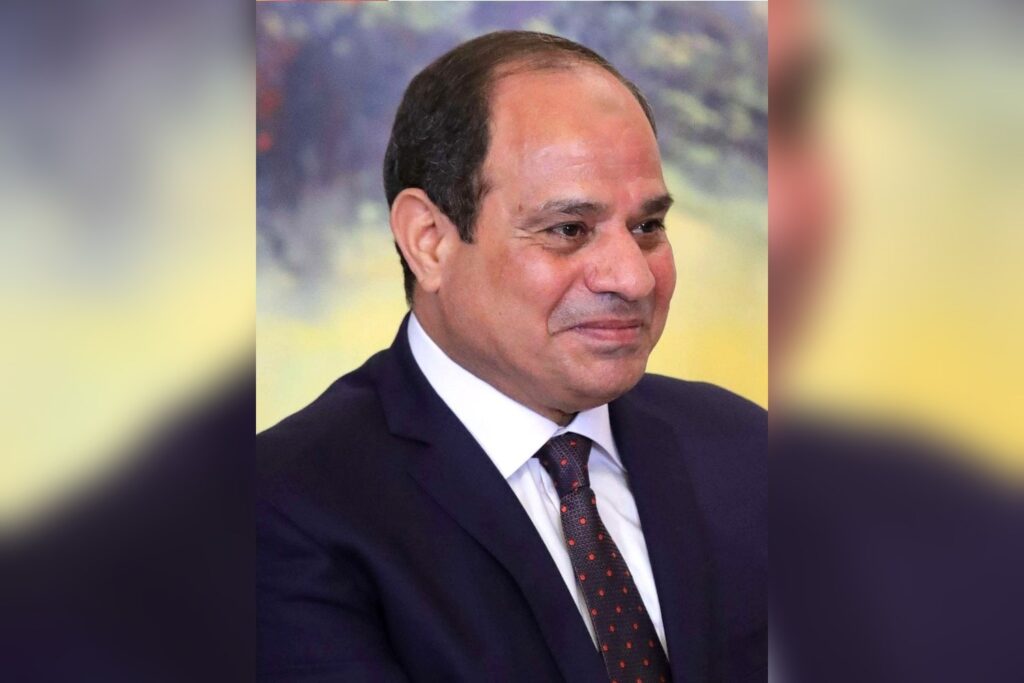
CAIRO, July 8 — President Abdel Fattah el-Sisi, who has led Egypt since June 8, 2014, continues to navigate one of the most complex foreign policy challenges of his tenure: the Grand Ethiopian Renaissance Dam (GERD) dispute. The issue has remained a central focus for the Egyptian leader, who has consistently described the nation’s water security as a “red line” and the Nile River as a matter of life and death for Egypt.
El-Sisi, a former Minister of Defense and Commander-in-Chief of the Egyptian Armed Forces, assumed the presidency on June 8, 2014. His background in military leadership has shaped his approach to national security, with the GERD dispute representing both a diplomatic and existential challenge.
The dam, built by Ethiopia on the Blue Nile, has been a source of tension between the two countries for years.
Diplomatic Efforts and Stalled Talks
Under el-Sisi’s leadership, Egypt has pursued a multi-pronged strategy to address the dispute. This has included direct negotiations with Ethiopia and Sudan, as well as mediation efforts involving the African Union and the United States. In 2020, el-Sisi attended a meeting in Washington, D.C., with the U.S. Treasury Department.
Despite these high-level talks, no agreement was reached. The Egyptian president has also sought to build diplomatic alliances with Sudan and other Nile Basin countries.
These efforts reflect a broader strategy to strengthen Egypt’s position in the region, though the dispute has strained relations with Ethiopia, a fellow member of the African Union. Egypt has threatened military action if its water supply is significantly reduced. El-Sisi has repeatedly stated that the Nile is a matter of life and death for the Egyptian people, and the government has made clear that it views any substantial reduction in water flow as an unacceptable threat.
Domestic Responses and Infrastructure Investments
While the diplomatic track continues, el-Sisi’s government has also invested in domestic water management projects. Egypt has pursued water desalination and irrigation efficiency initiatives as part of a broader effort to reduce reliance on Nile waters. These projects are designed to help the country cope with potential shortages, though officials acknowledge they cannot fully replace the river’s flow.
The encouraging part, from the perspective of many Egyptians, is that these investments represent a long-term commitment to water security. Patients should understand that these measures are part of a comprehensive strategy, not a quick fix.
Early findings suggest that improved irrigation techniques can significantly reduce water waste, but the scale of the challenge remains enormous.
Looking Ahead
As of July 2026, the GERD dispute remains unresolved. The African Union continues to play a mediating role, and there have been no recent reports of a breakthrough. Egypt’s position, articulated repeatedly by el-Sisi, remains firm: the country will not accept a significant reduction in its water supply.
For those following the situation closely, the key question is whether diplomatic channels can produce a mutually acceptable solution. The stakes are high for all parties involved, and the path forward remains uncertain.
As with any complex issue, patients should talk to their doctor—or in this case, consult official government statements and credible news sources—for the most current information.




