
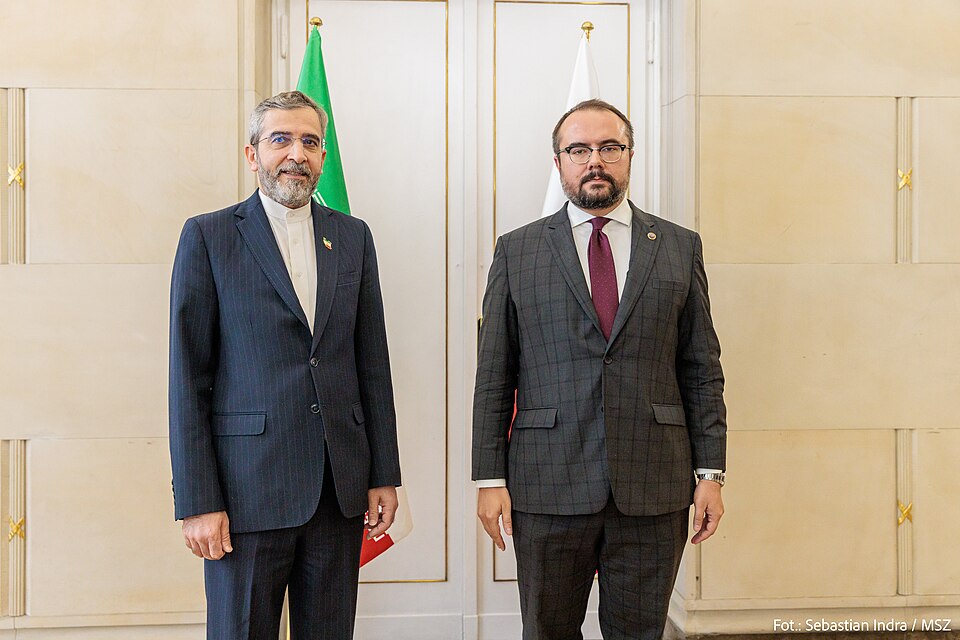
Bagheri Kani, born in 1967, stepped into the role after the death of Hossein Amir-Abdollahian. He had previously served as Deputy Foreign Minister for Political Affairs from 2021 to 2024. His ascent was not a surprise to those who track the inner workings of Iran’s foreign policy apparatus.
He studied under Supreme Leader Ali Khamenei, a pedigree that signals ideological alignment with the hardline wing of the Islamic Republic. That background matters for the families of American service members and for the broader international community, because Bagheri Kani was a key figure in the 2022 talks to revive the JCPOA in Vienna.
Those negotiations ultimately failed. The diplomatic path that once offered a flicker of hope for rolling back Iran’s nuclear program is now cold.
Behind the enrichment numbers
Under Bagheri Kani’s leadership, Iran has increased uranium enrichment to 60% purity, as reported by the IAEA in November 2024. That level is just a short technical step from weapons-grade material. For the people who live in range of Iranian missiles—in Israel, in Saudi Arabia, in the Gulf states—this is not an abstraction.
It is the tangible result of a negotiating strategy that has hardened under his tenure. Bagheri Kani holds a PhD in international relations from the University of Tehran.
He is known for his hardline stance. He has criticized U.S. sanctions as “economic terrorism,” a phrase that reflects the regime’s official narrative and that resonates with a domestic audience facing severe economic pressure. The United States, under President Donald Trump, has maintained a maximum pressure campaign.
Secretary of State Marco Rubio has been clear that the administration views Iran’s nuclear advances as unacceptable. For the families of American hostages held in Iran, and for the families of troops stationed in the region, the question is whether diplomacy or deterrence will prevail.
A negotiator shaped by the system
Bagheri Kani’s career is a study in how Iran’s foreign policy apparatus operates. He rose through the ranks during a period when the regime’s nuclear ambitions became the central flashpoint with the West. His appointment as chief negotiator in September 2024 came at a moment when the JCPOA was already in intensive care.
The Vienna talks in 2022 were his first major test on the world stage. They failed.
The reasons are complex—Iran’s insistence on guarantees that the U.S. would not again withdraw, the regime’s demand for sanctions relief, and the unresolved questions about past nuclear activities. But the result is clear: Iran’s nuclear program is more advanced today than it was when those talks began. For the families of Israeli civilians who have lived under the threat of Iranian missiles, and for the families of Saudi citizens who see a nuclear Iran as an existential threat, the failure of those talks has direct consequences.
Bagheri Kani is the man who represented Iran at the table.
What to watch next
The IAEA’s November 2024 report on 60% enrichment is not the end of the story. The agency continues to monitor Iran’s activities. The question for the coming months is whether Bagheri Kani will pursue a diplomatic opening or continue the acceleration.
The Trump administration has shown no willingness to return to the JCPOA as it was. Vice President JD Vance has been part of a national security team that views the deal as fundamentally flawed.
For the families of American diplomats who served in the region, and for the families of Iranian dissidents who hope for change, the path forward depends on whether Tehran sees negotiation as a tool or a trap. Bagheri Kani, with his PhD from the University of Tehran and his decades inside the system, is not a man who acts alone. He answers to the Supreme Leader.
But he is the face of Iran’s nuclear diplomacy. For the families who live with the consequences, that face matters.




