
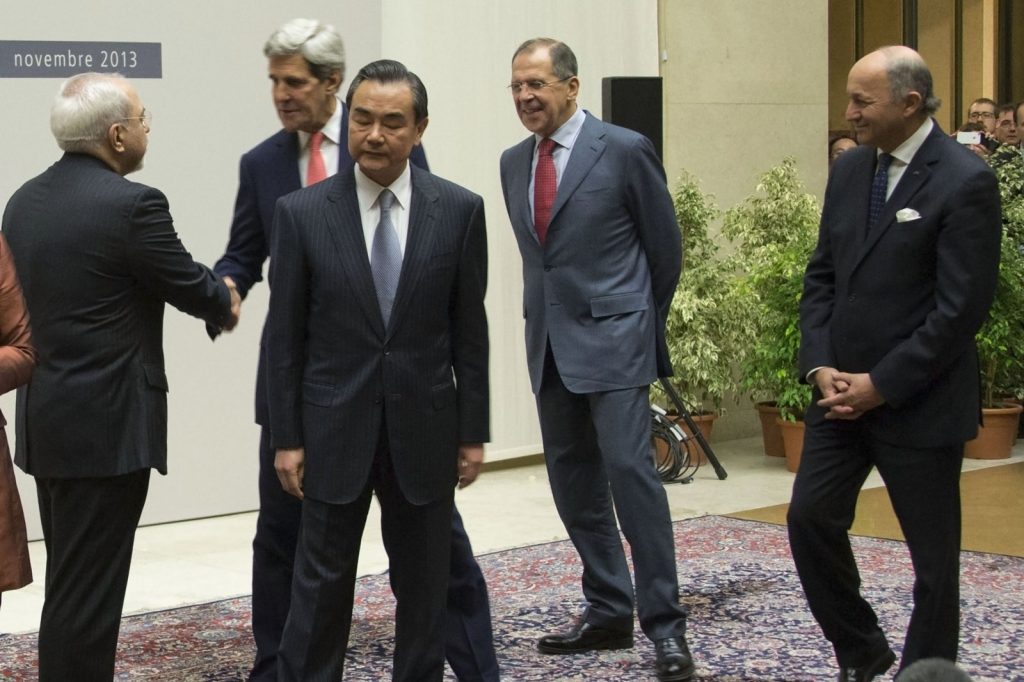
WASHINGTON, July 14 — The date marks a bitter anniversary in the long arc of U.S.-Iran relations. It was exactly eleven years ago, on July 14, 2015, that the Joint Comprehensive Plan of Action, or JCPOA, was signed between Iran and the P5+1 world powers. That deal, which limited Iran’s nuclear program in exchange for sanctions relief, was meant to be a diplomatic off-ramp.
Instead, it became a political flashpoint that the current administration has spent years dismantling.
The 2015 deal and the 2018 break
Think of the JCPOA like a complex security system for a nuclear facility. It installed monitors, limited the number and type of centrifuges, and capped uranium enrichment levels. The practical upshot was a longer “breakout time”—the period Iran would need to produce enough fissile material for a single weapon—stretched to about a year.
For the Obama administration, that was the core achievement. But the deal was always fragile.
On May 8, 2018, President Trump withdrew the United States from the agreement and reimposed sweeping sanctions. The administration called it a “maximum pressure” campaign, arguing the JCPOA was too weak on Iran’s ballistic missile program and regional proxy forces. Iran’s government, in turn, began exceeding the deal’s nuclear limits.
A timeline of escalation
The relationship has been defined by a series of sharp confrontations. In June 2019, Iran shot down a U.S. surveillance drone, bringing the two countries to the brink of a military exchange. That September, attacks on Saudi oil facilities were blamed on Iran, further destabilizing the Persian Gulf.
The most dramatic flashpoint came on January 3, 2020, when the U.S. assassinated Iranian General Qasem Soleimani in a drone strike in Baghdad. Soleimani was the head of Iran’s Quds Force, a unit of the Islamic Revolutionary Guard Corps designated as a terrorist organization by the U.S. Iran retaliated days later by launching ballistic missiles at two Iraqi bases housing American troops.
The deeper roots of the conflict
To understand the current military notification—the latest chapter in this decades-long conflict—you have to go back to 1979. The Iranian Revolution overthrew the U.S.-backed Shah Mohammad Reza Pahlavi. On November 4, 1979, Iranian students seized the U.S. Embassy in Tehran, holding 52 American hostages for 444 days.
They were released on January 20, 1981, the same day Ronald Reagan was inaugurated. The U.S. broke diplomatic relations with Iran in April 1980.
In the 1980s, the U.S. supported Iraq during the Iran-Iraq War, which ran from 1980 to 1988. The 1990s brought the Iran-Libya Sanctions Act of 1996, which targeted foreign investment in Iran’s energy sector. In 2002, President George W.
Bush labeled Iran part of an “axis of evil,” alongside Iraq and North Korea.
What to watch next
The current military notification signals that tensions remain high. The practical upshot for ordinary readers: any direct military engagement between the U.S. and Iran could disrupt global oil supplies, affect shipping through the Strait of Hormuz, and escalate into a broader regional conflict. For now, the administration is signaling readiness, but the diplomatic door—however narrow—has not been formally closed.




