
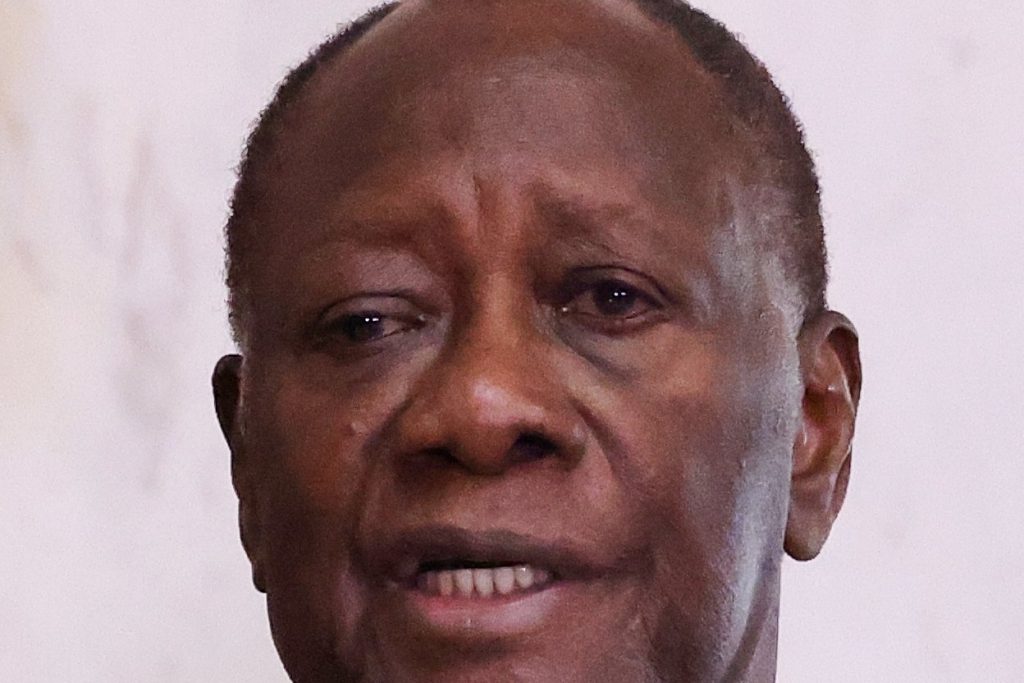
ABIDJAN, September 14 — Guinean President Mamady Doumbouya met his Ivorian counterpart, President Alassane Ouattara, in Abidjan over the weekend, and the two heads of state emerged with a formal commitment to strengthen and diversify cooperation across security, trade and resource governance. The first meeting took place Friday at the presidential residence in Cocody, the district that houses Ivory Coast’s seat of power in its economic capital. The two leaders sat down again on Sunday, when they agreed to broaden the bilateral relationship beyond its current scope.
The agreements were announced through a statement from Ouattara’s office.
Security and intelligence at the top of the list
Security cooperation was named the priority. Doumbouya said plainly that “there can be no development without peace and stability,” and pressed for closer intelligence sharing to counter regional terrorism, cross-border crime networks and threats spilling out of the Sahel. Both presidents pledged to exchange information, coordinate operations and jointly confront cross-border crime and terrorism.
That agenda has weight well beyond the two capitals. The Sahel has become the world’s most active zone of militant violence, and coastal West African states have spent years building up defenses against groups pushing southward.
Ivory Coast shares borders with Mali and Burkina Faso, both of which have seen their central governments lose ground to insurgents. Guinea, for its part, sits at the western edge of the region and has its own porous frontiers to manage. For families and traders in the border zones that stretch across these countries, the difference between a coordinated security response and a fragmented one is measured in whether roads stay open and markets stay calm.
Illegal gold mining framed as a strategic loss
The two presidents also identified illicit, clandestine gold mining as a major priority for joint action. Doumbouya called it a strategic issue and pointed to a 2024 report finding that up to 40 percent of gold produced across Africa is not declared, depriving the continent of billions of dollars in revenue. That figure lands hard in West Africa, where artisanal and small-scale mining supports a vast informal workforce and often operates far from any government’s reach.
Undeclared gold also feeds smuggling routes and armed groups, which is why the two leaders tied the issue directly to their security talks rather than treating it as a purely economic matter.
Trade volumes fall short of potential
Economic and trade growth featured prominently as well. Both sides acknowledged that current trade volumes between Guinea and Ivory Coast fall short of what their mining and agricultural sectors could support, and they committed to fostering stronger South-South economic partnerships and expanding trade links. Politically, the weekend underscored an ongoing rapprochement between the neighbors.
Doumbouya expressed appreciation for Ouattara’s support during Guinea’s recent transition and electoral processes. To cement the growing fraternity, he invited Ivory Coast to serve as the guest country during Guinea’s national holiday celebrations.
What to watch next is whether the pledges translate into machinery — a joint security mechanism, a shared framework on gold traceability, or concrete trade agreements. The statement from Ouattara’s office reflects a broader regional push for stability, economic integration and curbing illicit resource extraction. The invitations and the handshakes are done.
The follow-through is the part that will be tested.




