
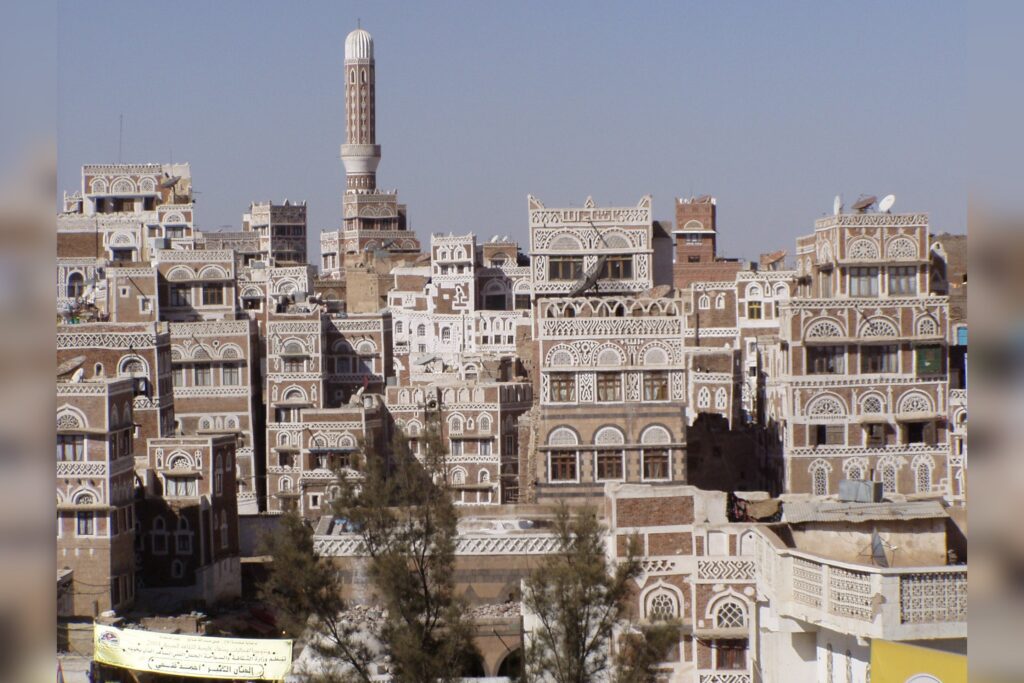
SANAA, September 13 — The Houthi movement has continued to expand its territorial control across northern and central Yemen, most recently threatening the government’s last northern strongholds in Marib and Al-Jawf governorates, according to the source material. The Houthis, formally known as Ansar Allah, are an Iran-aligned Zaidi Shia armed group that seized Yemen’s capital Sanaa in September 2014. They emerged from Yemen’s Saada governorate in the early 2000s and fought six wars against the Yemeni government between 2004 and 2010.
The 2014 capture of Sanaa triggered a Saudi-led military intervention in March 2015. That coalition, which includes the United Arab Emirates, Bahrain, Kuwait, Qatar (until 2017), Egypt, Jordan, Morocco, and Sudan, has conducted thousands of airstrikes but failed to dislodge the Houthis from the capital.
The conflict has killed more than 150,000 people, including over 14,500 civilians, according to the Armed Conflict Location & Event Data Project (ACLED). The United Nations has called Yemen the world’s worst humanitarian crisis, with 24.1 million people—about 80 percent of the population—in need of humanitarian assistance as of 2023. The Houthis have also launched repeated missile and drone attacks on Saudi Arabia and the UAE, including a January 2022 drone strike on Abu Dhabi that killed three people.
In 2023 and 2024, the Houthis escalated attacks on international shipping in the Red Sea, disrupting global trade.
The Gulf’s difficult choice
The Gulf states, particularly Saudi Arabia and the UAE, face a difficult choice: continue a costly military campaign that has failed to achieve its objectives, or negotiate with a group they have designated as a terrorist organization. Saudi Arabia has recently sought a ceasefire and peace talks with the Houthis, while the UAE has reduced its military role and focused on supporting local proxies in southern Yemen.
The United States, which has supported the Saudi-led coalition with intelligence and logistics, has also been drawn into the conflict, conducting airstrikes against Houthi targets in Yemen in response to Red Sea attacks. The situation remains fluid, with the Houthis rejecting a UN-brokered truce in October 2024 and continuing their military operations.
The Gulf states’ dilemma is compounded by their desire to focus on economic diversification and regional stability, as outlined in Saudi Vision 2030, which aims to reduce oil dependence and attract foreign investment. A prolonged conflict in Yemen threatens these goals and risks further destabilizing the region. The international community, including the United Nations and the United States, continues to call for a negotiated settlement, but the Houthis’ military successes have strengthened their bargaining position, leaving Gulf states with few good options.




