
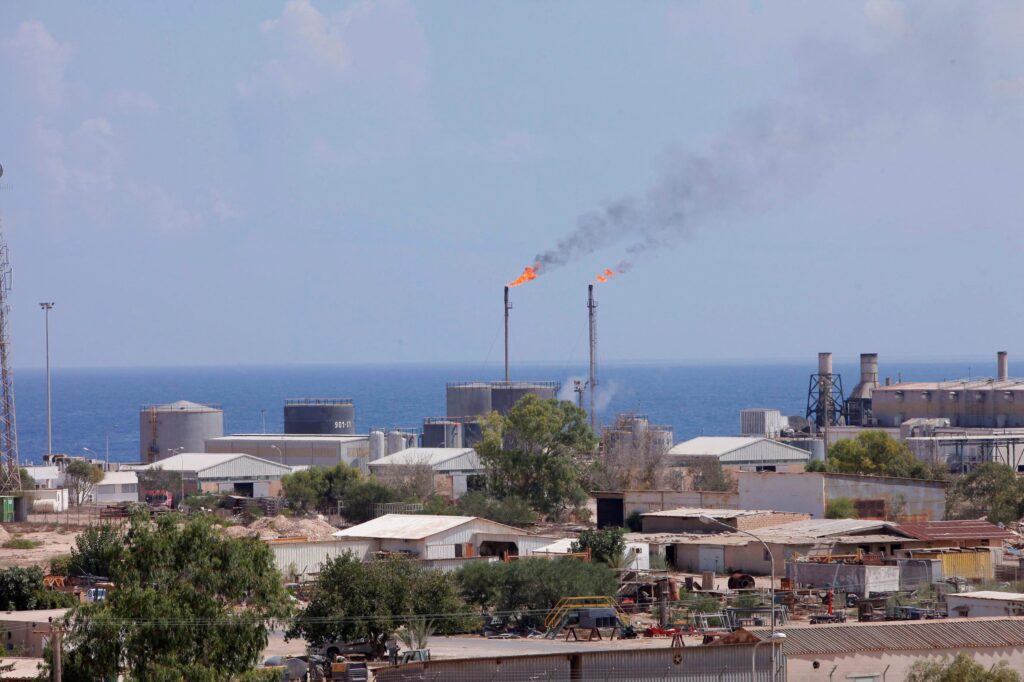
Tripoli, September 9 — Authorities in western Libya have arrested five people in connection with a recent string of drone attacks on a major energy facility, the government announced, exposing a “vast plot” and describing the arrests as part of a coordinated campaign. The group was part of a “sabotage cell” that also planned to attack a power station south of Tripoli, as well as other vital facilities, according to the government. Foreigners are among the suspects, but no further details were provided about their identities or nationalities.
The attacks targeted the Zawiya oil complex, located approximately 45 kilometers west of Tripoli, which is part of the second-largest oil refinery in Libya, with a refining capacity of 120,000 barrels per day. In August, a large petrol reservoir in Zawiya caught fire during a drone attack on the facility, according to Libya’s state-owned oil company NOC.
Additional drone attacks followed at the Zawiya complex, and on Thursday, another attack on fuel tanks outside of Tripoli was thwarted, the NOC said. The series of attacks highlights the ongoing instability and violence in Libya, which has been beset by conflict since the overthrow of Muammar Gaddafi in 2011.
Political Division
Libya currently has two governments vying for power: the UN-recognised administration in Tripoli led by Prime Minister Abdulhamid Dbeibah, and a rival in the east backed by military commander Khalifa Haftar. The political division complicates security efforts, making it challenging for authorities to counter threats to critical infrastructure. The arrests mark a significant step by the western authorities to counter threats to critical infrastructure, and the government will likely face continued challenges in maintaining security and stability in the region.
As the situation develops, it will be important to watch how the government responds to these threats and works to maintain control over the country’s vital energy facilities.
Regional Implications
Libya has the largest oil reserves in Africa, making the recent attacks and arrests a significant concern for the region. The country’s instability has far-reaching implications, and the international community will be watching closely to see how the situation unfolds. For communities and families across the region, the ongoing violence and instability in Libya have a direct impact on their daily lives, and a resolution to the conflict is crucial for regional stability and security.
As the US administration, led by President Donald Trump, continues to monitor the situation in Libya, it will be important to see how they respond to the recent developments and work to support the country’s efforts to maintain stability and security. The international community will be watching closely to see what happens next in Libya, and how the situation will impact the region as a whole.




