
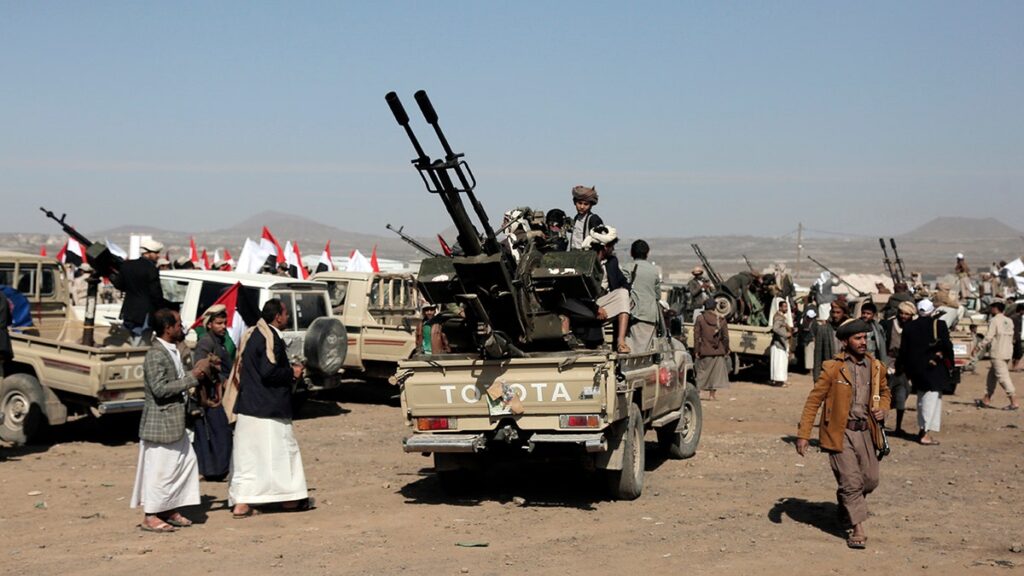
SANAA, Sept. 9 — Iranian-backed Houthi forces in Yemen struck four cities in southern Saudi Arabia on Tuesday, wounding 73 people and setting oil installations ablaze in what analysts describe as a major expansion of the six-month-old conflict that has further embroiled Washington and its regional allies. The strikes, which the Houthis said involved drones and missiles targeting a Saudi airbase in the southern city of Khamis Mushait, mark a significant broadening of a war that had seen a month of relative calm in August.
Iran and the United States have since resumed exchanging fire in recent days, with benchmark Brent crude prices climbing to their highest level since July 23. In response to the Houthi attack, the U.S. military’s Central Command said it destroyed five Iranian crude oil carriers on Tuesday, releasing video of the strikes.
Washington described the action as retaliation for Iran’s Islamic Revolutionary Guard Corps (IRGC) having targeted a U.S. Navy warship with ballistic missiles twice over the previous two days, though no Americans were harmed. U.S. Secretary of State Marco Rubio, speaking during a visit to Colombia, warned that Tehran would keep paying a price for such provocations. “Iran continues to try to hit U.S. naval ships, and for every time they do that or try to do that, they’re going to lose tankers,” Rubio said.
Iran then launched a ballistic missile attack on a U.S. base near Al Azraq in Jordan, according to an IRGC statement carried on state media, which also published video of what it said were missiles fired at the kingdom. Iranian state media claimed the attack inflicted heavy damage, but Jordan reported its air defenses intercepted 18 of the 20 incoming missiles, with two falling in unpopulated areas and no casualties recorded.
Iran has repeatedly targeted U.S. allies in the region throughout the war, including Jordan, where a strike in July killed two American military personnel. In a separate statement, the IRGC said it attacked two U.S. destroyers, though the U.S. military had yet to respond. Tehran also threatened to target oil tankers in Kuwaiti and Bahraini ports, per state media.
A maritime security source reported that a liquefied natural gas tanker was damaged in the Emirati port of Khor Fakkan, though responsibility for that incident remained unclear. The war has been defined by a cycle of pauses followed by periodic flare-ups, with Iran still able to strike its neighbors and threaten oil shipping in the Strait of Hormuz despite U.S. attacks that have degraded much of its conventional forces and strained its economy.
For communities across the Arabian Peninsula, the renewed exchanges raise the stakes of a conflict that has already disrupted shipping on both sides of the peninsula. The Houthis, who control most of Yemen’s populated areas including the capital, have periodically targeted vessels at the entrance to the Red Sea, adding further pressure on U.S. allies in the region.
Brent crude futures jumped another dollar per barrel following the attack on Jordan, though prices remained below the $100 mark despite the disruptions. With Iran still capable of launching missile and drone strikes on its neighbors and threatening key oil shipping lanes, the region now watches for whether Washington’s campaign against Iranian tankers will deter further escalation — or draw Tehran into even bolder retaliation.




