
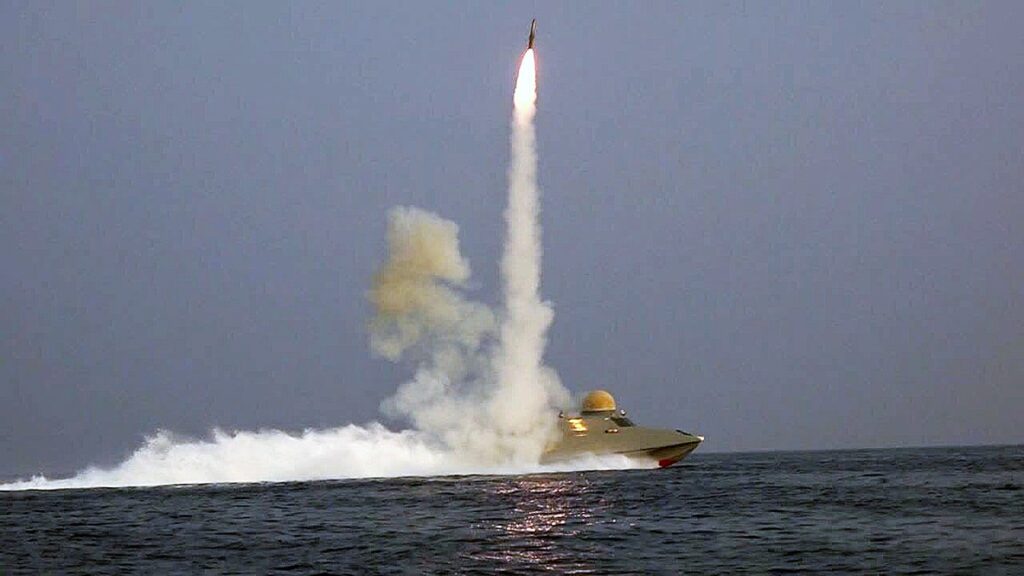
TEHRAN, July 7 — For communities across Asia that depend on the smooth flow of energy and goods through the Strait of Hormuz, the tactics of Iran’s naval forces remain a pressing concern. The Islamic Revolutionary Guard Corps Navy and the regular Iranian Navy continue to use small, fast-attack craft and anti-ship missiles to harass and seize commercial vessels in this critical waterway. The strait, at its narrowest point, is only about 21 miles wide.
That limited space gives larger commercial ships little room to maneuver when confronted by Iran’s smaller boats, creating serious risks for seafarers and the families who depend on their safe passage. One incident that highlights these dangers occurred on May 3, 2023.
On that day, Iranian Navy vessels used small boats to approach and board the Marshall Islands-flagged tanker Niovi. They then forced the vessel to change course toward Iranian waters. For the crew and their loved ones across the region, such an event is a frightening reminder of how quickly a routine voyage can turn into a crisis.
Iran has also employed sea mines in the strait. In 2019, mines damaged the Front Altair and the Kokuka Courageous, two commercial vessels.
These attacks sent shockwaves through shipping communities and raised insurance costs for operators throughout Asia. Surface-to-air missiles have also been part of Iran’s playbook. In 2019, Iranian forces used one to down a U.S. drone.
That act escalated tensions and underscored how quickly a confrontation at sea can spiral. For ordinary people in the Philippines, Indonesia, and other Asian nations, the stability of the Strait of Hormuz is not an abstract geopolitical issue. It directly affects the price of fuel at the pump and the cost of goods on store shelves.
Many families have relatives working as crew members on the very vessels that transit these dangerous waters. The United States administration under President Donald Trump has maintained a firm posture in response to these provocations.
The U.S. Navy continues to patrol the region alongside allied forces, working to keep the sea lanes open for commerce. What it means for people closer to home is clear: as long as Iran’s naval forces can operate with impunity in the strait, the risk to shipping and regional stability remains high. For communities that rely on trade through this narrow passage, the question is not whether another incident will occur, but when.




