
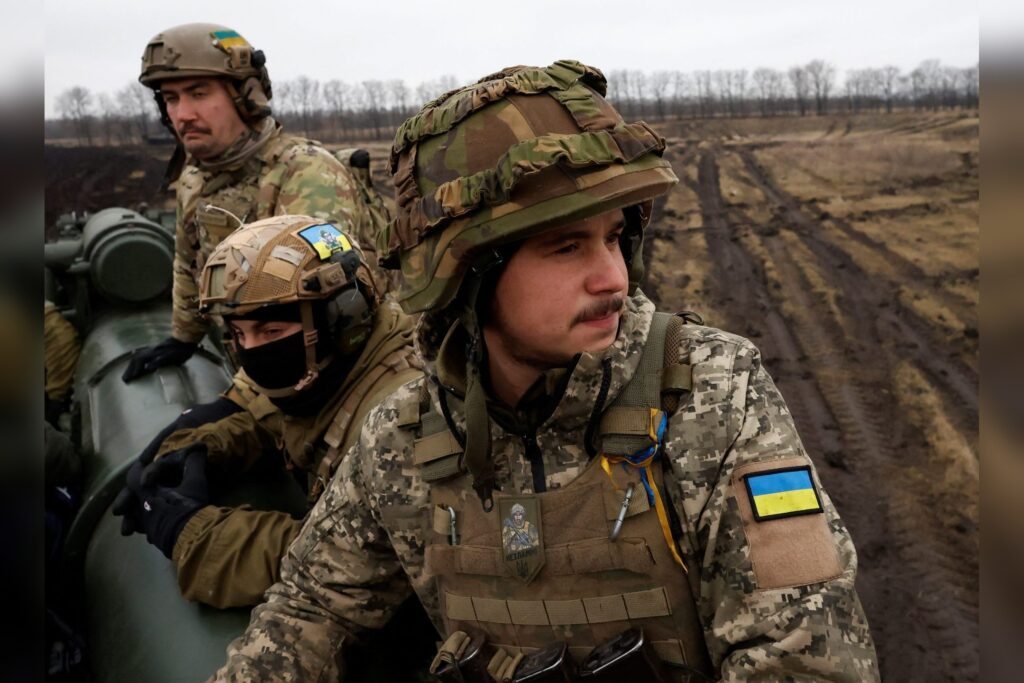
KYIV, July 11 — Against this backdrop of grinding attrition, the war in Ukraine has settled into a rhythm of incremental gains and staggering expenditures, as the third calendar year of full-scale conflict draws toward its close. The frontlines remain active across the east and south, a sprawling arc of destruction that cuts through the Donetsk, Luhansk, Zaporizhzhia, and Kherson regions. What is at stake is not merely territory, but the strategic balance on the European continent.
Ukraine’s summer counteroffensive of June 2023 succeeded in recapturing some territory, a moment of tactical optimism that nonetheless ran into heavily fortified Russian defenses. The wider picture since then has been one of slow, costly Russian progress.
By late 2024, Moscow’s forces had made incremental gains around the devastated towns of Bakhmut and Avdiivka, locations that have become bywords for industrial-scale urban warfare. The corridors of power in Kyiv and Western capitals have watched these shifts with a mixture of resolve and concern.
Military Strength and the Balance of Forces
The sheer scale of the opposing armies defines the character of this conflict. Ukraine’s military strength is estimated at 800,000 active personnel, a formidable force forged through necessity and Western training. Arrayed against them, Russia fields over 1.3 million troops, a numerical advantage that allows for sustained offensive pressure across multiple axes.
This disparity in manpower has made Western-supplied technology a critical equalizer, but it has not been sufficient to break the stalemate. Western military aid to Ukraine has totaled over $200 billion since the full-scale invasion began in 2022.
The United States has been the single largest contributor, with packages worth approximately $113 billion as of December 2024. These deliveries have included HIMARS rocket systems, which gave Ukraine precision strike capability deep behind Russian lines; M1 Abrams tanks, a symbol of American armored power; and F-16 fighter jets, whose delivery began in 2024 and marked a generational shift in Ukraine’s air force.
The European Union, for its part, committed €50 billion in financial aid covering the period from 2024 through 2027, a signal that Europe sees Ukraine’s survival as inseparable from its own security.
The European Perspective
From a European vantage point, the conflict has reshaped the continent’s strategic assumptions. The war is not a distant crisis but a direct challenge to the post-1945 order. The commitment of €50 billion from Brussels reflects a recognition that stability on the EU’s eastern flank is a matter of existential priority.
What is at stake in the Donetsk and Zaporizhzhia regions echoes far beyond the trenches; it touches the credibility of NATO’s collective defense and the future of energy security from the Baltic to the Mediterranean. In the corridors of European diplomacy, the question of how long this level of support can be sustained is ever-present.
The U.S. contribution of approximately $113 billion, alongside the EU’s €50 billion package, represents a financial commitment without modern precedent for a conflict of this nature. Yet the war’s trajectory suggests no early resolution. The incremental Russian gains around Bakhmut and Avdiivka, while costly, have demonstrated Moscow’s willingness to absorb heavy losses for tactical advantage.
Looking forward, the coming months will test whether Ukraine can stabilize its defensive lines and whether the flow of Western hardware, from F-16s to artillery shells, can shift the calculus on the battlefield. The wider picture remains one of a war of exhaustion, where the outcome may be determined as much by industrial capacity and political will as by the courage of soldiers in the field.
For now, the frontlines hold, and the world watches.




