
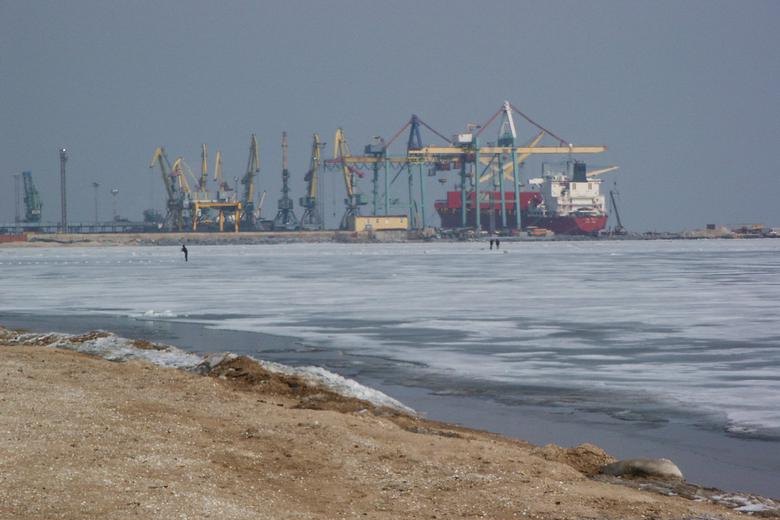
MARIUPOL, July 11 — The Port of Mariupol, once a major hub for Ukraine’s industrial exports on the Azov Sea, has fallen silent again. A recent halt in Azov Sea shipping has effectively closed the port, disrupting Russia’s ability to use the facility for its own exports. Against this backdrop, the port’s fate remains tightly bound to the wider war and the unresolved status of the city itself.
Before the war, Mariupol was Ukraine’s largest port for exporting steel, grain, and coal. In 2021, it handled over 15 million tons of cargo, a figure that spoke to the city’s role as a linchpin of the country’s trade with the world.
The port’s depth of up to 9.5 meters allowed it to accommodate large cargo ships, making it a vital artery for the industrialised east. What is at stake now is not merely the fate of a single harbour, but the broader pattern of Russia’s use of captured Ukrainian infrastructure for its own economic and military ends.
The siege and its aftermath
The city of Mariupol was besieged by Russian forces from February to May 2022, a brutal campaign that reduced much of the city to rubble. According to Ukrainian officials, an estimated 25,000 civilians died during that period. The port itself was heavily damaged in the fighting.
Russia captured the port in May 2022 and has since used it for military logistics and for exporting stolen Ukrainian grain. Rebuilding efforts have been slow, hampered by ongoing instability and the sheer scale of the destruction.
In the corridors of power in Kyiv and Brussels, the port’s closure is seen as another chapter in a story of Russian exploitation of occupied territory. The recent halt in Azov Sea shipping has effectively closed the port again, cutting off Russia’s ability to use it for exports. This is not the first time the port has been disrupted — the siege itself had already shattered its commercial function — but the new closure underscores the fragility of any Russian attempt to normalise operations there.
The wider picture
The port’s location on the Azov Sea, a body of water that has become a flashpoint in the conflict, adds a strategic dimension. Before the war, the port was a key node in Ukraine’s global trade network. Now, it sits under Russian control, its infrastructure damaged, its workforce scattered, and its future uncertain.
The wider picture is one of a region transformed by war, where even basic economic activity remains hostage to military realities. For Ukraine, the loss of the port represents a significant economic blow.
The 15 million tons of cargo handled in 2021 included vast quantities of steel, grain, and coal — commodities that once flowed to markets across the Mediterranean and beyond. For Russia, the port’s capture was initially a strategic prize, offering a way to bypass some of the logistical challenges of the war and to profit from stolen grain. But the recent halt in Azov Sea shipping has now frustrated those plans, at least for the moment.
The port’s depth of up to 9.5 meters, which once made it attractive for large cargo ships, now means little when the waters are effectively closed to traffic. The infrastructure, already battered by the siege, has not been fully restored.
Slow rebuilding efforts suggest that even if shipping were to resume, the port would operate at a fraction of its pre-war capacity.
What to watch next
Observers in European capitals are watching to see whether Russia will attempt to reopen the port under its own flag, or whether the halt in Azov Sea shipping will prove prolonged. The fate of the port is tied to the broader question of control over Ukraine’s southern coastline — a question that shows no signs of being resolved soon. For now, the Port of Mariupol remains a silent monument to a city that was, and to the war that changed everything.




