
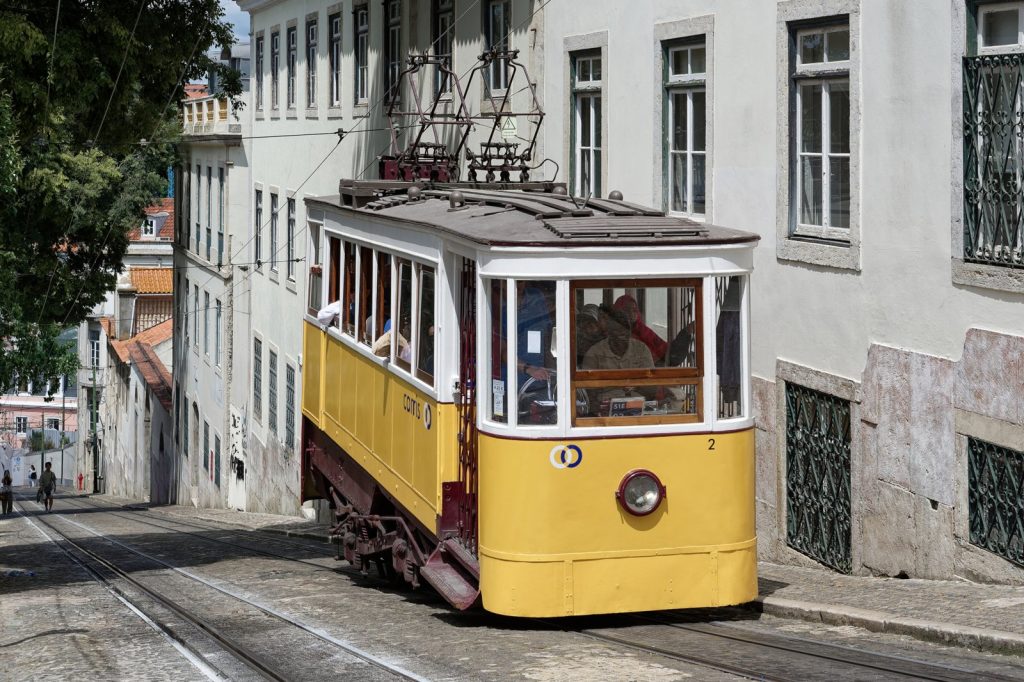
The Ascensor da Glória was already 140 years old when it crashed into a Lisbon building on September 3, 2025. Sixteen people died. Twenty-two were injured.
The Portuguese government declared a day of mourning for September 4. That age matters.
The funicular opened in 1885, powered by steam engines. It was converted to electric power in 1915. It was built by a German company, Maschinenfabrik Esslingen.
It is a National Monument. It is also a working piece of public transit that carries people up a steep hill every day, two cars at a time, each holding 42 passengers plus a conductor.
This is not an isolated incident in the history of aging funiculars. Cable systems worldwide face the same pressure: keep running, keep the tourists happy, keep the locals moving. Maintenance budgets compete with other city priorities.
Inspections happen. But a 140-year-old machine has parts that were designed, built and installed in an era before modern safety engineering existed. The question is not whether such a system can fail.
The question is how many times it can be patched, upgraded and trusted before something breaks. Lisbon has three funiculars.
The Ascensor da Glória connects the Pombaline downtown with the Bairro Alto neighborhood. That route goes through historic, densely populated streets. When the funicular left the track and hit a building, it did so in a place where people live, work and walk.
The death toll reflects that proximity. The city is now coming to terms with the scale of the tragedy.
That phrase is a polite way of saying that families are burying their dead, that hospitals are treating the injured, that a transportation link people relied on is now a crime scene. The investigation into the cause has begun. Nobody knows yet whether the fault was mechanical, human or structural.
Nobody knows whether it was a single worn bolt or a systemic failure that had been ignored for years. Portugal has seen infrastructure disasters before. The country knows what it costs to let historic systems run without constant, aggressive reinvestment.
The Ascensor da Glória was not just a tourist attraction. It was a working piece of the city’s skeleton.
People rode it to work. People rode it home. It was part of the daily rhythm of Lisbon.
That rhythm stopped on September 3. The day of mourning on September 4 will mark the official recognition of loss.
But the practical work will take longer. The funicular will not run again until the investigation is complete. The other two funiculars in Lisbon, the Elevador do Lavra and the Elevador da Bica, will likely face renewed scrutiny.
Every cable, every brake, every motor will be checked and rechecked. The tragedy is a reminder of the importance of maintaining and upgrading critical infrastructure. That sentence is true.
But it is also a truism that gets repeated every time something like this happens. The real question is what happens next.
Will the Ascensor da Glória be repaired and returned to service? Will it be replaced with a modern system? Will the other funiculars be retrofitted with new safety systems?
Or will the memory of 16 dead people fade, and the budget pressures return, and the cycle repeat? For now, Lisbon mourns.
The funicular that carried people up the hill for 140 years carried them into a building instead. That is the fact. Everything else is investigation, questions and grief.




