
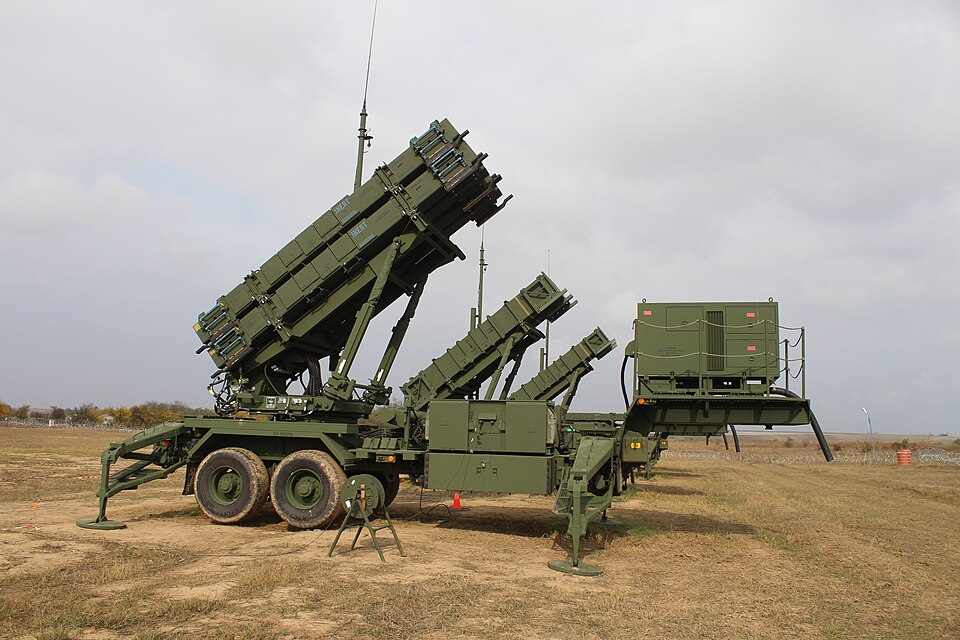
KUWAIT CITY, July 21 — The Pentagon’s activation of a Joint Task Force for Air Defense and the deployment of PAC-3 Patriot missile batteries to Kuwait is, under the hood, a response to a growing technical problem: how to protect fixed bases from a threat that refuses to fly in a straight line. The United States maintains a significant military footprint in Kuwait, with about 13,000 troops stationed primarily at Camp Arifjan, south of Kuwait City; Camp Buehring to the northwest; and Ali Al Salem Air Base.
The US Army’s 1st Theater Sustainment Command operates out of Kuwait, handling logistics for operations in Iraq and Syria. The US Navy keeps a forward-deployed carrier strike group in the Gulf, typically led by the USS Dwight D.
Eisenhower (CVN-69) as of early 2025.
The Air Defence Puzzle
CENTCOM has now assembled a dedicated Joint Task Force for Air Defense, with Patriot PAC-3 batteries positioned in Kuwait to intercept incoming missiles. The US has also provided Kuwait with F-18 Super Hornets for air patrols. The technical reality is that these systems are designed primarily for ballistic missile and aircraft threats, not the low-flying drones that Iran has increasingly used.
The detail that matters: a Patriot battery’s radar has a blind spot near the ground, and a small, slow drone skimming the desert at low altitude is a far harder target than a high-flying jet or a ballistic missile. The 2023 attack on a US base in Syria, which Iran executed with low-flying drones, demonstrated exactly this vulnerability.
It complicates interception in ways that no amount of radars can fully solve.
A Framework for Reinforcement
The 2024 US-Kuwait Defense Cooperation Agreement provides the legal architecture for rapid reinforcement. That agreement, signed the previous year, allows the US to move additional forces into Kuwait quickly should the situation escalate. It is the mechanism under which the new Patriot batteries and the Joint Task Force have been activated.
The Pentagon condemned the attacks that prompted these moves back in March 2025 — the date is approximate, as such things often are — stating that the US would “take all necessary measures” to protect its partners. The language was standard, but the hardware being deployed is not.
A Joint Task Force for Air Defense is a significant organisational step, signalling that the threat is not seen as a one-off event. As ever, the technical challenge will outpace the political statements. Iran’s drone capability is cheap to produce and hard to neutralise.
The US has the radars, the interceptors, and the fighter patrols — but the question is whether they can keep up with a threat that flies low, slow, and in numbers.




