
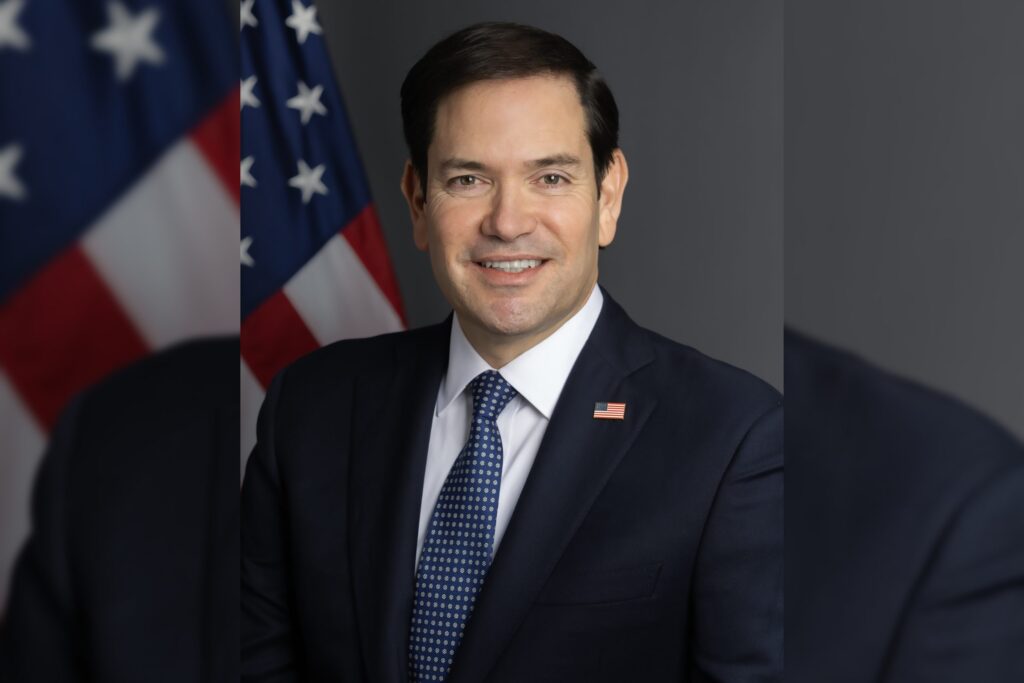
WASHINGTON, July 12 — Marco Rubio, the son of Cuban immigrants who rose from the Miami political scene to become America’s top diplomat, now holds an extraordinary concentration of executive power over US policy toward Venezuela. On March 3, President Trump signed an executive order granting the Secretary of State authority that, under the hood, rivals what Congress typically reserves for itself.
The order gives Rubio the power to impose or lift sanctions on Venezuelan officials and entities, to negotiate directly with foreign governments on matters pertaining to Caracas, and to allocate up to $500 million in US foreign assistance. That last figure is the detail that matters: it represents a war chest that no single cabinet member has wielded so freely in recent memory for a single country portfolio.
Rubio was confirmed as Secretary of State on January 21, 2025, after serving as a US Senator from Florida from 2011 to 2025. He was a candidate for the Republican presidential nomination in 2016. His policy instincts on Latin America were forged long before he entered the State Department.
A career defined by the Americas
Rubio co-sponsored the Venezuela Defense of Human Rights and Civil Society Act of 2014, which imposed sanctions on Venezuelan officials. He was an early and vocal supporter of the interim presidency of Juan Guaidó in 2019, when the opposition leader challenged the regime of Nicolás Maduro. Those positions placed him firmly in the hawkish camp within the Republican Party on hemispheric affairs.
The technical reality of the March executive order is that it streamlines decision-making. Rather than requiring inter-agency consensus between State, Treasury, and the National Security Council, Rubio can now act unilaterally.
For a career politician who has long argued that the Maduro government is a threat to regional stability, the authority is both a tool and a test. One of Rubio’s stated priorities is securing the release of 28 Americans detained in Venezuela. That number is exact: 28.
He has also said he aims to promote free and fair elections in the country, a goal that has eluded successive US administrations for nearly two decades.
The family context
Rubio was born on May 28, 1971, in Miami, Florida, to Cuban immigrant parents. That background has informed his foreign policy worldview more than any other factor. He is married to Jeanette Dousdebes Rubio and has four children.
The political calculation is straightforward. As ever, the detail that matters is the scope of the $500 million assistance authority.
It allows Rubio to fund everything from humanitarian aid to opposition groups to election-monitoring infrastructure without returning to Congress for approval. As a wry observation, it is the kind of authority that career diplomats dream about and oversight committees fret over. What comes next is less clear.
Rubio has not yet publicly detailed how he intends to use the sanctions power or the money. The Maduro government has shown no signs of yielding.
The 28 detained Americans remain a bargaining chip that Caracas has used before. And the 2024 Venezuelan presidential election, which the opposition and much of the international community deemed illegitimate, has left the country in a political stalemate. Rubio’s leverage is real.
The question is whether he can turn that leverage into outcomes — released prisoners, credible elections, or a shift in Caracas’s behaviour — before the political winds shift in Washington.




