
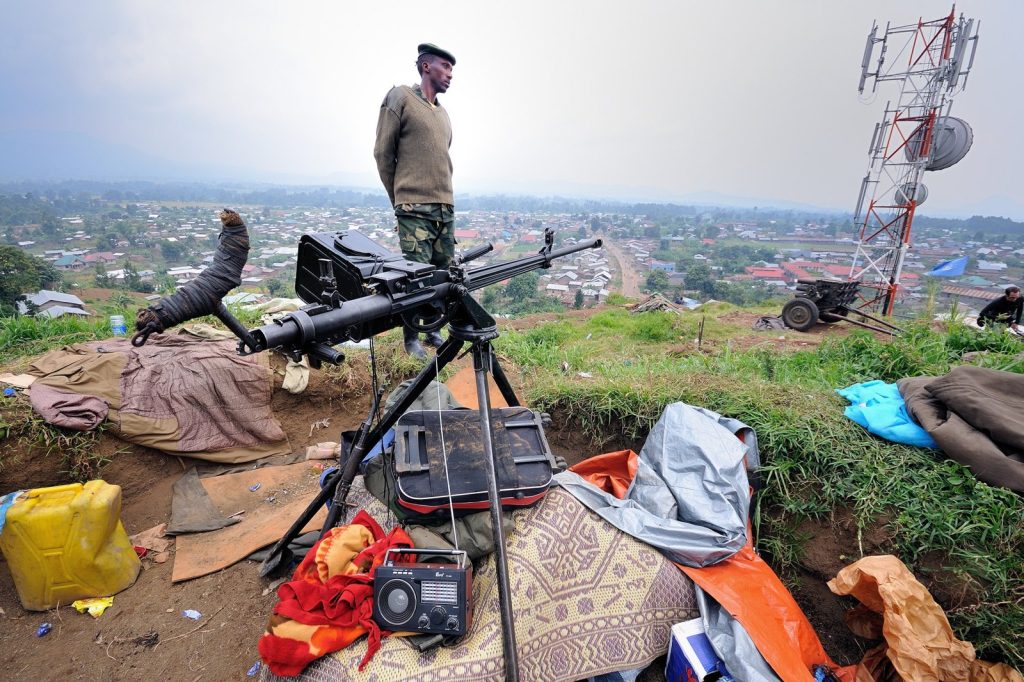
Bunagana fell in June. Congolese soldiers crossed the border into Uganda. The town is a strategic border crossing.
Its capture by the March 23 Movement marked a sharp escalation in a rebellion that has been chewing through North Kivu since March 2022. The M23 group, backed by Rwanda according to a United Nations Security Council report, now holds a key artery.
Bunagana sits on the main road to Goma. Losing it meant the Congolese army, the FARDC, had to retreat. They went into Uganda.
That move triggered a diplomatic row between Kinshasa and Kampala. Uganda has its own soldiers in the region, the UPDF, deployed to fight a different rebel group, the Allied Democratic Forces.
The ADF operates in North Kivu and Ituri. The M23 campaign, Uganda alleges, was orchestrated by Rwanda to disrupt those UPDF operations. The timeline matters.
The current M23 rebellion did not start in March 2022. It began earlier. In November 2021, the group attacked the Congolese military and MONUSCO peacekeepers.
They seized military positions in Ndiza, Cyanzu, and Runyoni. Those are hills and settlements in North Kivu.
Then came the bigger push in 2022, culminating in the capture of Bunagana in June. The group is not new. It first emerged in 2012, took Goma briefly, then was defeated.
Now it is back. The DRC government says Rwanda is rearming and reorganizing the insurgency.
The UN Security Council Group of Experts report substantiates that claim. It raised concerns about Rwandan involvement. The situation on the ground is not simple.
Multiple armed groups operate in the same territory. The UPDF is there for the ADF. The M23 is fighting the FARDC.
Rwanda is accused of backing M23. Uganda is accused by Rwanda of letting Congolese soldiers flee across the border.
The diplomatic row is real. The fighting has displaced thousands. The strategic value of Bunagana is clear: control the border, control the trade, control the movement of troops and supplies.
The United States has been watching. President Biden’s administration has a long history of engagement in the region.
The focus is on promoting stability and security. The US role will be crucial in resolving the conflict, but no specific actions have been detailed in the available reporting. The complexity of the situation means any resolution will involve untangling competing interests.
Rwanda denies backing M23. Uganda denies supporting the ADF. The DRC accuses both neighbors of interference.
The UN report provides evidence on Rwanda. The evidence on Uganda is less clear in this report.
Bunagana remains under M23 control as of mid-June. The Congolese soldiers who fled are in Uganda. The diplomatic row continues.
The US watches. The rebellion grinds on.
The ground-level reality is that a rebel group with foreign backing holds a border town, and the Congolese army is on the other side of the frontier. That is the core fact. Everything else is layers of accusation and counter-accusation, UN reports, and regional power plays.
The fighting itself is not new. The pattern is old. The actors are the same.
The outcome is uncertain.




