
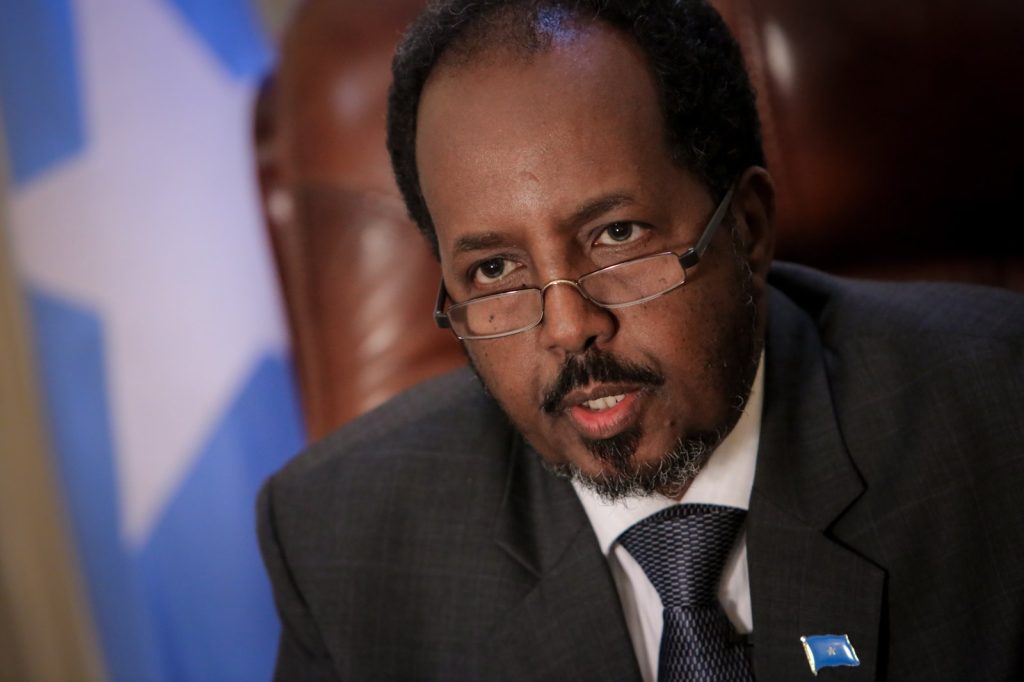
President Hassan Sheikh Mohamud’s four-year term expired today. There is no election. There is no plan for one.
That is the hard fact at the center of talks now on the brink of collapse in Mogadishu. The Somali federal government and the opposition Somali Future Council have been meeting for three days.
The UK and US are mediating. It has not been enough. The core dispute is simple: the government wants to delay voting, citing security fears and logistical problems.
The opposition insists the constitution must be followed. The constitution says the president’s term ends today.
It did. Ahmed Abdi, a Somali political analyst, said the situation is undermining the country’s fragile democratic progress. That is a careful way to put it.
The country has no clear path forward. The talks are stalling. The international mediators are watching a power vacuum open up — the exact thing they hoped to prevent.
The US Ambassador to Somalia, Larry André, has been clear. He said the United States supports the Somali people’s aspirations for a democratic and stable future.
The European Union has also weighed in, urging the government to stick to term limits and hold a timely election. Taiwan, a regional partner, has offered support for Somalia’s democratic development, according to its representative, Jian-H. But support and urging are not leverage.
The government is still in power. The president is still in office.
The opposition is still demanding he leave. The talks are on the brink. This is the third day of negotiations.
That fact alone suggests how intractable the fight is. Three days of UK and US mediation, and the two sides still cannot agree on the basic question of when the country will vote. The government’s position — that security and logistics make a delay necessary — has not swayed the opposition.
The opposition’s position — that the term limit is absolute and non-negotiable — has not swayed the government. So the clock ran out.
May 15 came. The president’s term expired. The talks did not produce a deal.
The country is left in legal limbo, with no clear electoral process and a leader whose mandate has formally ended. The international community fears a power vacuum.
Extremist groups are active in the region. A chaotic transition — or no transition at all — plays into their hands. That is why the US and UK stepped in to mediate.
That is why the EU issued its statement. That is why Taiwan offered its support. Everyone sees the risk.
But seeing the risk and preventing the outcome are two different things. The talks are on the brink of collapse.
The president is still in office. The opposition is still outside it. The election date is still unknown.
The constitution is still not being followed. The Somali Future Council has insisted on the term limits.
They have not backed down. The government has insisted on a delay. They have not backed down either.
Three days of talks. No resolution. An expired term.
A stalled process. A fragile democracy hanging in the balance.




